Greenwich Village Neighborhood Guide
Old New York at its most romantic: historic townhouses, Washington Square Park, intimate restaurants, jazz clubs and streets that refuse to follow the Manhattan grid.
Greenwich Village has a character that feels almost impossible to manufacture. Tree-lined streets bend away from the grid, brick townhouses sit behind iron railings and small restaurants, cafés, music venues and bookstores occupy spaces that have been part of neighborhood life for generations.
Its history as a home for artists, writers, musicians and activists is well documented, but the Village works because it is not simply living in its past. New restaurants sit beside longtime institutions, students cross paths with generations of residents around Washington Square Park, and an ordinary walk can move from a quiet residential block to one of Manhattan’s liveliest streets within minutes.
Spend enough time here and you quickly find your own routine: coffee on MacDougal Street, a walk through Washington Square Park, lunch somewhere small, dinner in an intimate dining room and jazz or comedy after dark.
What We Love About Greenwich Village
The streets are an obvious place to start.
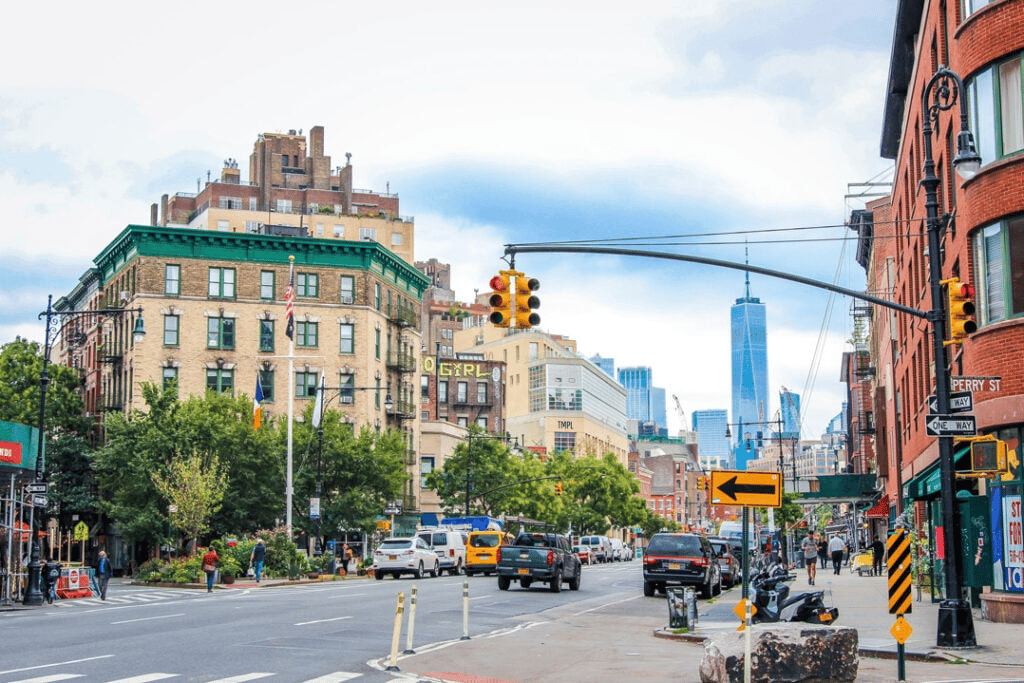
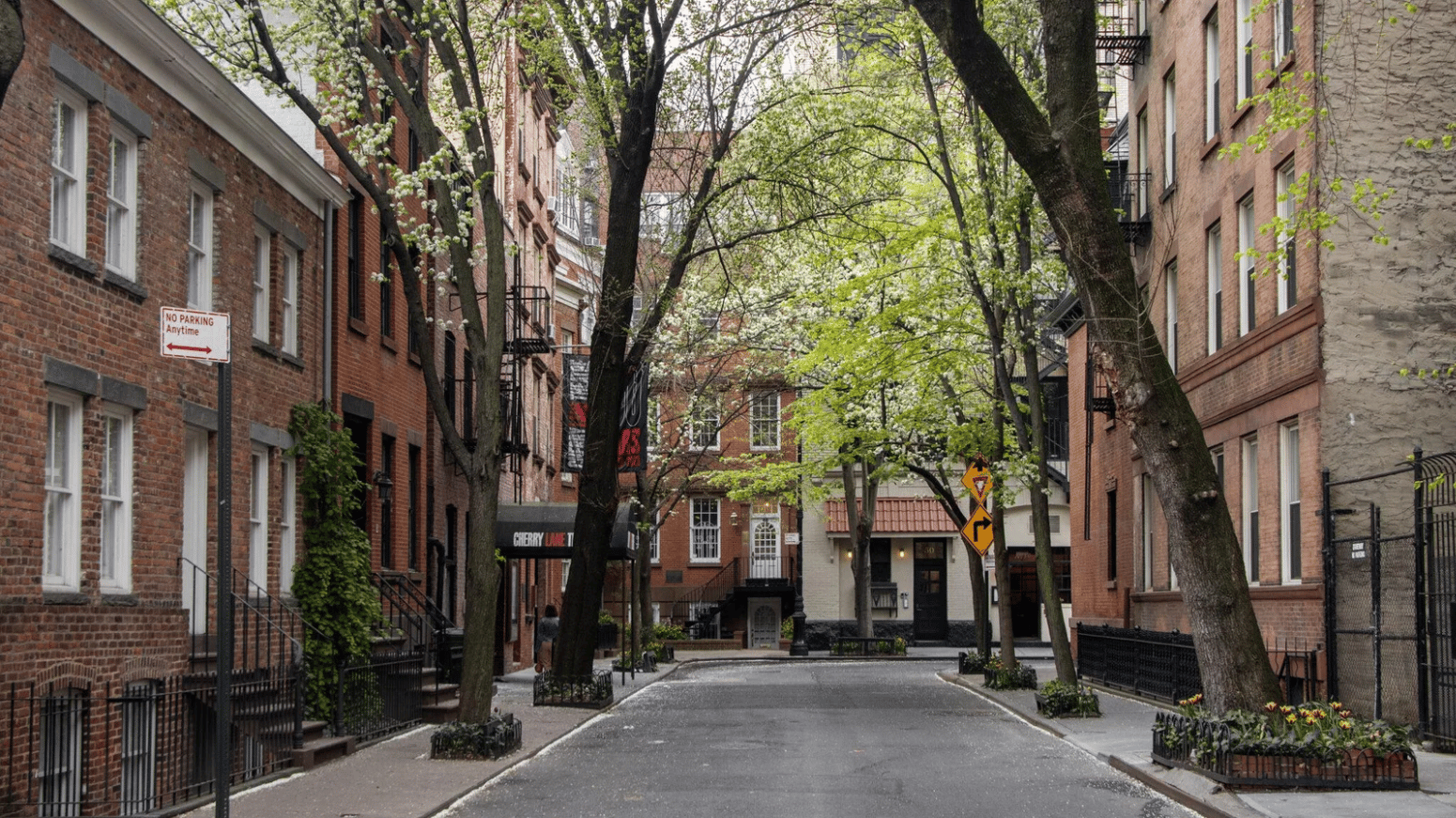
Much of Greenwich Village developed before Manhattan’s street grid reached this part of the city, which helps explain its irregular blocks, unexpected intersections and streets that seem to change direction without warning.
That older pattern gives the neighborhood an intimacy increasingly difficult to find in Manhattan. Federal and Greek Revival rowhouses, later 19th-century townhouses, prewar apartment buildings and former commercial spaces sit side by side, often beneath mature trees.
Then there is the cultural history. Greenwich Village has played an extraordinary role in New York’s literary, music, theater, LGBTQ+ and countercultural life. Washington Square Park became a gathering place for musicians, artists and political movements, while nearby cafés, clubs and basement venues helped shape everything from the Beat era and folk revival to modern jazz and stand-up comedy.
Despite all of that history, the Village still feels lived in rather than preserved behind glass.
A Few of Our Favorite Places
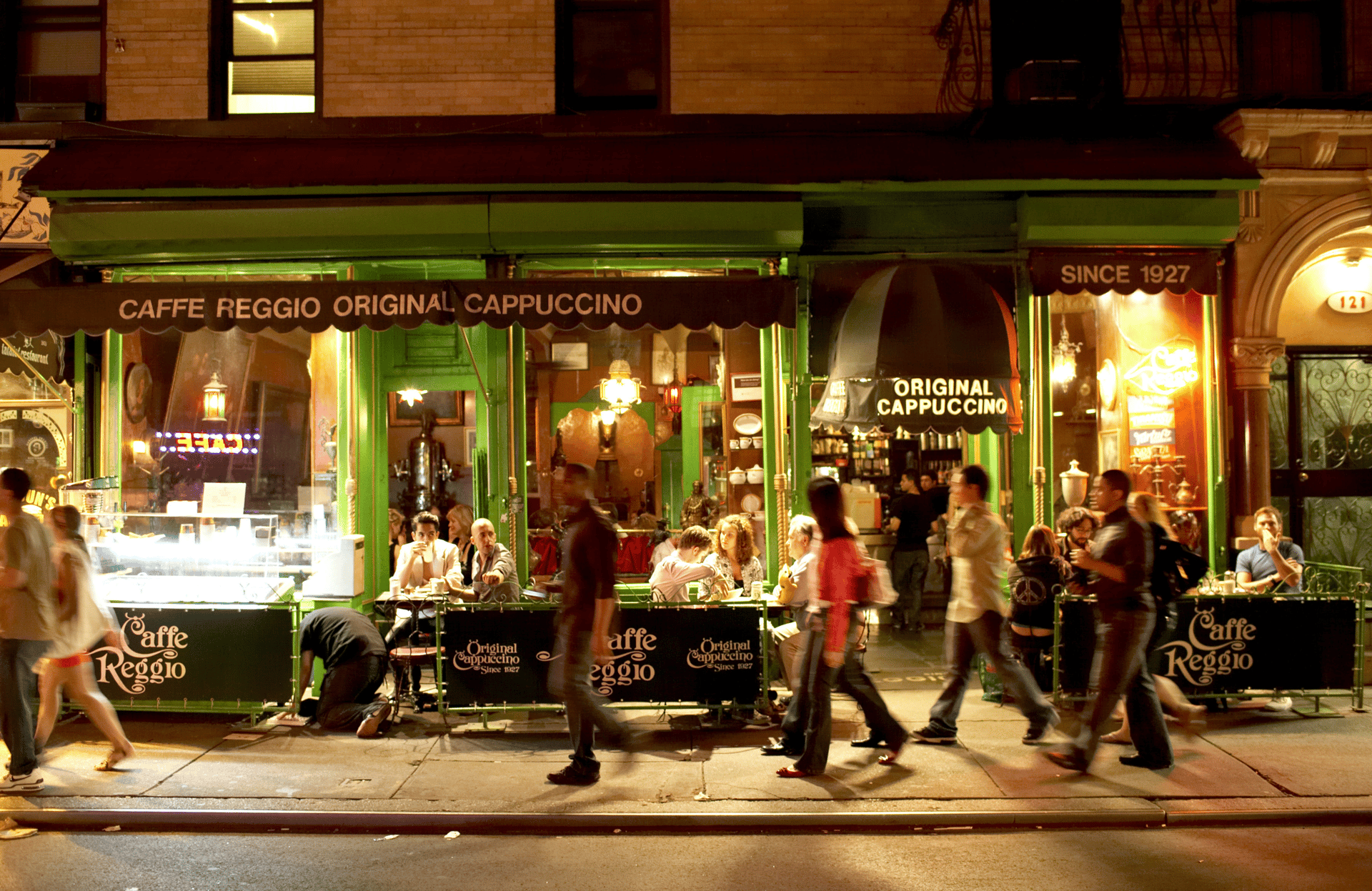
Start with coffee at Caffè Reggio
Caffè Reggio on MacDougal Street has been part of Greenwich Village since 1927.
Inside, dark wood, artwork, marble-topped tables and an ornate 1902 espresso machine give the room the feeling of another era entirely. The café has long been associated with the arrival of Italian espresso culture in New York, and nearly a century later it remains one of the most recognizable coffee rooms in the Village.
Order a cappuccino, stay longer than planned and then continue toward Washington Square Park.
Take your time around Washington Square
Washington Square Park may be the neighborhood’s most recognizable landmark, but the streets immediately surrounding it are just as important to the experience.
Waverly Place, Washington Place, MacDougal Street and the blocks around the park reveal townhouses, cafés, university buildings and architecture spanning several periods of New York history.
Do not worry too much about taking the quickest route. Greenwich Village is one of those Manhattan neighborhoods where getting slightly turned around usually improves the walk.
Where We Like to Eat
Greenwich Village has been a serious dining neighborhood for generations.
The appeal today is the range: Michelin-starred cooking, glamorous Italian-American restaurants, intimate seafood rooms, classic New York taverns and places that have been part of the downtown dining conversation for decades — all packed into a remarkably small part of Manhattan.
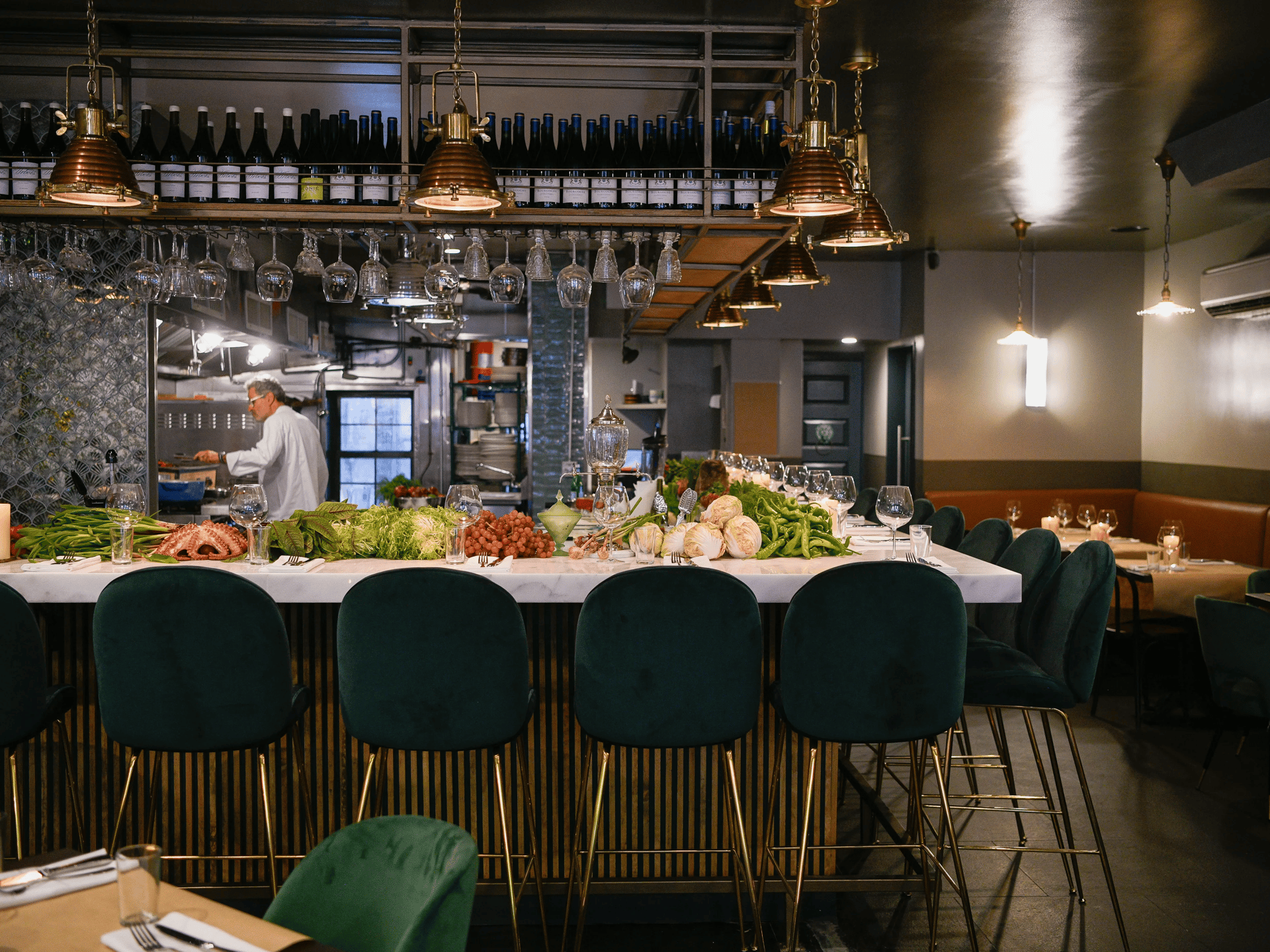
Shmoné
For a special dinner, Shmoné on West 8th Street is one of the neighborhood’s most distinctive reservations.
The Michelin-starred restaurant takes an intensely seasonal, market-driven approach to Israeli and Middle Eastern cooking, with a menu that evolves according to what ingredients are at their best.
The intimate room puts diners close to the kitchen, and much of the food is designed to be shared. Vegetables, breads, seafood and meats are treated simply enough that the ingredients remain at the center of the experience.
It feels sophisticated without becoming overly formal — exactly the kind of restaurant Greenwich Village does particularly well.
Minetta Tavern
For the old New York atmosphere, Minetta Tavern is difficult to replace.
The MacDougal Street institution combines the mood of a classic Greenwich Village tavern with the polish of a French steakhouse. Dark wood, red banquettes and walls crowded with portraits create a dining room that feels almost inseparable from the neighborhood around it.
Steak is an obvious choice, but the Black Label Burger has become a destination in its own right.
Pair it with a martini and allow the room to do the rest.
Carbone
For something more theatrical, Carbone on Thompson Street turns Italian-American dining into an occasion.
The restaurant occupies the former home of Rocco, a longtime neighborhood red-sauce restaurant, and draws inspiration from the grand Italian-American dining rooms of mid-century New York.
Everything is intentionally polished: the captains, the room, the tableside service and a menu built around elevated versions of familiar classics.
The spicy rigatoni has become the signature, but part of the appeal is the entire experience — glamorous, energetic and distinctly New York.
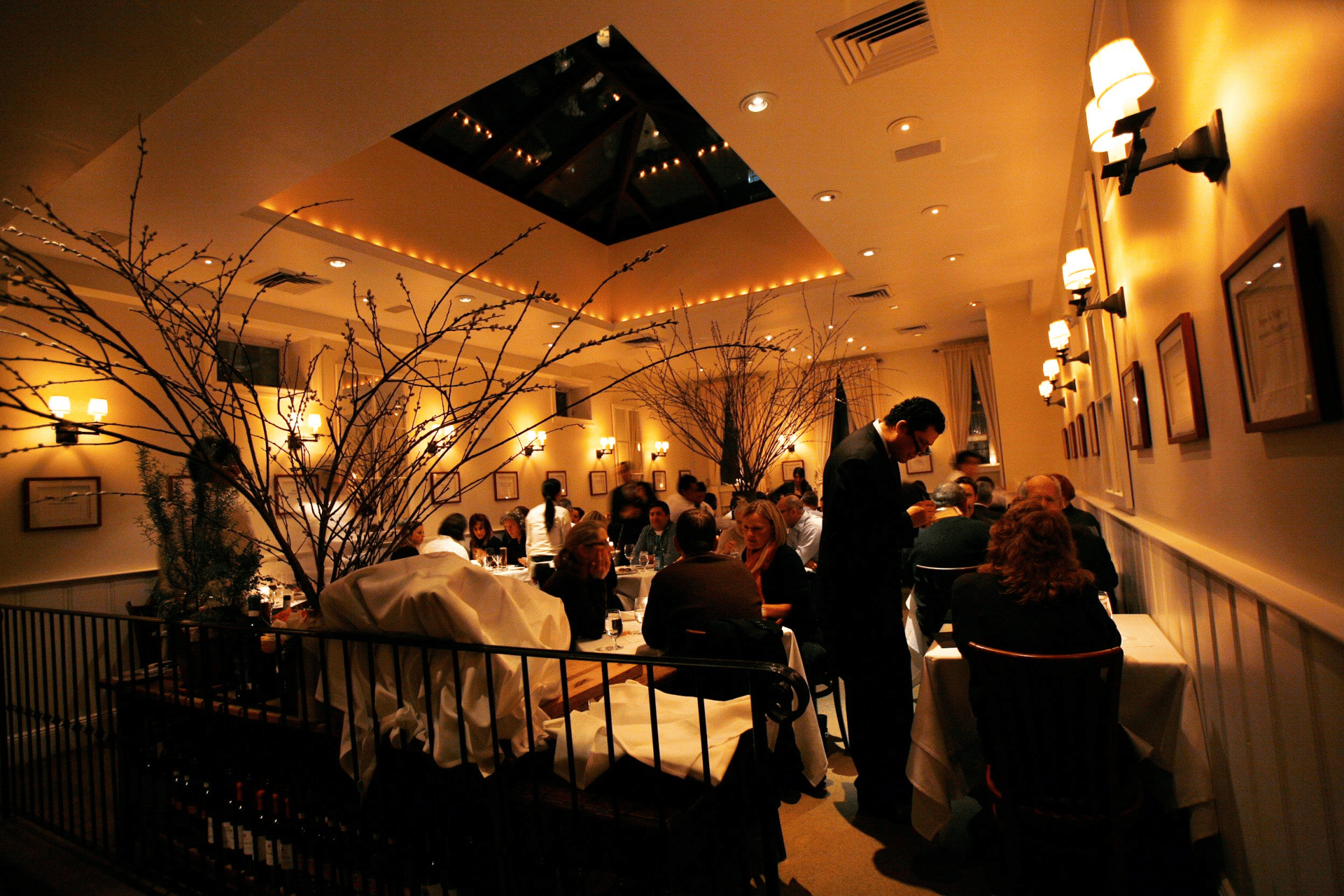
Babbo
Babbo on Waverly Place has entered a new chapter while remaining deeply connected to its longtime Greenwich Village home.
Set inside a historic carriage house, the restaurant centers its menu on regional Italian cooking, handmade pasta and a dining experience that encourages you to order several courses and stay awhile.
The candlelit rooms feel appropriately intimate for the Village, balancing fine dining with enough personality that dinner never feels overly formal.
It remains a beautiful choice when you want a proper Italian evening.
Dame
Dame on MacDougal Street takes a completely different approach.
The tiny seafood restaurant serves a tightly focused menu with British influences, pristine seafood and a particularly famous plate of fish and chips.
Its size is part of the appeal. The dining room is intimate, the menu evolves with the seasons and dinner feels considerably more personal than it would in a larger downtown restaurant.
Reservations can take planning, but that only reinforces what Dame does best: small-scale, ambitious dining in a neighborhood built around intimate spaces.
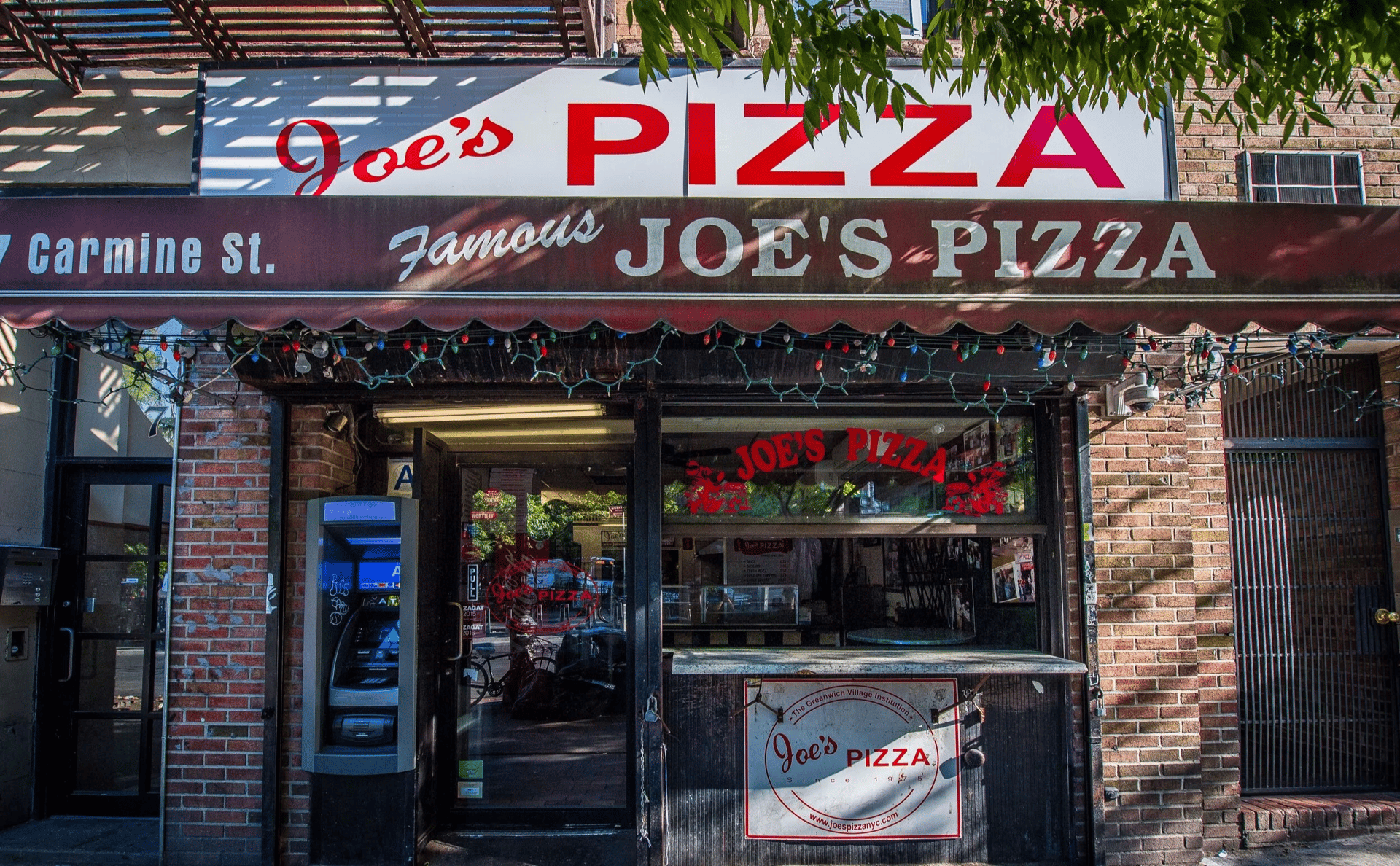
For something more casual: Joe’s Pizza
Every neighborhood guide needs somewhere you can eat standing up.
Joe’s Pizza was established in Greenwich Village in 1975 and remains one of the city’s best-known examples of the classic New York slice.
The Carmine Street shop is wonderfully straightforward: order at the counter, take the paper plate and eat immediately.
No tasting menu, no reservation and no need to overthink it.
Sometimes the right Village dinner is simply a slice on the way somewhere else.
Culture from Washington Square to MacDougal Street
Greenwich Village’s cultural history was built largely in small rooms.
Jazz clubs, comedy basements, coffeehouses, theaters and informal gathering places gave artists somewhere to perform before anyone knew their names, and that tradition remains visible throughout the neighborhood.
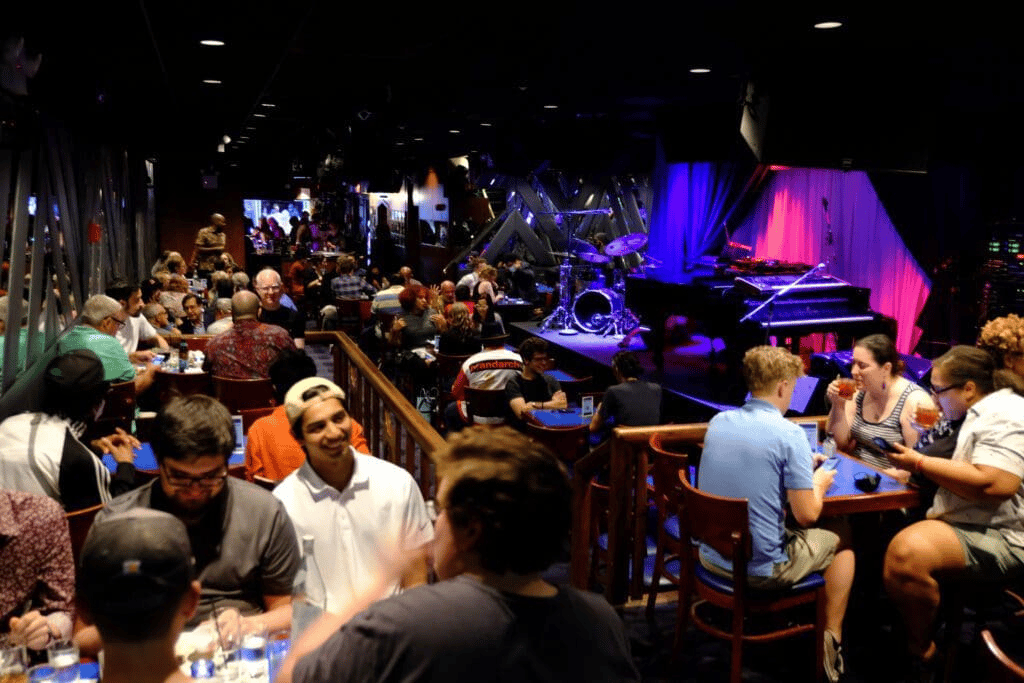
Blue Note
For jazz, Blue Note on West 3rd Street remains one of Greenwich Village’s essential rooms.
The intimate club has welcomed generations of major jazz musicians while continuing to program emerging artists and performers working beyond the traditional boundaries of the genre.
The space is close enough that even internationally known performers can feel only a few feet away.
Check the calendar, arrive early and make the music the evening rather than something squeezed in afterward.
Comedy Cellar
A few steps away, the Comedy Cellar is one of Greenwich Village’s defining nighttime institutions.
The original MacDougal Street room is famously intimate, with audiences packed closely around a small stage and lineups that mix established comedians with rising performers and occasional surprise appearances.
The setting is simple because it does not need much else.
If you want the classic Greenwich Village comedy experience, this is it.
Stonewall National Monument
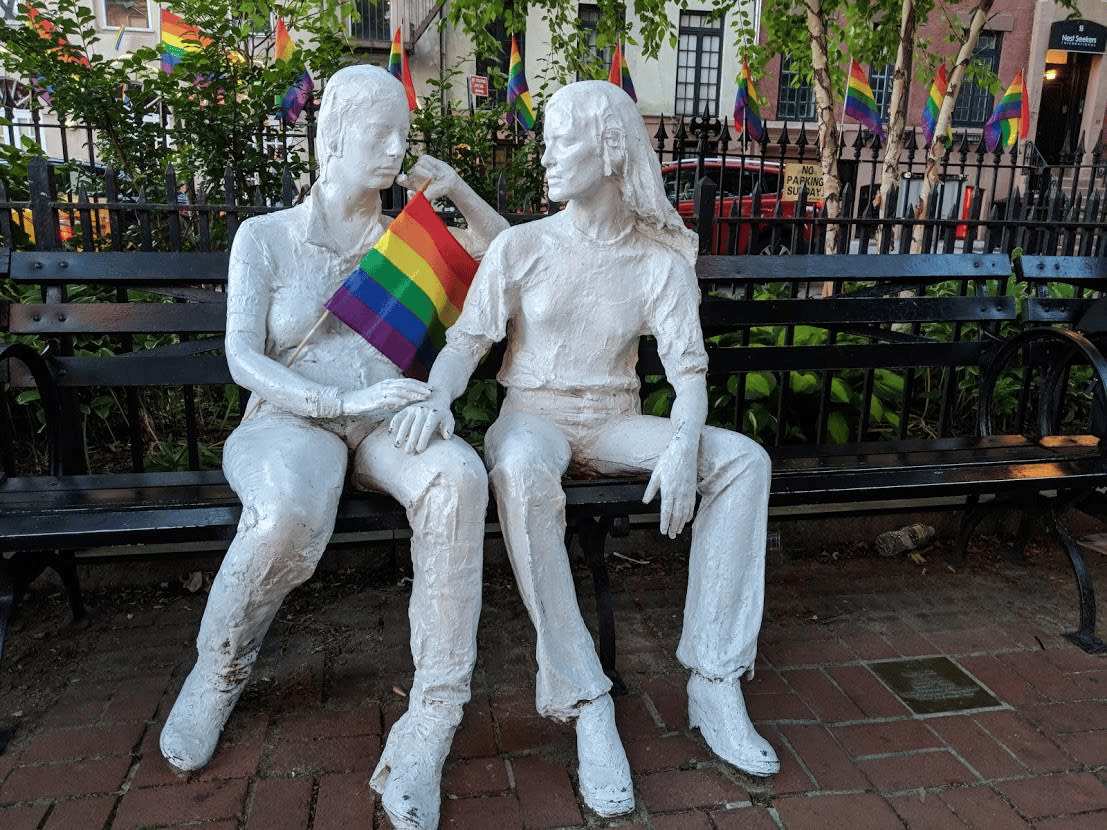
Toward the western side of Greenwich Village, Stonewall National Monument preserves one of the most important sites in the history of LGBTQ+ civil rights.
The Stonewall uprising began in June 1969 following a police raid on the Stonewall Inn and became a pivotal moment in the modern LGBTQ+ rights movement.
Christopher Park and the surrounding area form part of the national monument, while the Stonewall National Monument Visitor Center beside the historic site adds exhibitions and interpretation to the experience.
It is an essential part of understanding how deeply activism and community are woven into the history of Greenwich Village.
Jefferson Market Library
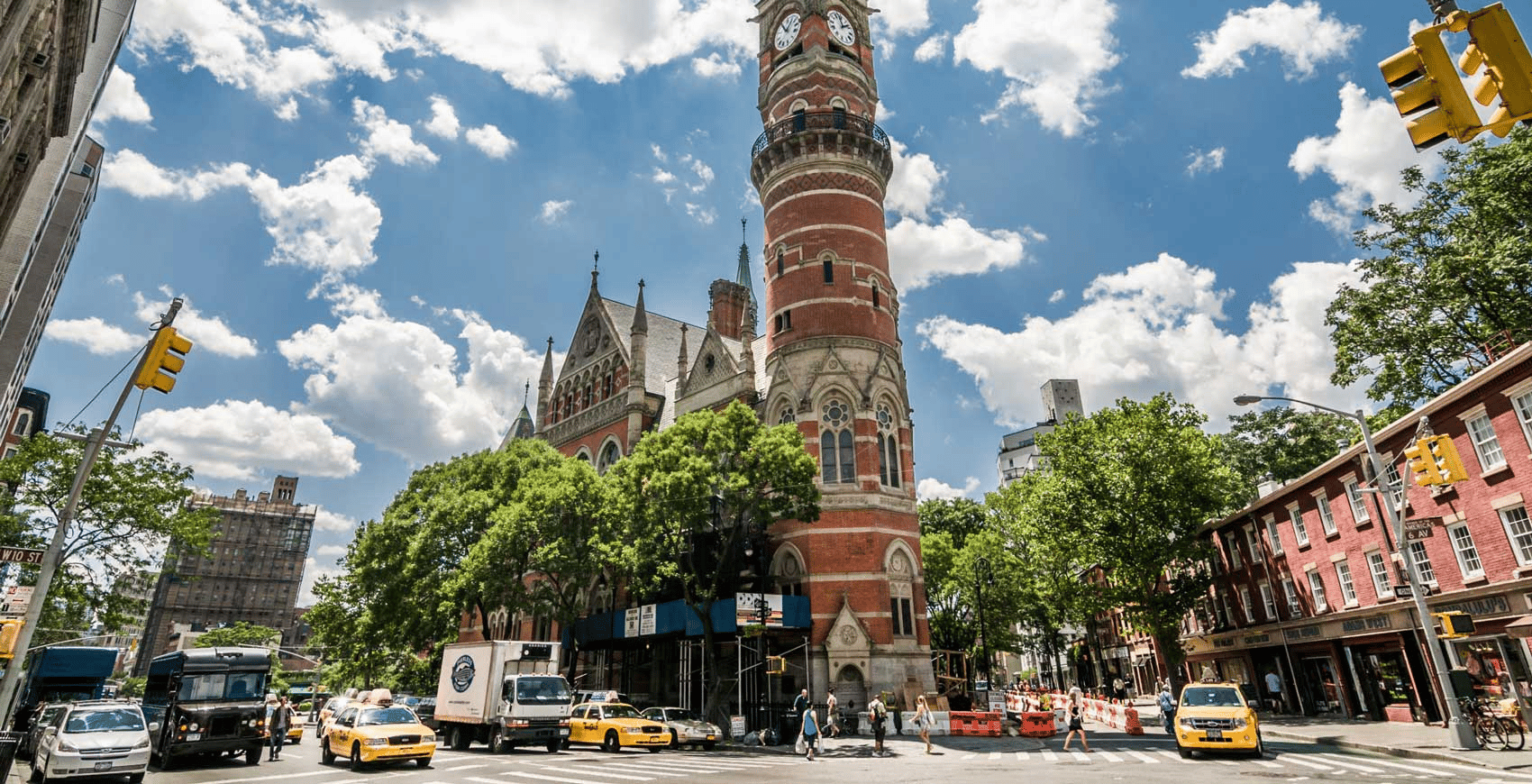
Jefferson Market Library is worth seeing before you even open a book.
The extraordinary Victorian Gothic building at Sixth Avenue and West 10th Street was constructed in the 1870s as a courthouse, complete with its distinctive clock tower.
After local preservation efforts saved it from demolition, the building was converted into a branch of The New York Public Library.
Today, stained glass, brick arches and former courtroom spaces make it one of Manhattan’s most beautiful neighborhood libraries — and one of Greenwich Village’s great preservation stories.
When You Want a Drink
The Up & Up
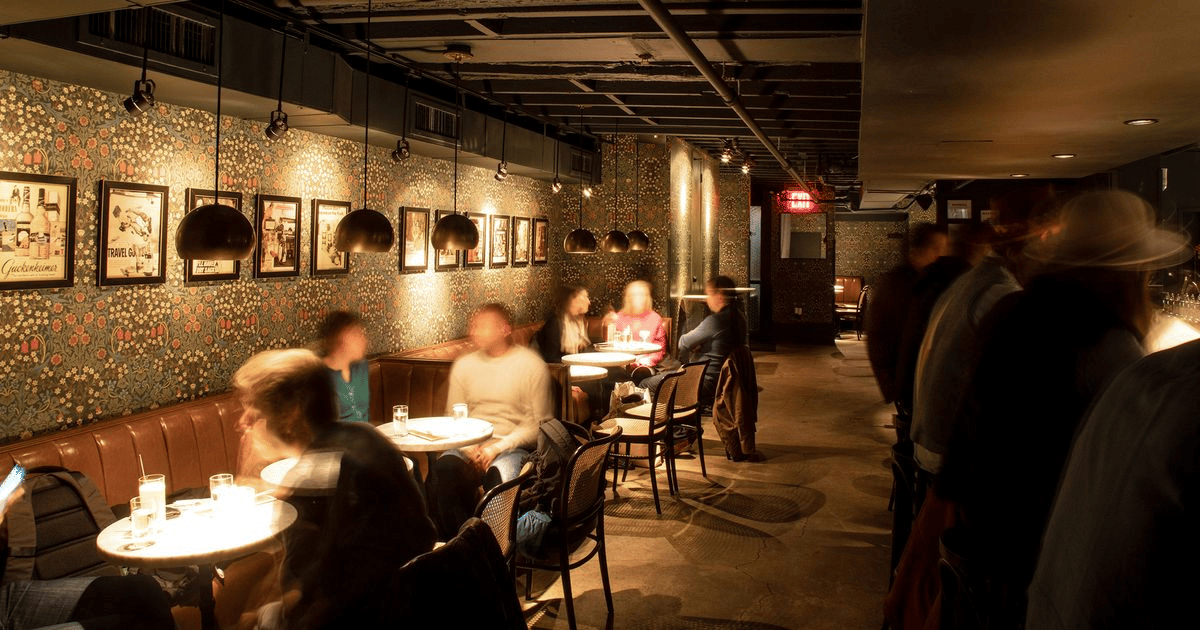
For cocktails, The Up & Up on MacDougal Street is our pick.
Follow the stairs down from the street and you enter an intimate cocktail bar occupying a cellar with an extraordinary Greenwich Village history. The space was once home to the Gaslight Café, an important venue during the Beat and folk eras.
The history is there if you know it, but the bar does not rely on nostalgia.
Cocktails are the focus, the room is beautifully designed and the atmosphere feels sophisticated without becoming too serious.
It is exactly the kind of place you hope to find down a staircase in Greenwich Village.
Get Outside
Washington Square Park
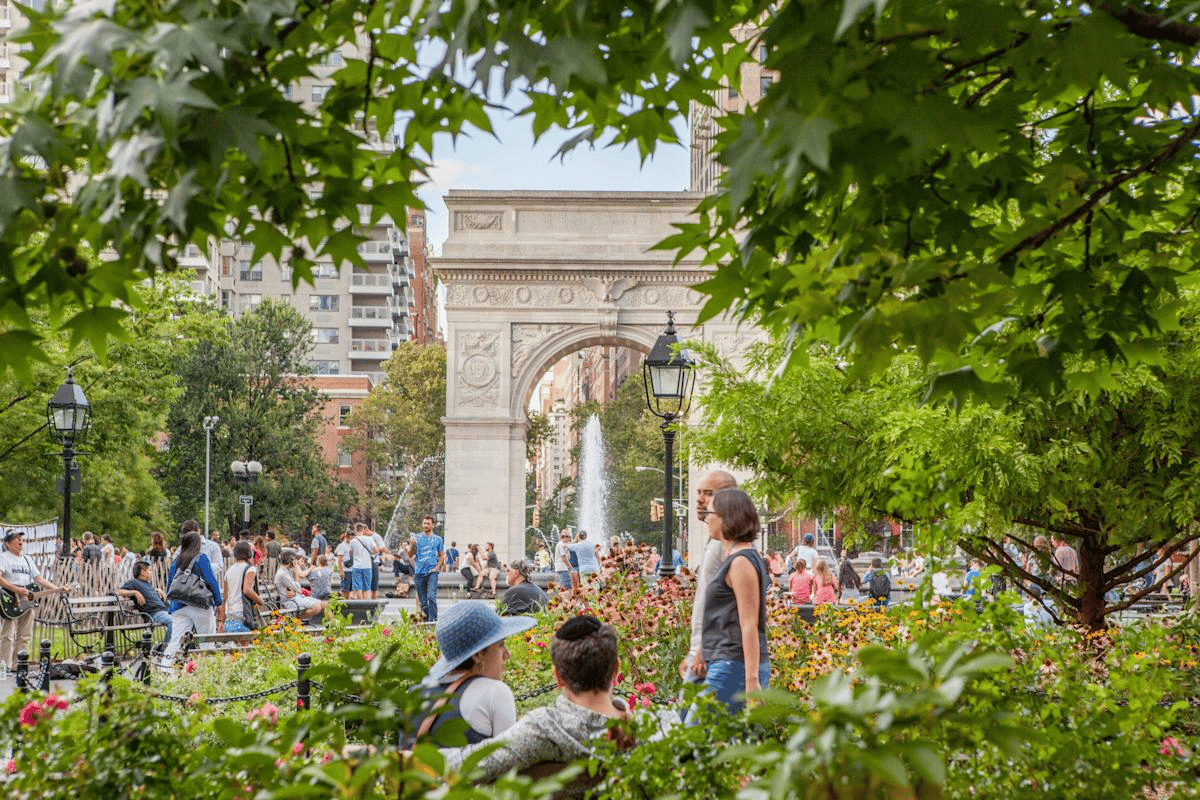
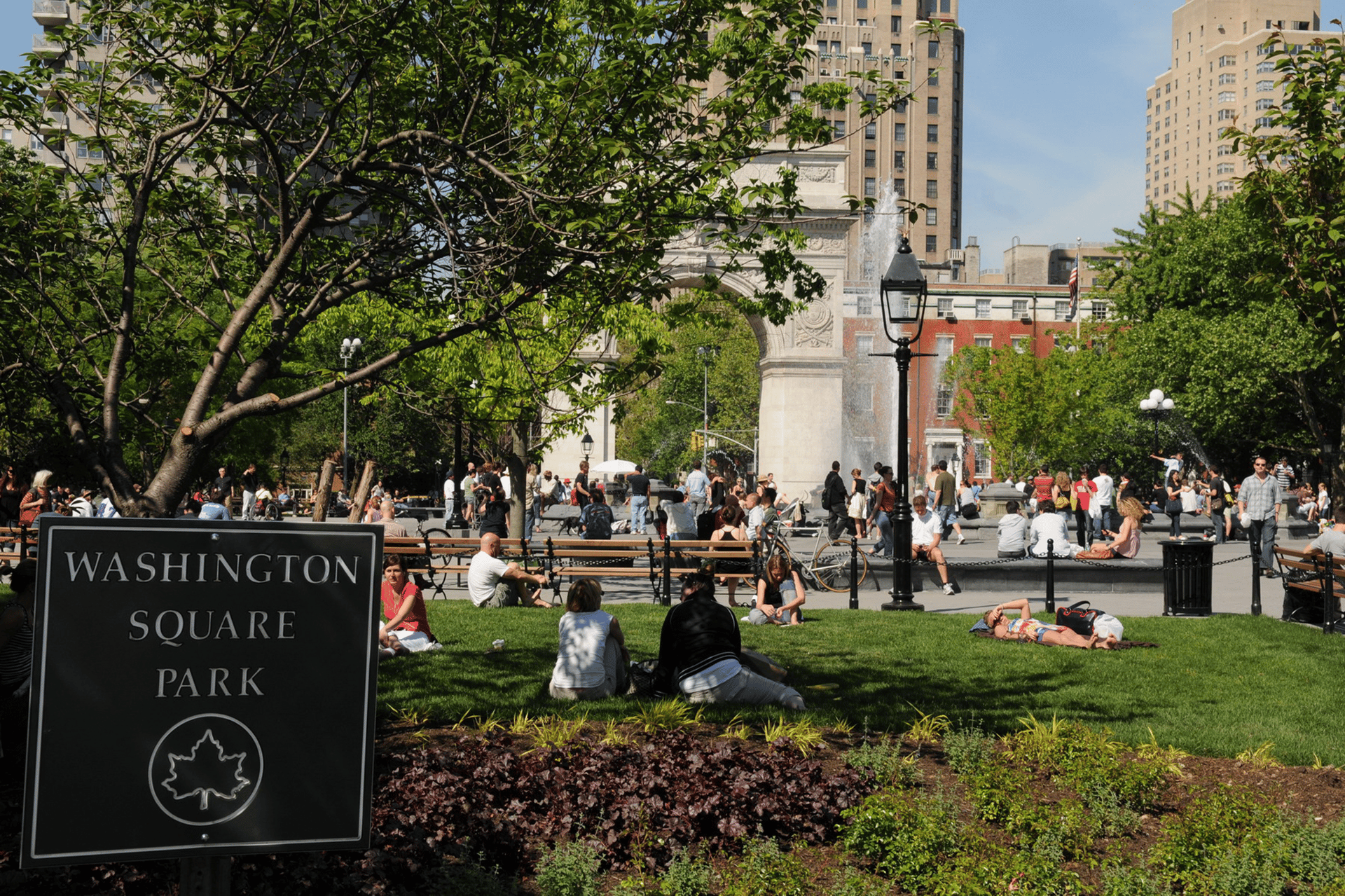
Washington Square Park is the Village’s living room.
At 9.75 acres, it is not one of Manhattan’s largest parks, but few public spaces contain quite as much energy.
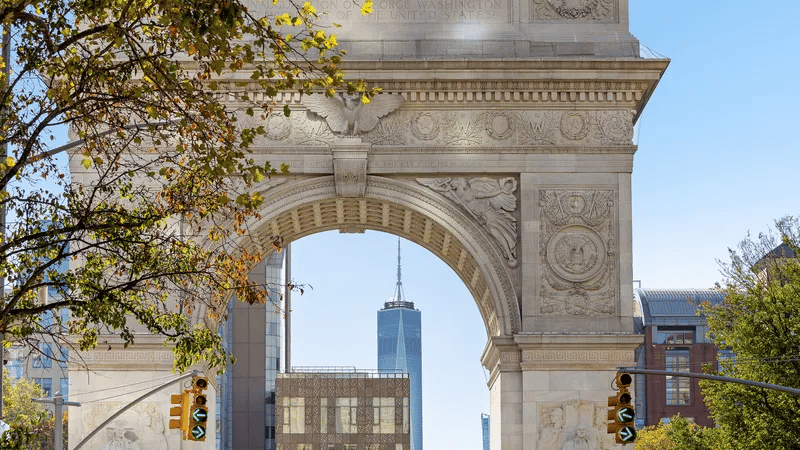
The marble Washington Square Arch anchors the northern entrance, while musicians, chess players, students, performers, families and longtime residents fill the paths and fountain plaza throughout the day.
Walk through on your way somewhere or stay for an hour. The park works either way.
The best part is that it rarely feels like exactly the same place twice.
Jefferson Market Garden
For something much quieter, step inside Jefferson Market Garden.
The garden occupies the former site of the Women’s House of Detention beside Jefferson Market Library and was transformed into a community green space following the demolition of the jail.
Lawns, flowering plants, shaded benches and carefully tended gardens make it feel remarkably removed from Sixth Avenue only a few steps away.
It is one of those small Village places you can walk past repeatedly before realizing what is hidden behind the gate.
Streets Worth Wandering
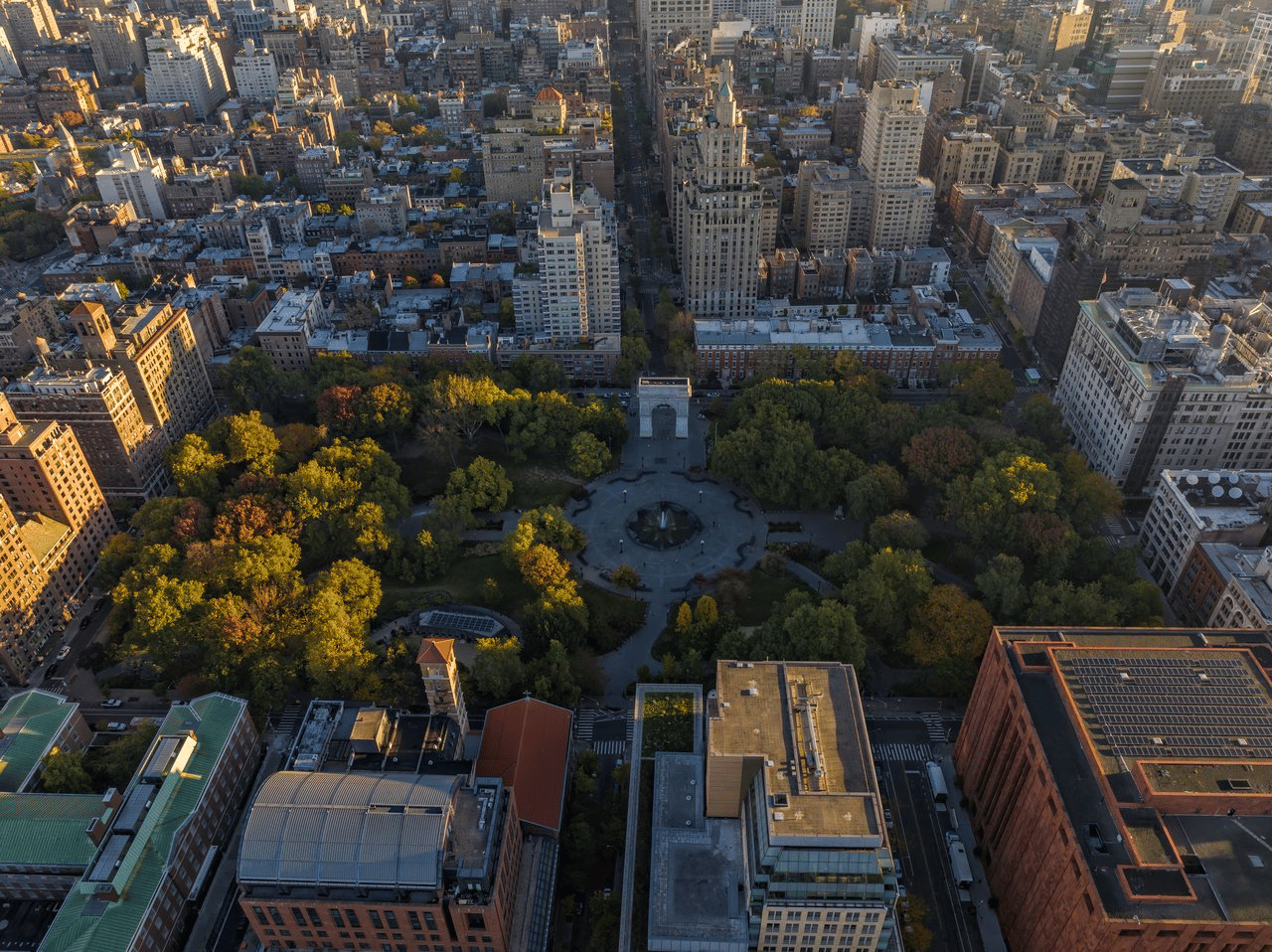
Greenwich Village is one of Manhattan’s best neighborhoods for walking without a destination.
MacDougal Street carries much of the Village’s music, café and nightlife history, with restaurants and small storefronts packed into a few blocks south of Washington Square.
Waverly Place changes character as it moves around the neighborhood, passing townhouses, university buildings and quieter residential sections.
Washington Place offers another beautiful approach to the park, while West 8th Street brings restaurants and shops together along one of the neighborhood’s livelier east-west corridors.
West 10th Street is particularly beautiful around Jefferson Market, while streets farther west become increasingly irregular, intimate and residential.
The architecture is part of the pleasure, but so are the smaller details: ironwork, stoops, old storefronts, hidden courtyards and streets that seem to bend simply because they can.
Our Greenwich Village Shortlist
- For coffee: Caffè Reggio
- For a special dinner: Shmoné
- For old New York: Minetta Tavern
- For Italian-American: Carbone
- For Italian: Babbo
- For seafood: Dame
- For a classic slice: Joe’s Pizza
- For a cocktail: The Up & Up
- For jazz: Blue Note
- For comedy: Comedy Cellar
- For LGBTQ+ history: Stonewall National Monument
- For architecture and books: Jefferson Market Library
- For people-watching: Washington Square Park
- For something quieter: Jefferson Market Garden
- For a walk: MacDougal Street and Waverly Place
Living in Greenwich Village
Residentially, Greenwich Village offers one of Manhattan’s most distinctive environments.
Townhouses and historic rowhouses define many of its quieter blocks, with Federal, Greek Revival and later 19th-century architecture creating a scale very different from neighborhoods dominated by large apartment towers.
Prewar cooperative and condominium buildings add another layer, particularly around Washington Square, lower Fifth Avenue, Sixth Avenue and the neighborhood’s larger streets.
Converted lofts and former commercial buildings can also be found throughout the Village, introducing higher ceilings, larger windows and less conventional layouts.
New construction exists, but landmark protections across much of Greenwich Village mean contemporary development is more limited and usually arrives on individual sites rather than transforming entire blocks.
What ties everything together is life at street level: restaurants, cafés, music venues, parks, independent shops and cultural institutions are close enough that much of daily life can happen entirely on foot.
The Real Estate
Greenwich Village real estate is defined as much by architecture as by location.
The Greenwich Village Historic District, designated in 1969, protects more than 2,000 buildings across dozens of blocks and preserves an unusually varied collection of rowhouses, townhouses, churches, apartment buildings and commercial structures.
Historic townhouses are among the neighborhood’s most recognizable homes. Federal and Greek Revival examples remain on certain blocks alongside later Italianate and other 19th-century rowhouses, often with brick façades, stoops, ironwork and intimate proportions.
Prewar cooperatives are another important part of the Greenwich Village residential landscape, ranging from smaller walk-up and elevator buildings to substantial residences surrounding Washington Square and lower Fifth Avenue.
Loft conversions and condominium buildings provide additional options, while newer luxury residences remain relatively limited because so much of the neighborhood falls within landmarked districts.
That limited development is part of what makes Greenwich Village real estate different. The neighborhood has evolved continuously, but much of its residential architecture still reflects the scale, irregular street pattern and craftsmanship of an older Manhattan.
From historic townhouses and classic prewar cooperatives to lofts and carefully integrated contemporary condominiums, Greenwich Village offers one of the city’s most architecturally distinctive ways to live.
Find a Home in Greenwich Village
Whether you are drawn to a historic townhouse on a tree-lined street, a classic prewar residence near Washington Square or a contemporary condominium within one of downtown Manhattan’s most established neighborhoods, explore what is currently available across Greenwich Village.