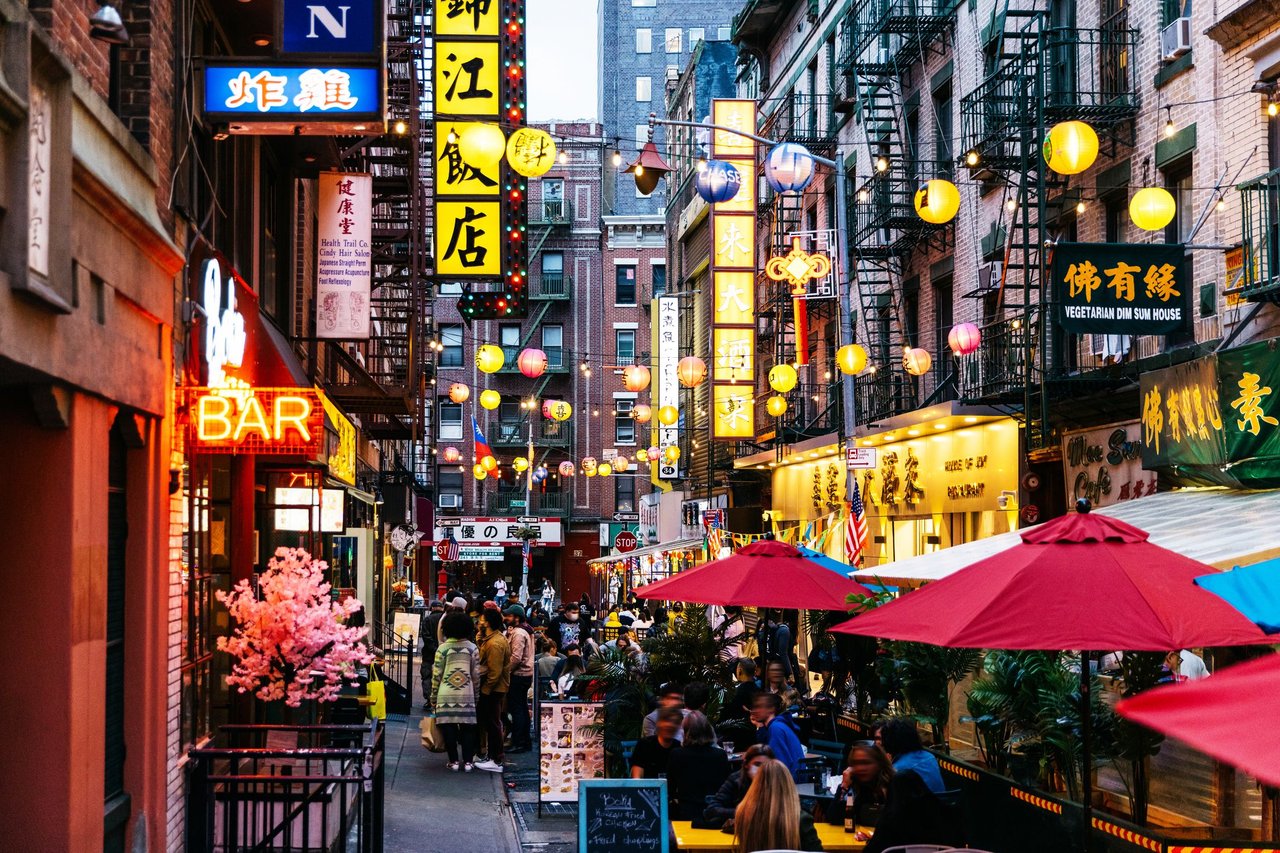
Historic Lower Manhattan at its most vivid: narrow streets, century-old institutions, bustling food markets, destination restaurants and a neighborhood shaped by generations of Chinese New Yorkers.
Chinatown is one of Manhattan’s most distinctive neighborhoods, but it is also one of its most layered. Its historic core grew around Mott, Pell and Doyers Streets, where immigrant communities built businesses, associations, restaurants and places of worship that became the foundation of Chinese American life in New York.
That history is still visible everywhere, but Chinatown is not a neighborhood preserved in amber. Traditional bakeries sit beside contemporary restaurants, produce markets spill onto the sidewalks near wine bars and galleries, and younger generations continue to find new ways to build on the culture that came before them.
Spend enough time here and you quickly find your own routine: a sponge cake on Baxter Street, groceries on Mott, lunch around Bayard Street, an afternoon learning about Chinese American history, dinner somewhere new and a walk through Doyers Street after dark.
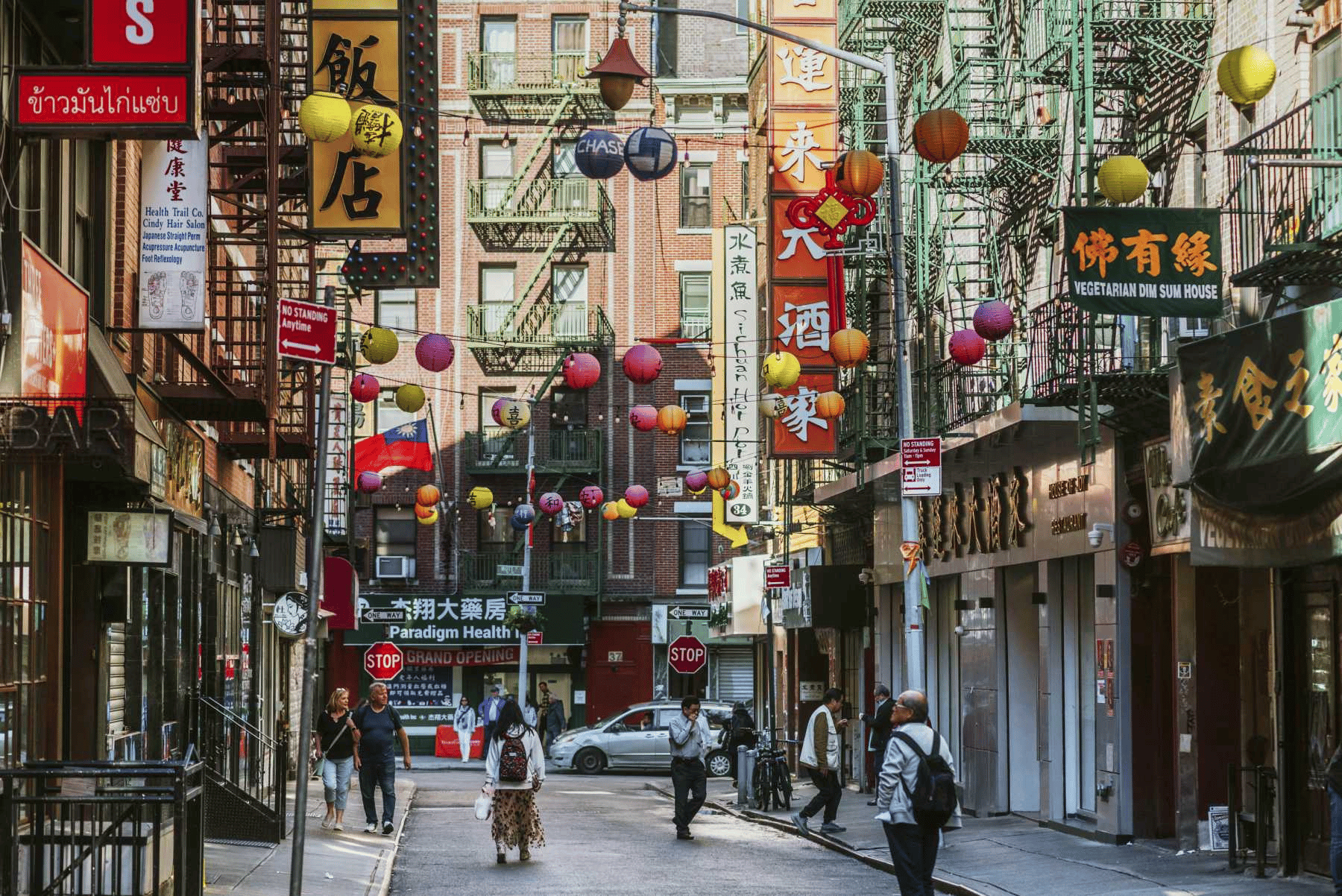
The streets themselves are an obvious place to start.
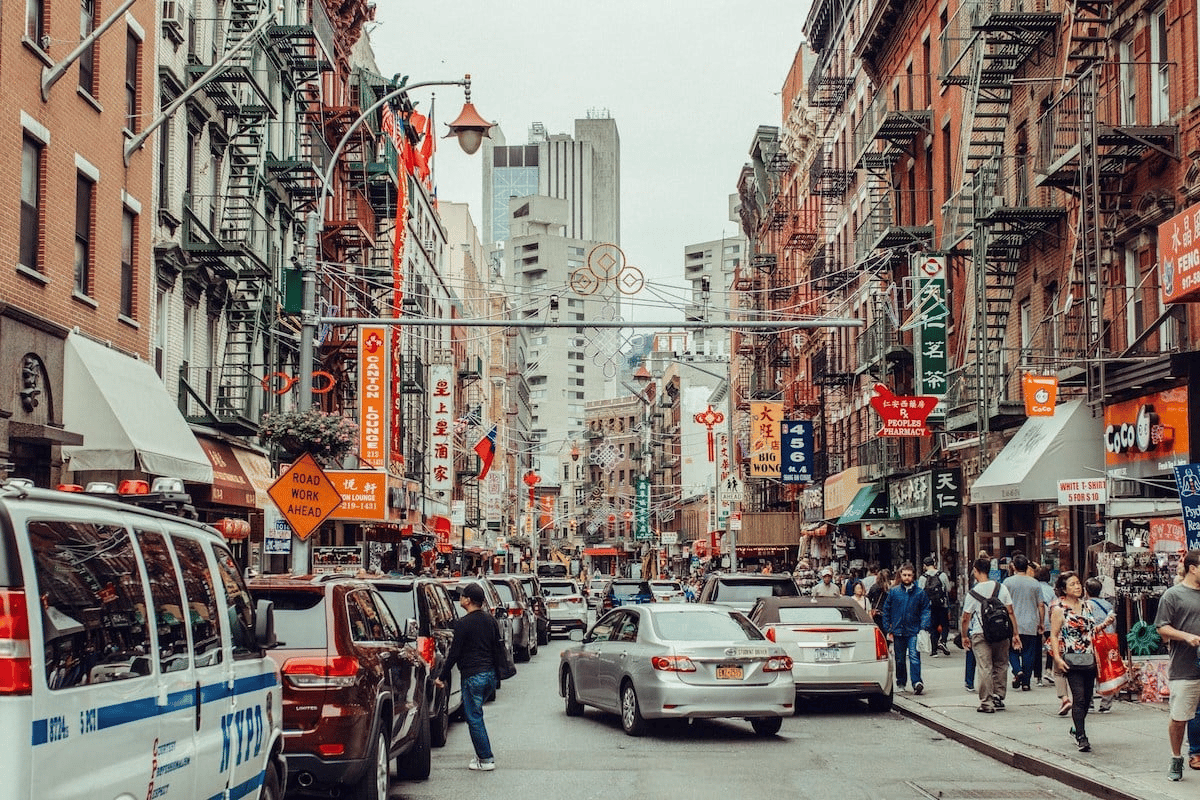
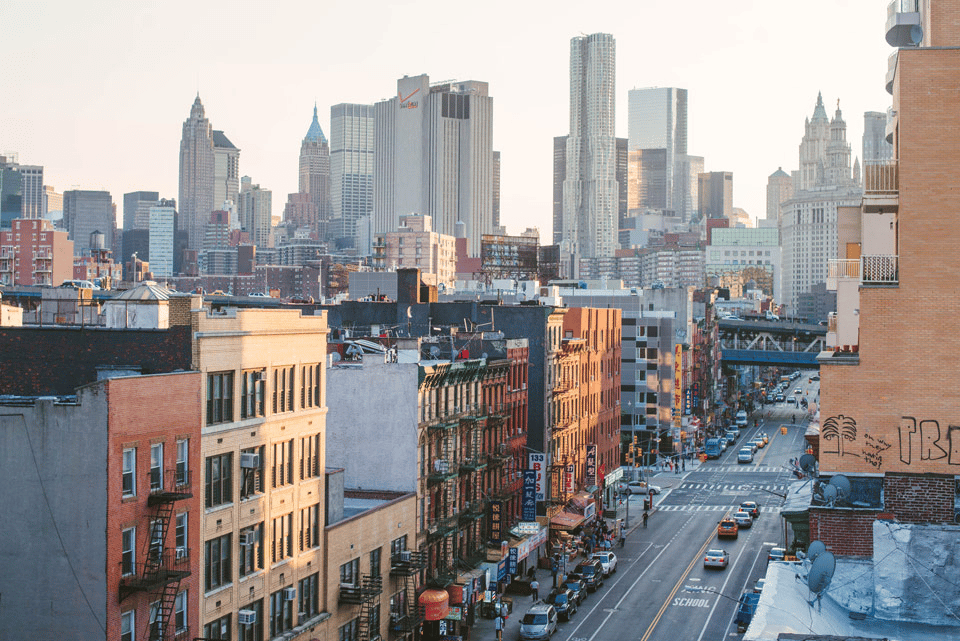
Chinatown developed differently from much of Manhattan, and its older street pattern gives the neighborhood an intimacy that is increasingly rare. Mott, Pell and Doyers Streets form the historic heart, with narrow blocks, fire escapes, small storefronts and buildings that have been adapted over generations to serve new residents and businesses.
Food is woven into everyday life here in a way that feels particularly visible. Produce stands, fish markets, bakeries, tea shops, noodle restaurants and banquet rooms are not simply destinations — they are part of the neighborhood’s daily infrastructure.
And then there is the contrast between old and new. A restaurant that has been here for decades might sit a few doors from a contemporary wine bar, while historic tenements share the block with newer residential buildings. Chinatown continues to change, but its strongest places tend to understand what came before them.
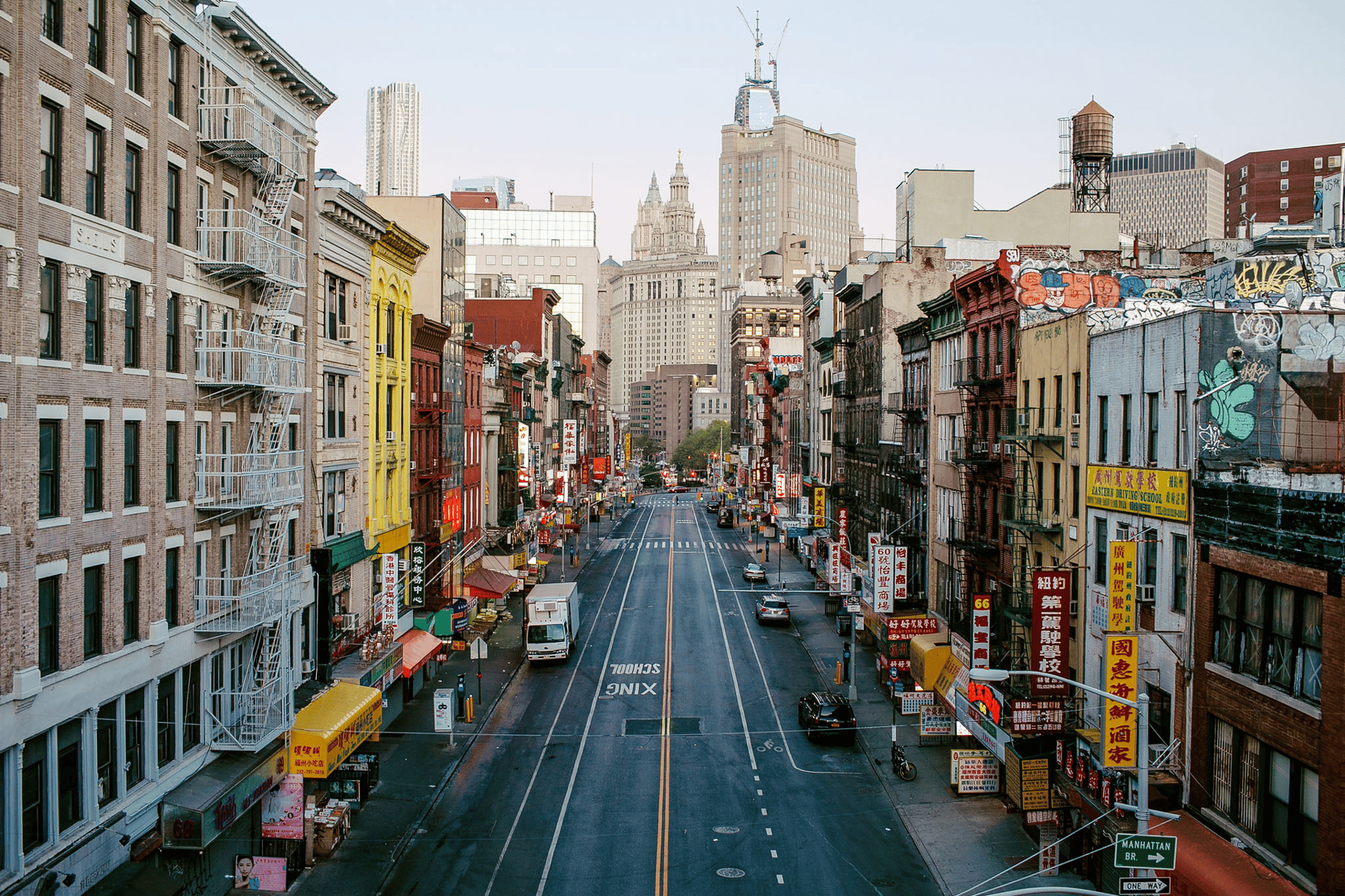
Kam Hing Coffee Shop on Baxter Street is the kind of place that makes a neighborhood guide feel incomplete without it.
The bakery is best known for its incredibly light Hong Kong-style sponge cakes, baked throughout the day and available in the original version along with rotating flavors.
Pick up one or two, add a coffee or milk tea and continue toward Bayard or Mott Street. It is simple, inexpensive and exactly the kind of neighborhood ritual we love.
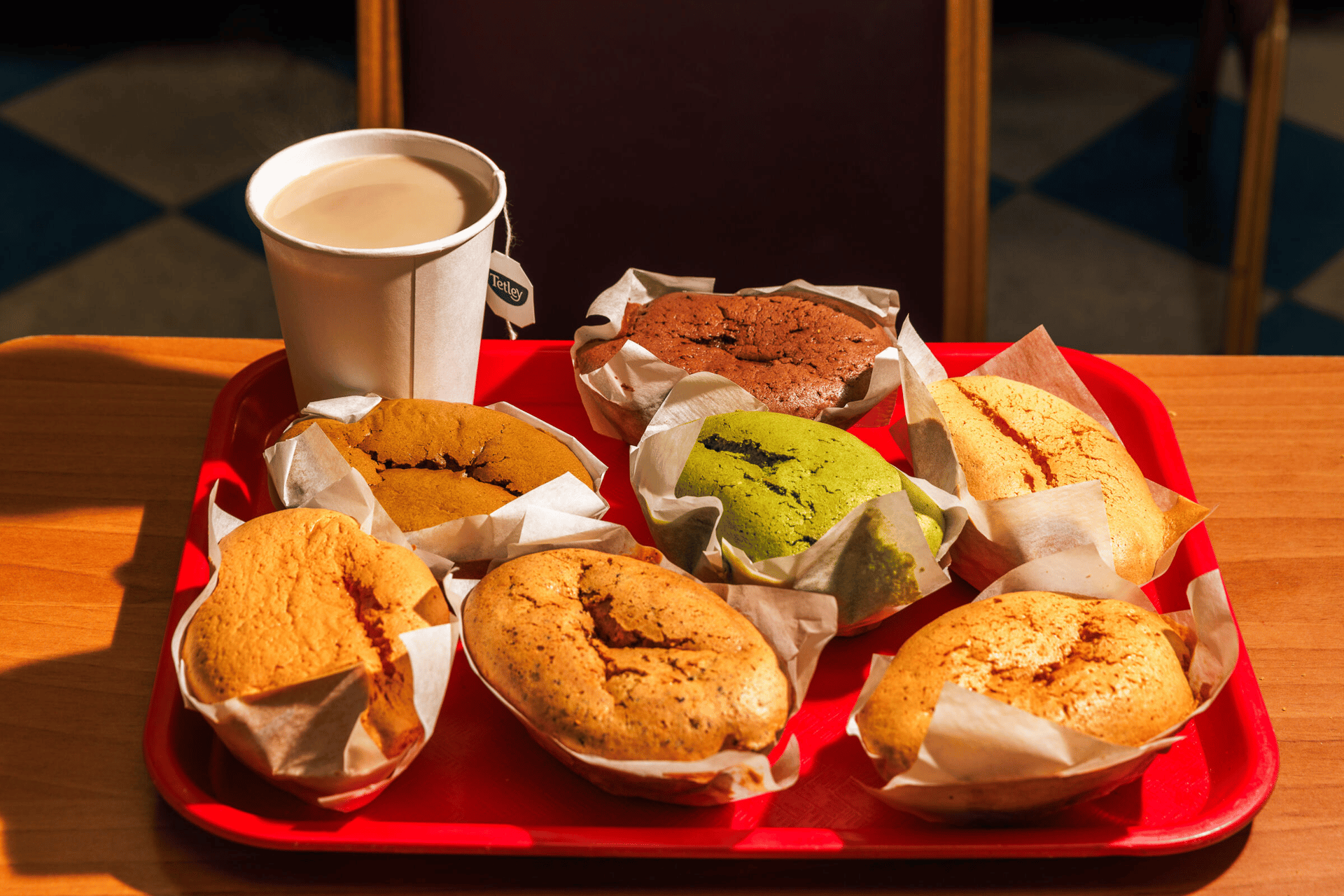
Mott Street is the spine of historic Chinatown.
Walk south from Canal Street and the neighborhood unfolds through tea shops, bakeries, restaurants, grocers and storefronts that reflect generations of change.
Turn onto Bayard, Pell or Doyers whenever something catches your attention. The distances are short, but there is enough happening that there is rarely a reason to hurry.
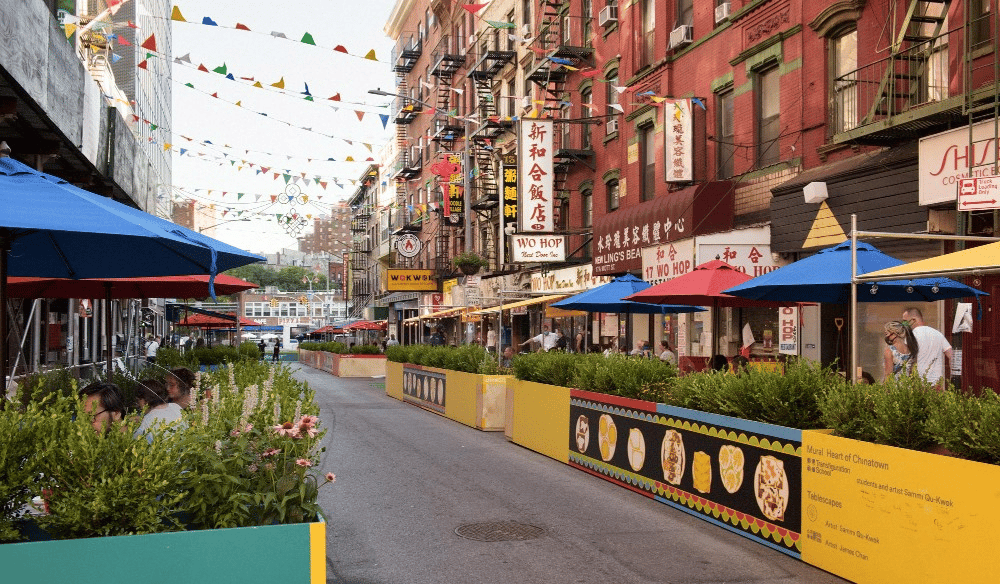
Few Manhattan neighborhoods reward eating your way through them quite like Chinatown.
The best part is the range. Traditional Cantonese and Sichuan restaurants sit alongside new-generation Chinese American cooking, contemporary wine bars and polished dining rooms that reinterpret the idea of a Chinatown restaurant without losing sight of where they are.
For a special dinner, Chinese Tuxedo on Doyers Street is one of the neighborhood’s most atmospheric choices.
The dramatic bi-level restaurant occupies a building that once housed New York’s first Chinese-language theater, and much of the original architectural character has been incorporated into the space.
The menu reimagines Chinese banquet cooking through dishes designed for sharing, while the cocktail and wine programs make it particularly well suited to a longer evening.
It feels unmistakably contemporary, but its connection to the history of the building gives it a sense of place that would be difficult to recreate anywhere else.
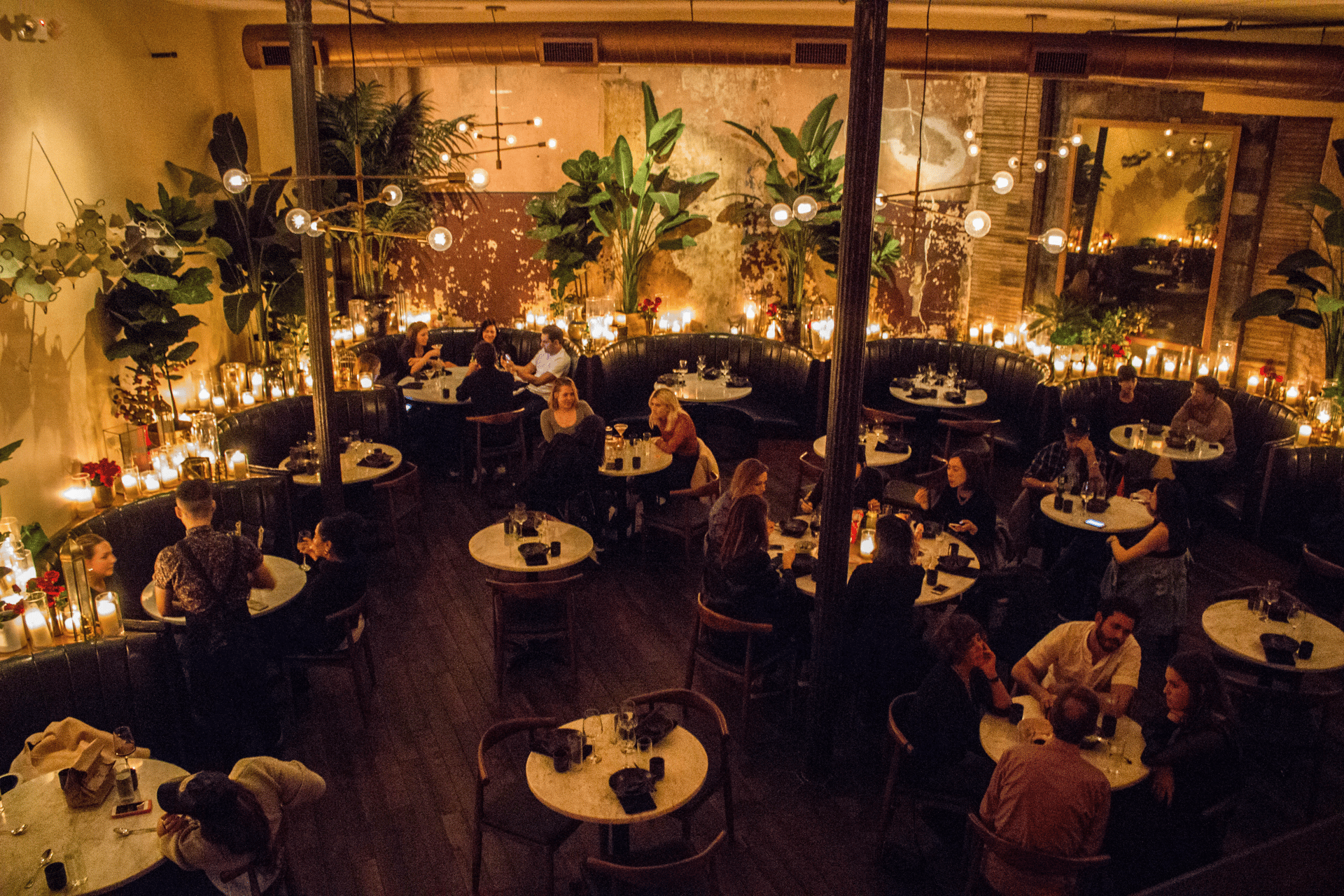
Just a few doors away on Doyers Street, Lei represents another version of contemporary Chinatown.
The intimate wine bar pairs an unusually thoughtful wine collection with modern Chinese cooking, served in a room small enough that the entire experience feels personal.
It is especially good when you want dinner to feel sophisticated without becoming formal — a bottle of wine, several plates for the table and enough time to stay awhile.
Potluck Club on Chrystie Street brings a younger-generation perspective to Cantonese American cooking.
Founded by friends with deep connections to Chinatown, the restaurant draws on the food, films and memories they grew up with, translating them into a lively contemporary dining room filled with references to Hong Kong cinema.
The menu is made for sharing, and the atmosphere feels celebratory without becoming overly polished.
It is one of the places that best captures how Chinatown’s restaurant scene can move forward while remaining connected to the community around it.
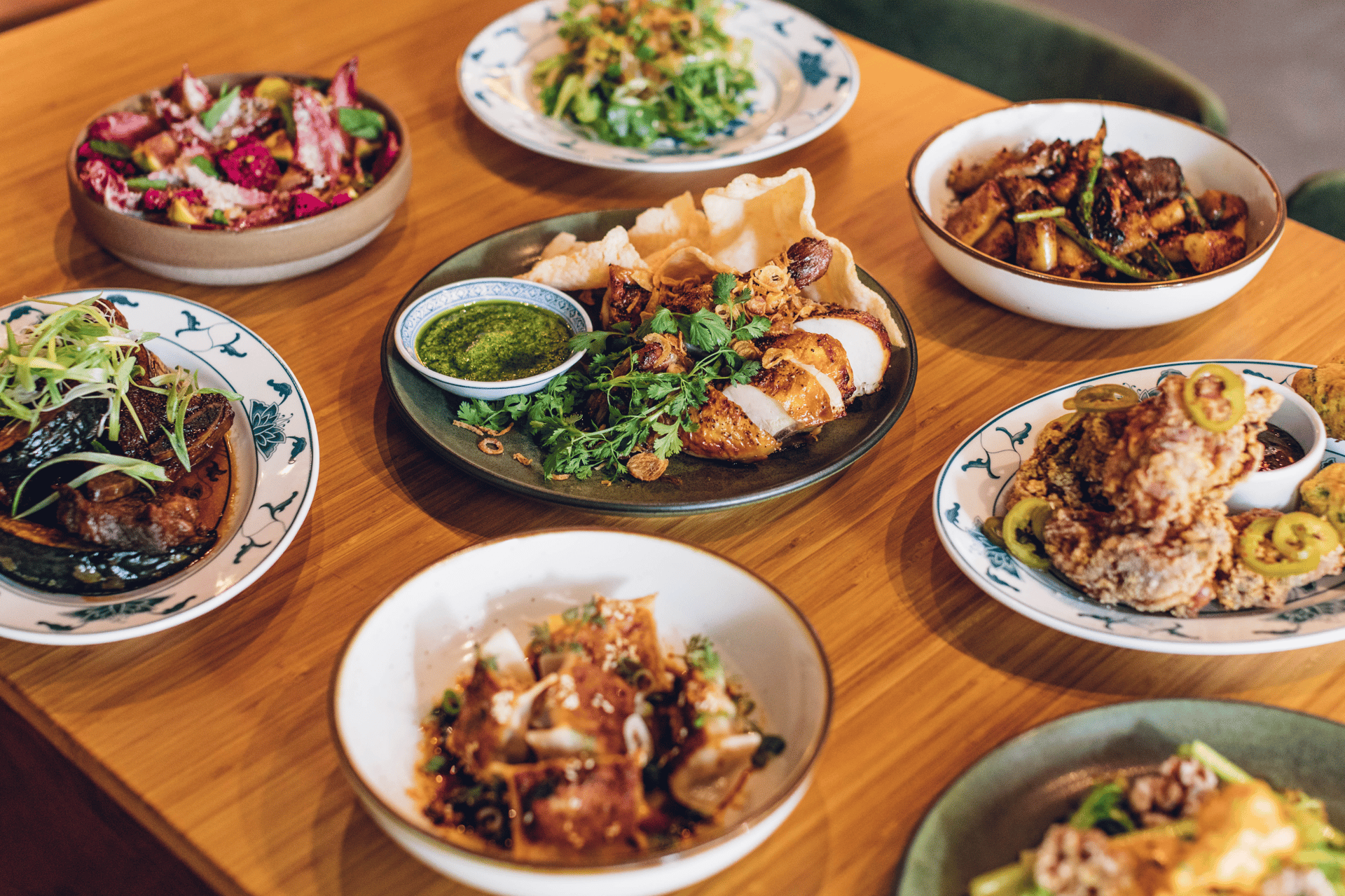
For something more traditional but still polished, Hwa Yuan on East Broadway is worth knowing.
The restaurant traces its history to the original Hwa Yuan, whose chef Yu Fa Tang helped make cold sesame noodles a New York favorite decades ago.
Today, the restaurant spans several floors and serves Sichuan cooking in a setting that works equally well for a dinner for two or a larger family gathering.
It feels like a bridge between different eras of Chinatown dining.
Uncle Lou on Mulberry Street is another restaurant built around that connection between generations.
Owner Louis Wong created the restaurant as a celebration of the Cantonese and Toisanese food he grew up with, alongside dishes familiar to generations of Chinese Americans raised in New York.
The menu is intentionally broad and particularly good for a table willing to order family-style.
It feels warm, welcoming and very much like a restaurant designed to belong to the neighborhood rather than simply exist within it.
Few places are as visually associated with Chinatown as Nom Wah Tea Parlor.
The Doyers Street institution first opened in 1920 as a bakery and tea parlor and later became known for dim sum, buns, dumplings and tea.
The red booths, historic storefront and bend of Doyers Street outside are part of the experience.
Come for lunch, order several things for the table and allow yourself to enjoy it for what it is: a piece of Chinatown restaurant history that is still very much alive.
Chinatown’s history is not confined to one museum.
It lives in its streets, buildings, family associations, libraries, temples, restaurants and businesses. Still, a few places offer particularly good context for understanding how the neighborhood developed.
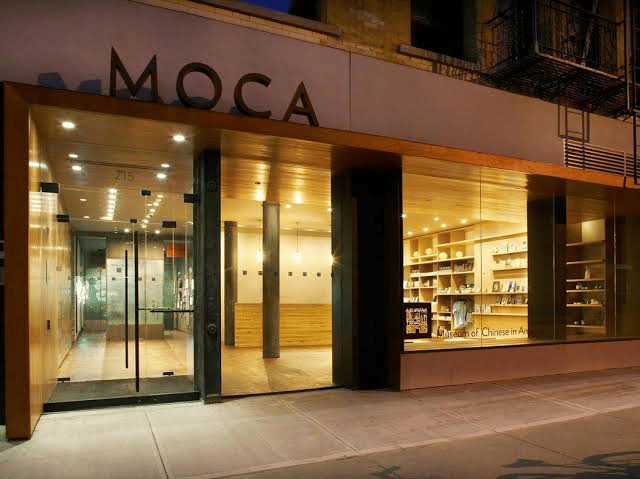
The Museum of Chinese in America is the place to begin.
Located on Centre Street, the museum explores Chinese American history through exhibitions, objects, photographs, oral histories and archival material.
Its collections place Chinatown within a much broader story of immigration, exclusion, identity, family and Chinese American life across the United States.
Spend time here before walking the neighborhood and many of the streets outside begin to look different.
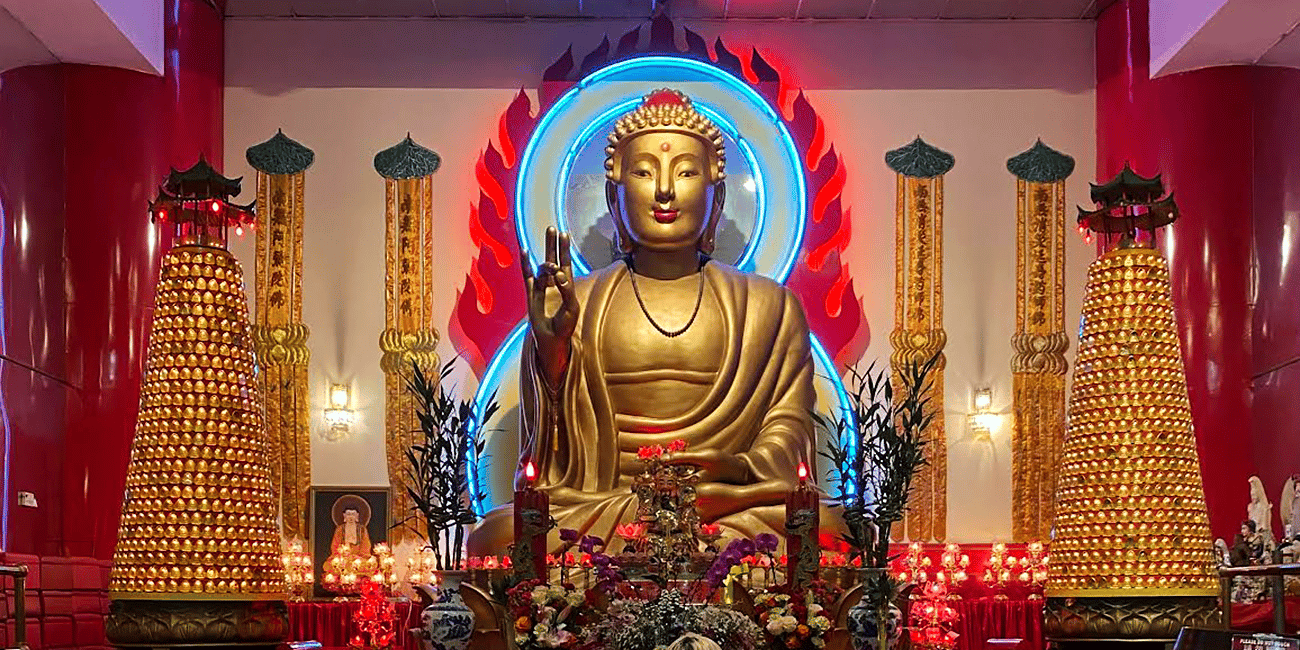
At the eastern gateway to Chinatown on Canal Street, Mahayana Buddhist Temple offers a quieter experience than the streets surrounding it.
The temple serves an active Buddhist community and welcomes visitors into a space centered around worship, teaching and cultural programs.
Its location beside the Manhattan Bridge makes the contrast especially striking: one of the neighborhood’s busiest intersections outside, and an entirely different atmosphere once you step in.
The Chatham Square branch of The New York Public Library has served the neighborhood for more than a century.
Opened in 1903, the McKim, Mead & White building has maintained a Chinese-language circulating collection since the early 20th century and today remains an important community resource.
It is less of a tourist destination than many places on this list, which is precisely why it belongs here. Chinatown is not simply somewhere to visit — it is a neighborhood where people live, study, work and gather.
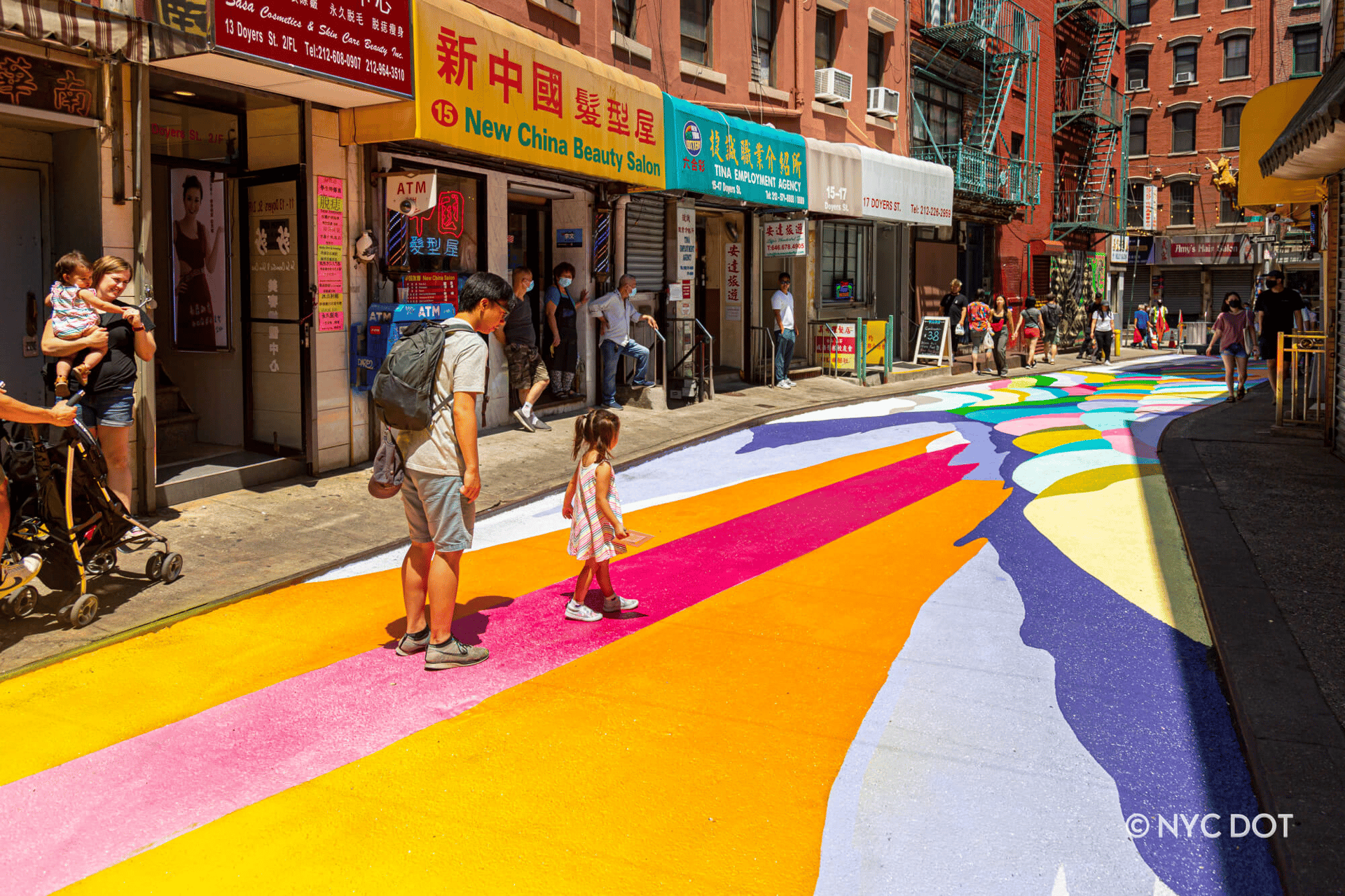
Doyers Street may be only one short block, but few streets carry as much Chinatown history.
Its unusual curve leads between Pell Street and the Bowery, passing restaurants, businesses and the former Chinese Theatre at 5 Doyers Street.
Today, the street is pedestrian-friendly and often filled with outdoor tables and public art, making it one of the best places to see how historic Chinatown and contemporary downtown Manhattan overlap.
Walk it slowly.
For cocktails, Opera House on Doyers Street is our pick.
Opened beneath Chinese Tuxedo in the historic 5 Doyers Street building, the bar takes inspiration from the Chinese Theatre that once operated at the address.
The room is dramatic and intimate, while the cocktail menu draws its names and inspiration from Chinese opera and classical stories.
It is a particularly good way to end a Chinatown dinner — atmospheric enough to feel like a destination, but connected closely enough to the building and neighborhood that the concept feels considered rather than decorative.
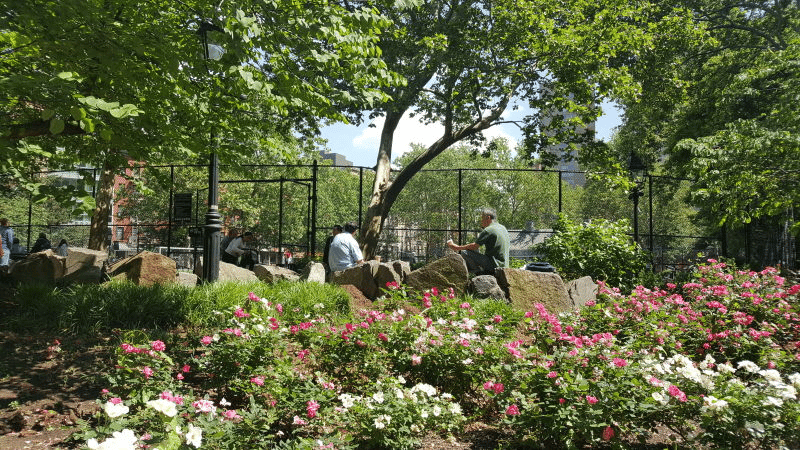
Columbus Park is one of the most important places for understanding daily life in Chinatown.
The park sits between Mulberry, Baxter, Bayard and Worth Streets and functions as a true neighborhood gathering place.
On any given day, you may find groups playing cards and traditional games, people practicing tai chi, musicians performing or families simply sitting together beneath the trees.
The appeal is not an elaborate landscape or a long list of attractions. It is watching a public space being genuinely used.
At Chinatown’s eastern edge, the Manhattan Bridge creates one of the neighborhood’s most dramatic urban moments.
The approach around Canal Street, Bowery and Chatham Square is busy and a little chaotic, but that is part of its character.
For a longer walk, take the pedestrian path across the bridge toward Brooklyn. As you rise above the streets, the scale of Chinatown and Lower Manhattan begins to change beneath you.
It is one of the best ways to understand just how tightly this neighborhood is woven into the rest of downtown.
Chinatown is a neighborhood where taking the longer route is almost always the better choice.
Mott Street is the obvious starting point, particularly between Canal Street and Chatham Square, where restaurants, bakeries, tea shops and markets create the neighborhood’s most recognizable streetscape.
Pell Street feels even more intimate, with narrow sidewalks, historic buildings and restaurants packed into a short block.
Doyers Street bends away from the grid entirely, while Bayard Street is particularly good for food, bakeries and everyday neighborhood activity.
Farther east, East Broadway reveals another side of Chinatown, with restaurants, community institutions and residential buildings that feel more local and less oriented toward visitors.
Do not worry too much about seeing everything. The neighborhood is compact enough that getting slightly lost is usually the better itinerary.
Residentially, Chinatown feels unlike many of Manhattan’s more uniform neighborhoods.
Much of the historic core is defined by tenement buildings and prewar walk-ups, often with apartments above active ground-floor businesses. The result is a streetscape where residential and commercial life are unusually intertwined.
Many buildings have relatively modest footprints and older layouts, but they offer something that newer residential neighborhoods cannot easily reproduce: direct connection to streets with generations of history and an established network of local businesses.
There are also loft buildings, converted commercial properties and more contemporary condominiums throughout Chinatown and along its edges, particularly around Canal Street, the Bowery and the streets approaching the Lower East Side and Civic Center.
What ties these different types of housing together is life outside the apartment. Markets, restaurants, bakeries, parks, cultural institutions and multiple subway lines are all packed into a remarkably walkable section of Lower Manhattan.
Chinatown real estate reflects the neighborhood’s long immigrant, commercial and residential history.
Historic tenement buildings remain one of the defining property types throughout the neighborhood. Typically built during the 19th and early 20th centuries, many have smaller apartments above commercial storefronts, creating the mixed-use character that still defines streets such as Mott, Pell and Bayard.
Prewar walk-ups and older mixed-use buildings make up another significant part of the housing stock, while former commercial and loft buildings offer larger-scale spaces and more unconventional layouts in certain parts of the neighborhood.
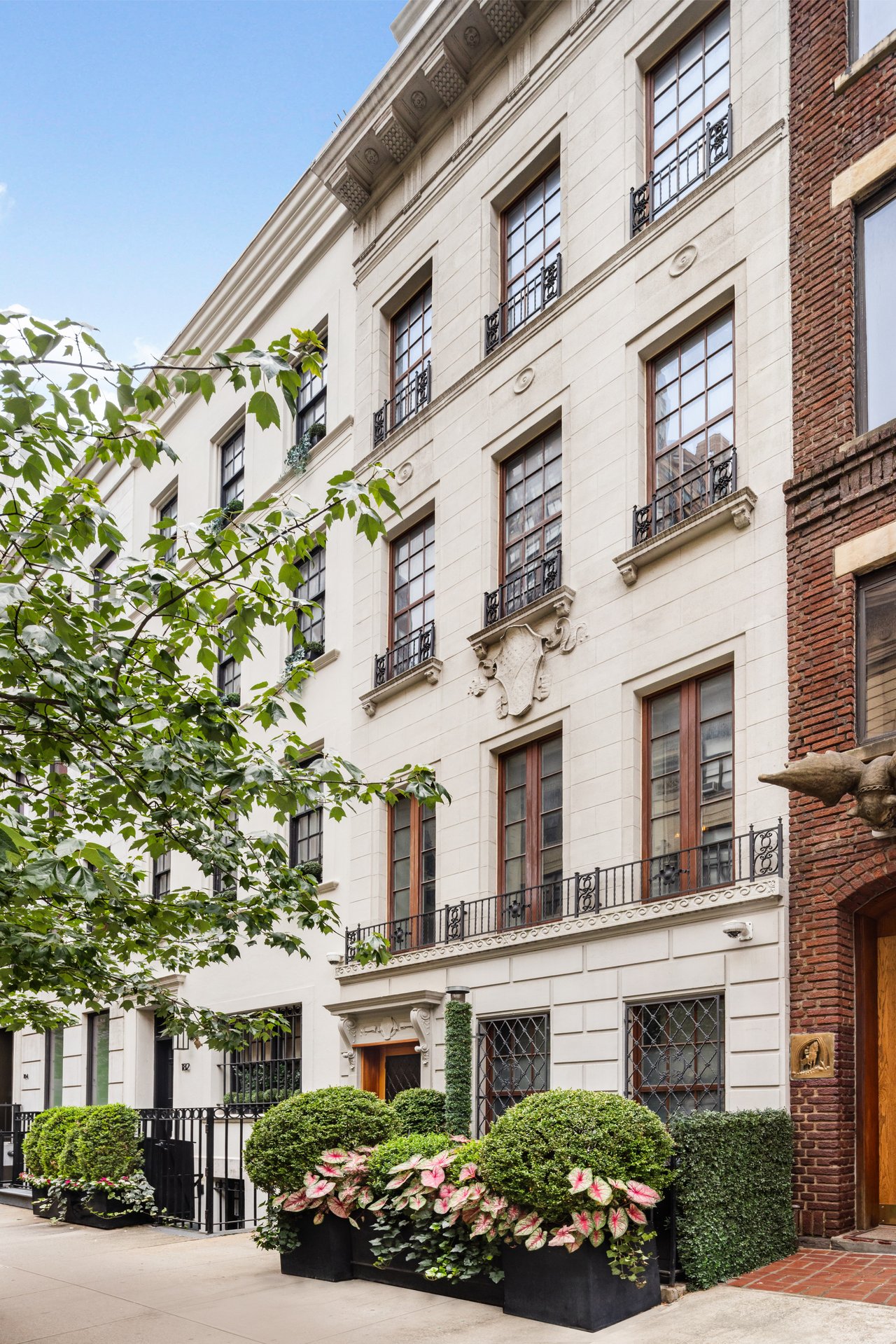
Newer condominium development has gradually introduced a different residential option, particularly along Chinatown’s wider streets and around its outer edges. These properties are more likely to offer elevators, larger windows, contemporary finishes, private outdoor space and modern amenity packages.
The neighborhood also sits beside several very different residential districts — SoHo, the Lower East Side, Two Bridges and the Civic Center — which helps explain the variety of architecture found within only a few blocks.
From historic Chinatown walk-ups and mixed-use tenements to loft conversions and contemporary condominiums, the neighborhood offers a residential landscape as layered as its history.
Whether you are drawn to a historic walk-up in the heart of the neighborhood, a loft-style residence or a contemporary condominium with modern amenities, explore what is currently available across Chinatown.
10,751 people live in Chinatown, where the median age is 48 and the average individual income is $51,726. Data provided by the U.S. Census Bureau.
Total Population
Median Age
Population Density
Average individual Income
There's plenty to do around Chinatown, including shopping, dining, nightlife, parks, and more. Data provided by Walk Score and Yelp.
Explore popular things to do in the area, including Tienley Co, Bow Ding Seafood, and East Broadway Gourmet.
| Name | Category | Distance | Reviews |
Ratings by
Yelp
|
|---|---|---|---|---|
| Dining | 0.03 miles | 1 review | 5/5 stars | |
| Dining | 0.1 miles | 0 reviews | 0/5 stars | |
| Dining | 0.13 miles | 0 reviews | 0/5 stars | |
| Dining | 0.14 miles | 0 reviews | 0/5 stars | |
| Dining | 0.24 miles | 0 reviews | 0/5 stars | |
|
|
||||
|
|
||||
|
|
||||
|
|
||||
|
|
||||
|
|
Chinatown has 5,345 households, with an average household size of 2. Data provided by the U.S. Census Bureau. Here’s what the people living in Chinatown do for work — and how long it takes them to get there. Data provided by the U.S. Census Bureau. 10,751 people call Chinatown home. The population density is 122,878 and the largest age group is Data provided by the U.S. Census Bureau.
Total Population
Population Density Population Density This is the number of people per square mile in a neighborhood.
Median Age
Men vs Women
Population by Age Group
0-9 Years
10-17 Years
18-24 Years
25-64 Years
65-74 Years
75+ Years
Education Level
Total Households
Average Household Size
Average individual Income
Households with Children
With Children:
Without Children:
Blue vs White Collar Workers
Blue Collar:
White Collar:
590 Madison Ave, Floor 8 New York, NY10022
590 Madison Ave, Floor 8 New York, NY10022
