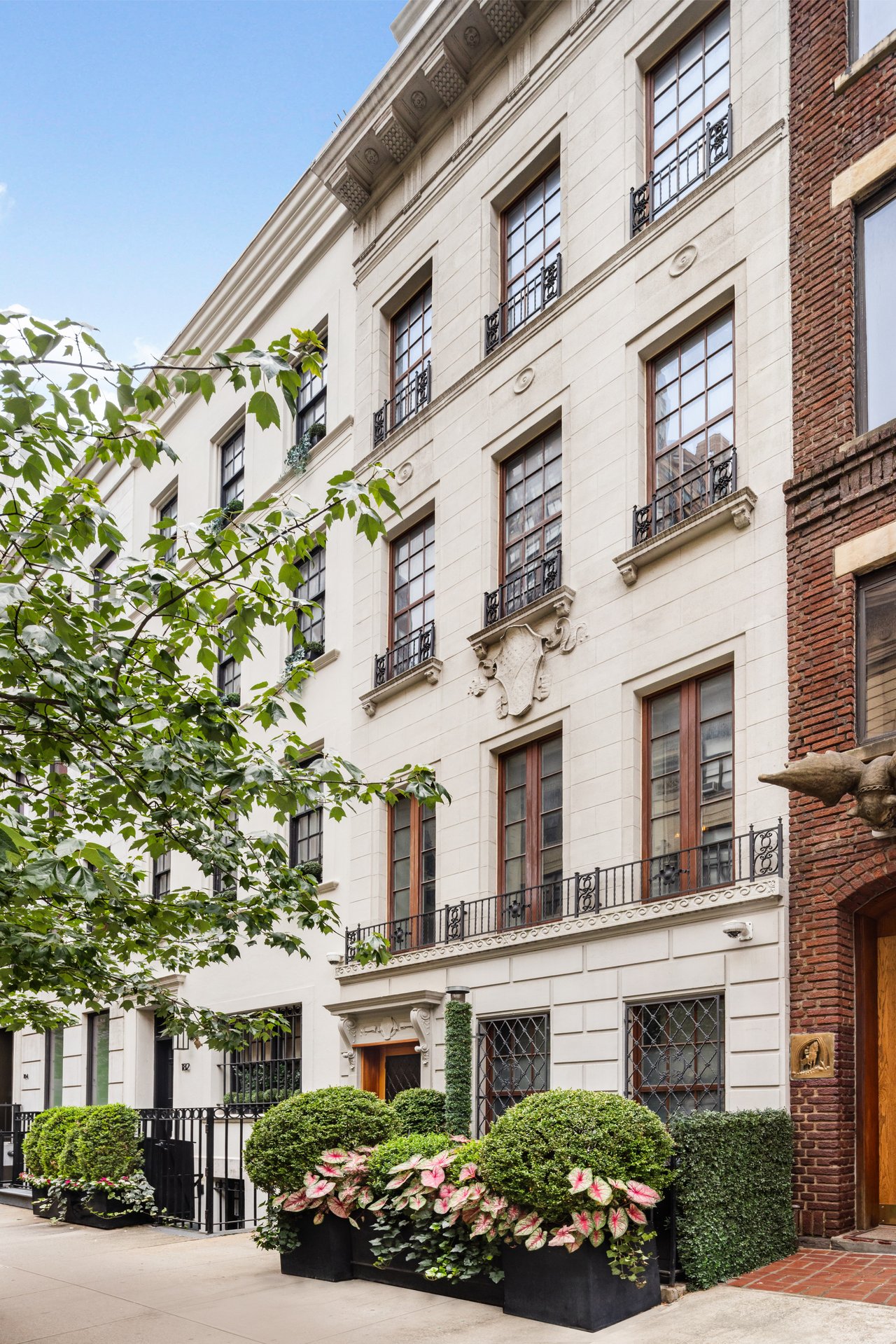
We price from the building and the line, not the neighborhood average. That means recent sales in the same building and comparable lines, adjusted for floor, light, views, layout and condition, then tested against what is competing for the same buyer today. The strongest buyers see a listing in its first weeks, so the opening price matters most.
Related: How to price a luxury apartment in Manhattan
Spring (late January through June) and early fall (September to mid-November) bring the most buyers. At the top of the market, readiness matters more than the calendar: buyers at $4 million and above transact year-round, and a well-prepared listing in a quieter month faces less competition. We also plan around the board calendar, since co-op boards may now pause for a summer recess.
Plan on four to six months from launch to closing. StreetEasy’s median days on market for Manhattan was 115 in September 2026, and closing typically takes another 30 to 60 days for a condo and 60 to 90 for a co-op, including board approval. Getting the price right in the first two weeks is the biggest variable you control.
Most sellers should budget 7% to 10% of the price. The main items are the brokerage commission, the NYC transfer tax (1.425% above $500,000), the New York State transfer tax (0.65% at $3 million and up in NYC, 0.4% below), a co-op flip tax where one applies, and attorney and managing agent fees. We give you fee estimates before you list.
A flip tax is a transfer fee some co-ops charge when an apartment sells, and the seller customarily pays it. However, this is negotiable. Each building sets its own formula: a percentage of the price, a flat fee or an amount per share. It sits in the proprietary lease or house rules, and we confirm it before pricing because it changes your net.
Yes, for the better. Under Local Law 58, in effect since July 28, 2026, boards in co-ops with more than 10 units must tell your buyer within 15 days whether the application is complete, then decide within 45 days, with one 14-day extension. A complete package now moves on a predictable clock, so we build it with the buyer’s broker before it is submitted.
Related: Positioning an Upper East Side co-op for today’s buyers
Through June 2028, co-op and condo units with a Department of Finance market value of $1 million or more that are no one’s primary residence owe 4% to 6.5% of that value each year. One- to three-family homes are covered from $5 million. The first bills are due January 1, 2027. Your real choice is to hold, lease to a full-time tenant or sell, and the math differs by building.
Related: The pied-à-terre tax: hold, rent or sell
Rarely renovate; always prepare. Buyers at this level usually want to put their own stamp on kitchens and baths, so major work seldom earns back its cost. Paint, lighting, repairs, edited furnishings and professional photography do. For a vacant apartment, virtual staging shows scale and possibility for a fraction of the cost of physical staging.
It depends on your timeline. A quiet, off-market approach suits sellers who value privacy and accept a market price, and it lets us test demand with qualified buyers first. Broad exposure usually produces the strongest price, because competition sets value. A common path is a short private phase, then a full launch if the right buyer has not emerged.
Yes. Your attorney can close under a power of attorney, so you do not need to be in New York. Foreign sellers should plan for FIRPTA: the buyer generally withholds 15% of the gross price for the IRS at closing, with lower rates for some residences under $1 million. An IRS withholding certificate can reduce it, so start that application early.
Usually, on the gain above your purchase price plus improvements and selling costs. If the home was your primary residence for two of the last five years, up to $250,000 of gain ($500,000 for married couples filing jointly) can be excluded. The rest is taxed federally and by New York State, and by the city if you are a resident. Have your accountant model it before you list.
Look for recent sales in your building or its direct competitors, a pricing case built on evidence rather than flattery, and a buyer network that reaches beyond the listing portals. Ask how the first 30 days will run, because that window sets the result. Steven Cohen has sold more than $2.45 billion of New York real estate over 26 years.
Buy a condo for flexibility and a co-op for value and character. Condos allow higher financing, ownership through an LLC or trust, and leasing with fewer restrictions, which suits pied-à-terre and international buyers. Co-ops hold much of Manhattan’s prewar housing, including many of its most distinguished buildings, generally trade at lower prices per square foot, and require board approval.
Related: Co-op vs. condo: pros and cons
The largest items are the mansion tax (1% to 3.9% of the price from $1 million), the mortgage recording tax on condo loans (1.925% of loans of $500,000 or more; co-ops are exempt), title insurance on condos, and attorney and bank fees. In a new development, you usually also pay the seller’s transfer taxes, about 2.075% at $3 million and up. We prepare a line-by-line estimate before you bid.
It is a one-time New York State tax the buyer pays on residential purchases of $1 million or more, charged on the full price. The rate steps up with price: 1% from $1 million, 1.25% from $2 million, 1.5% from $3 million, 2.25% from $5 million, 3.25% from $10 million, 3.5% from $15 million, 3.75% from $20 million and 3.9% from $25 million. Co-ops and condos are taxed alike.
About two months from a complete package. Under Local Law 58, in effect since July 28, 2026, boards in co-ops with more than 10 units must confirm within 15 days whether your application is complete, then decide within 45 days, with one 14-day extension and an optional summer recess. Boards can still decline without giving a reason, so the package and interview still matter.
Related: Co-op board package basics
More than the down payment. Most co-ops require at least 20% down; stricter buildings ask for 30% to 50%, and some of the most selective expect all cash. Boards also look for a debt-to-income ratio around 25% to 30% and post-closing liquidity, often up to two years of housing costs, held in cash or securities. Retirement accounts and real estate may not count. We match buyers to buildings whose standards they meet before they fall for an apartment.
In a condo, usually yes; in a co-op, rarely. Since March 1, 2026, all-cash purchases of residential property by an LLC, corporation or trust must be reported to FinCEN by the closing agent, including who owns the entity. Entities can still help with liability and estate planning, but the privacy they add is now limited, so decide with your attorney before you sign.
Yes, most easily in a condo; many co-ops limit or prohibit pieds-à-terre. Budget for the new surcharge: through June 2028, a co-op or condo that is no one’s primary residence owes 4% to 6.5% a year of its Department of Finance market value once that value reaches $1 million, and that value is often well below the purchase price. Leasing to a full-time tenant can qualify for an exemption.
Related: The full-time tenant exemption
The building’s finances as closely as the apartment. We review two years of board minutes, financial statements, the reserve fund, any underlying mortgage, planned assessments, sublet and pied-à-terre rules, and the flip tax. In buildings over 25,000 square feet, ask about Local Law 97: emissions limits tighten in 2030, fines run $268 per metric ton over the cap, and some boards fund upgrades through assessments.
Usually the seller, through the listing commission, but it is no longer automatic. Since REBNY’s rule change on January 1, 2024, the seller makes a separate offer to the buyer’s broker, and if there is none or it is low, your broker may negotiate a fee with you. Settle how your broker is paid at the first meeting.
Through a broker owners trust with private listings. At the high end, some sellers show their homes quietly first, to protect privacy or test a price, and some of those homes never reach the portals. Tell us your criteria and we will bring you private and coming-soon listings as they surface, and approach owners directly when a building fits.
You trade a board for full responsibility. There is no co-op approval, but the roof, facade, mechanical systems and elevator are yours, and many Manhattan townhouses sit in historic districts where exterior changes need Landmarks Preservation Commission approval. Budget for an architect’s and engineer’s inspection, and note that the pied-à-terre surcharge covers one- to three-family homes from $5 million.
Related: Guide to NYC townhouses
For a buyer with a long horizon, a tight market rewards preparation more than waiting. In the third quarter of 2026, Manhattan co-op and condo deals rose 8% from a year earlier while listings fell 10.7%, and luxury listings fell 14.1% (Miller Samuel). Well-priced apartments in strong buildings are moving; listings that have sat are where there is room to negotiate.
Modest, so underwrite it net. For example, a $3 million condo renting for $11,000 a month grosses 4.4%; after $3,500 a month in common charges and taxes, the net is about 3% before vacancy, insurance and leasing costs. The case for Manhattan rests on scarcity, steady demand and a dollar asset as much as on income. We underwrite each building with its actual charges and recent leases.
A condo, in almost every case. Condos generally let owners lease, subject to building rules and the board’s right of first refusal, and they allow LLC ownership. Most co-ops restrict subletting, often to limited periods after you have lived there, and some prohibit it, which makes them a poor fit for a rental strategy.
Not as a whole-apartment Airbnb. Under Local Law 18, stays under 30 days are legal only when the host lives in the home and is present, with no more than two guests, and the host must register with the city. Most condo and co-op bylaws prohibit short stays anyway, so the realistic model is leases of 30 days or more, ideally a year.
Not if a full-time tenant lives there as a primary residence, but the exemption is not automatic. Through June 2028, co-op and condo units that are no one’s primary residence owe 4% to 6.5% a year of their Department of Finance market value once that value reaches $1 million. Keep a bona fide lease on file and claim the exemption with the Department of Finance.
Related: The full-time tenant exemption
Often, for a condo investment, with eyes open on reporting. Since March 1, 2026, all-cash residential purchases by entities and trusts are reported to FinCEN along with the people behind them. LLCs formed outside the U.S. and registered in New York must also file ownership reports with the state, by December 31, 2026 if they registered earlier. Structure it with your attorney and accountant before you sign.
Plan for three. Rent is taxed at 30% of the gross (or a lower treaty rate) unless you elect to be taxed on net income, which allows deductions. On a sale, the buyer generally withholds 15% of the gross price under FIRPTA. And the estate of a non-U.S. person must file a U.S. estate tax return once U.S. assets, including New York real estate, exceed $60,000, so ownership structure belongs with a cross-border tax advisor before you buy.
Related: Buying Manhattan real estate as a non-U.S. resident
You do, if you hire one. Under the FARE Act, in effect since June 11, 2025, a broker who represents the landlord or lists the apartment cannot charge the tenant, so leasing commissions are now an owner’s cost. Build it into your yield; in a market this tight, a well-presented apartment leases quickly.
Mostly not. Condo and co-op units are exempt from the Good Cause Eviction law, so renewals are not held to its rent standard. State rules still apply to every lease: a security deposit of no more than one month’s rent, returned within 14 days with an itemized statement, and a background check fee of no more than $20.
It depends on the price you can negotiate. New developments offer modern systems, amenities and sometimes sponsor concessions, but buyers usually pay the sponsor’s transfer taxes and a premium for newness. Resales in established buildings often trade at lower prices per square foot and come with a record of rents, charges and resale values you can study.
The fundamentals favor owners of well-located rentals. Manhattan’s median rent reached a record $5,395 in September 2026 with vacancy at 1.54% (Corcoran), while homes for sale fell 11.7% from a year earlier (StreetEasy). Round-trip transaction costs can exceed 10%, which favors longer holds. We would rather show you the numbers on a specific building than make a market call.
Only if you hire your own broker. Under the FARE Act, in effect since June 11, 2025, a broker who lists the apartment or represents the landlord cannot charge the tenant, and the fees you owe must be disclosed in writing before you sign. If you engage a broker to search for you, you agree on that fee directly.
Most landlords look for annual income of 40 times the monthly rent and strong credit, so a $12,000-a-month apartment calls for about $480,000 a year. A guarantor typically needs around 80 times the rent. Some landlords will also consider substantial liquid assets or an institutional guarantor in place of income.
Yes, with planning. Institutional guarantor companies serve international renters and those without U.S. credit, usually for a fee of roughly one month’s rent. Landlords cannot collect more than one month’s rent as a deposit or advance, so prepaying several months is not an option. An employer letter and proof of assets strengthen the application.
First month’s rent, a security deposit of no more than one month’s rent, and a background check fee of no more than $20. The deposit must be returned within 14 days of move-out, with an itemized statement of any deductions. In a condo or co-op, add the board’s application and move-in fees.
You rent from an individual owner, and the building’s board reviews the lease and your application. Condo rentals often have finer finishes and layouts, but the board process adds paperwork, fees and time. Rental buildings move faster and standardize everything from leases to repairs.
Often not. The law exempts apartments renting above 245% of fair market rent, which under the state’s August 2026 notice means about $6,505 a month for a one-bedroom in New York City, $7,130 for a two-bedroom and $8,928 for a three-bedroom. Condo and co-op units, buildings completed since 2009 and small landlords are also exempt. Ask before you sign, because it affects how much your rent can rise at renewal.
Late fall and winter, when fewer people are moving and landlords have more room to negotiate. Summer brings the most choice and the most competition. In September 2026, Manhattan’s median rent hit a record $5,395 with vacancy at 1.54% (Corcoran), so good apartments move quickly in any season.
Sometimes, more on terms than on price. With vacancy near 1.5%, headline rents are firm, but a longer lease at the same rate, a free month in a new building, upgrades or a flexible move-in date are often possible. Bidding wars still occurred on 16% of new Manhattan leases in September 2026 (Miller Samuel), so a complete application ready on day one is your strongest lever.
Yes, for stays of 30 days or more. New York City bars whole-apartment rentals under 30 days unless the host is present, so furnished and corporate rentals start at one month. Expect a premium over unfurnished rents, and confirm the building allows the lease length you need.
If your time and the right apartment matter more than the fee, yes. Your own broker can hear about apartments before they are widely marketed, knows which buildings are well run, prepares a complete application and negotiates on your behalf. Under the FARE Act you pay that broker only if you engage one, and the fee is agreed up front.
Steven Cohen I October 22, 2026
Steven Cohen I November 4, 2026
Steven Cohen I July 25, 2025
Steven Cohen I March 3, 2025
Steven Cohen I October 23, 2025
Steven Cohen I October 16, 2025