Gramercy Park Neighborhood Guide
Old Manhattan at its most composed: historic townhouses, elegant prewar residences, leafy Irving Place, destination restaurants and one of the city’s most unusual private gardens at its center.
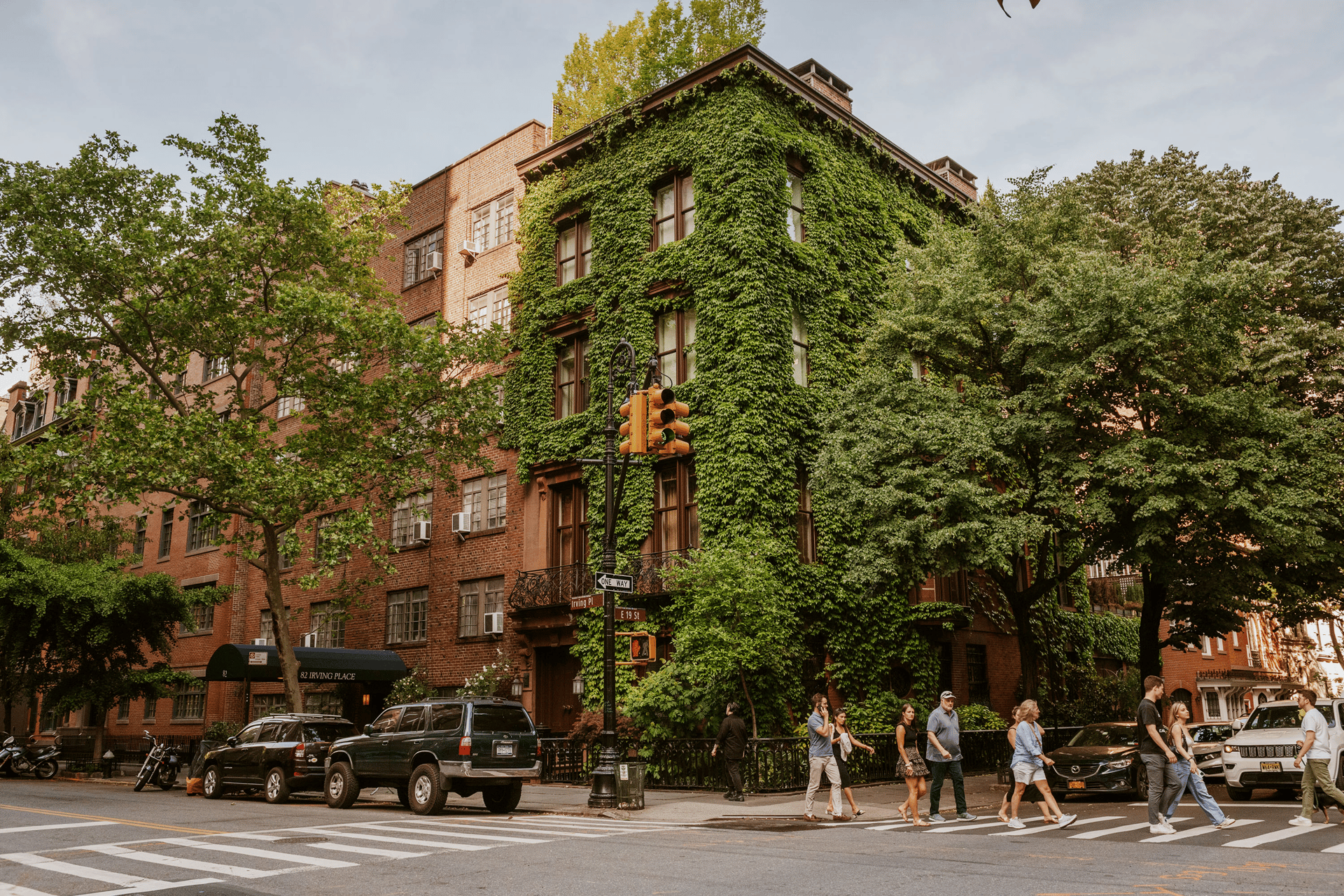
Gramercy Park has a quiet confidence that feels increasingly rare in Manhattan. The neighborhood takes its identity from the gated garden at its center, but its appeal extends well beyond the park itself — onto tree-lined residential streets, past landmark townhouses and private clubs, and along Irving Place, where restaurants and cafés give the area the feeling of a true neighborhood.
It is polished without feeling overly formal. Spend enough time here and you quickly find your own routine: coffee on Irving Place, a walk around the park, lunch somewhere familiar, an afternoon admiring the architecture and dinner at one of the neighborhood’s longtime institutions.
The pace feels noticeably calmer than nearby Union Square or Flatiron, even though both are only minutes away.
What We Love About Gramercy Park
The park is the obvious place to start.
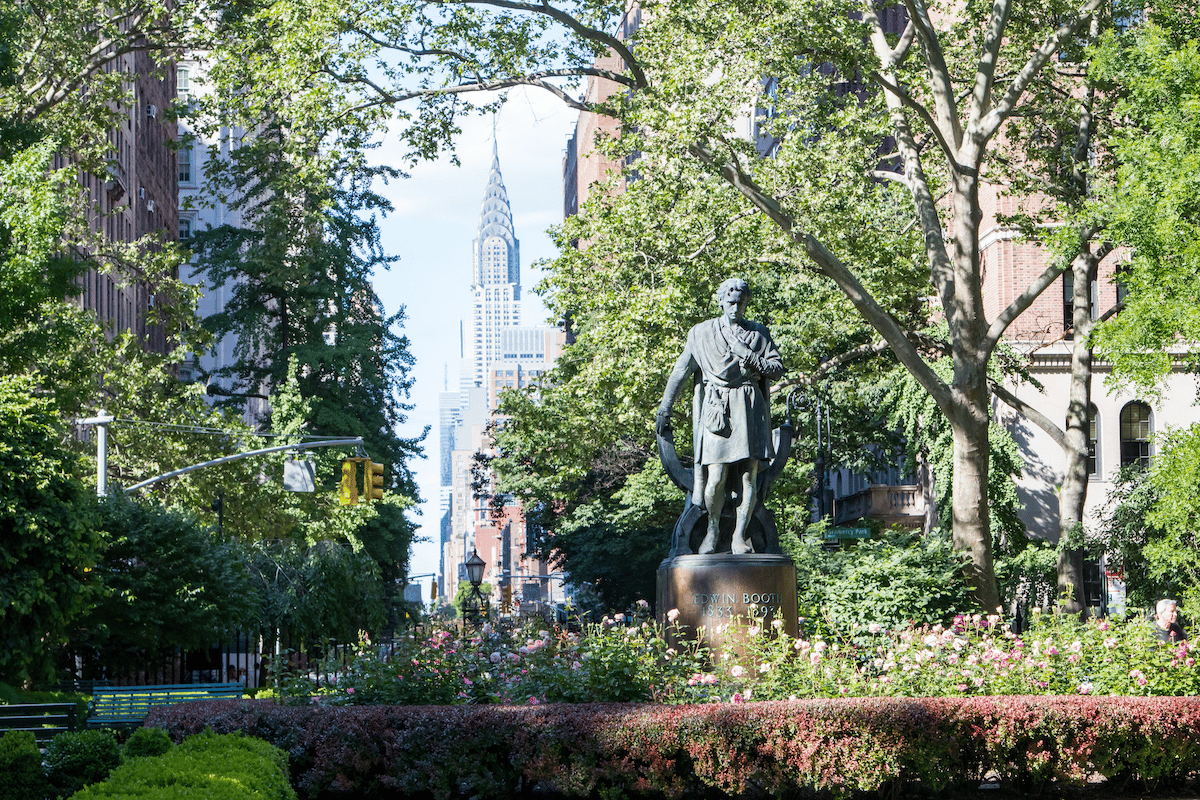
Gramercy Park was conceived in the 19th century as the centerpiece of a carefully planned residential enclave, and the relationship between the garden and the buildings surrounding it remains central to the neighborhood today.
Unlike a typical Manhattan park, Gramercy Park is privately owned and maintained. Access is tied to eligible properties and institutions surrounding the square, with keys managed through those buildings rather than available through general admission.
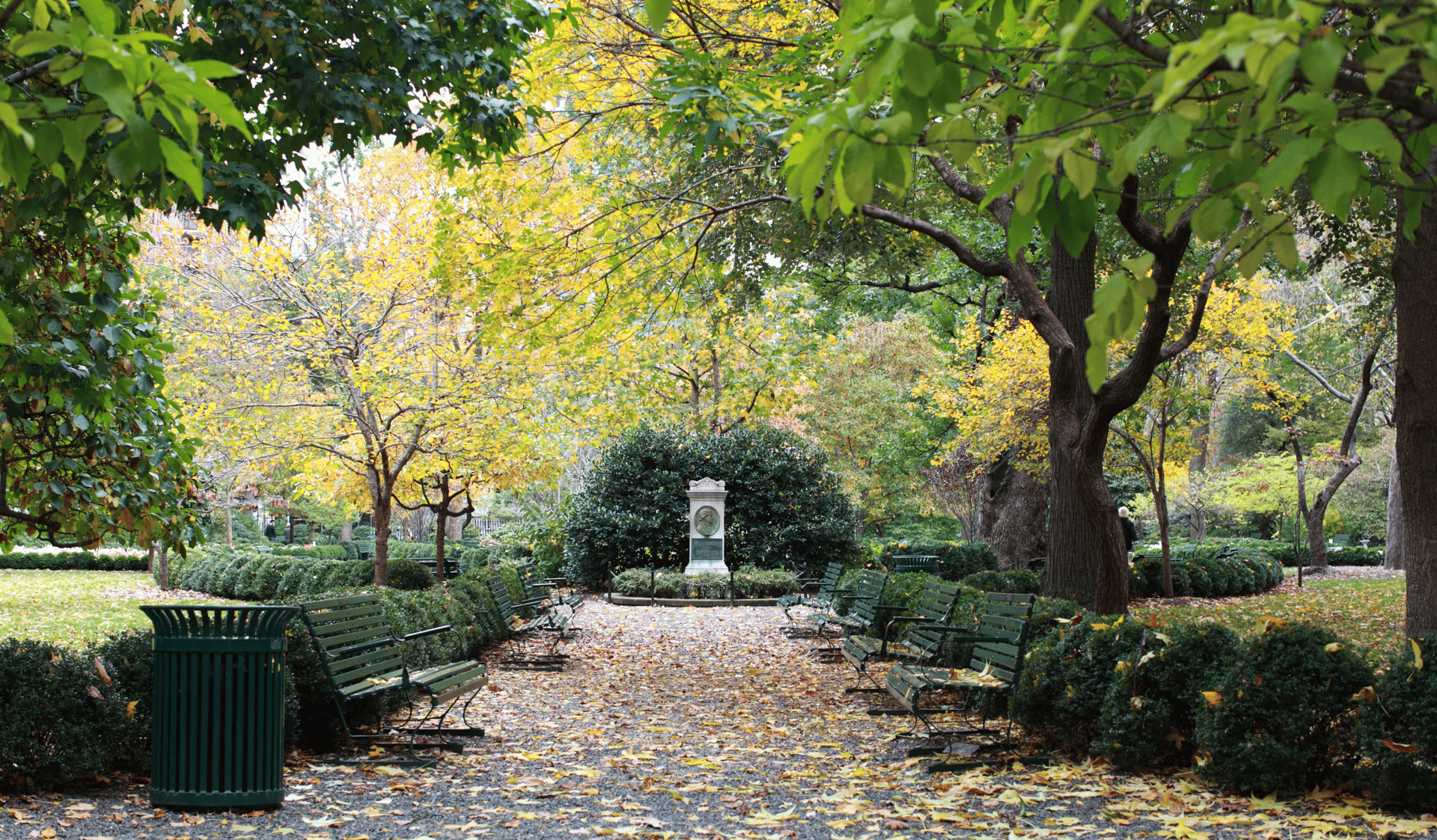
That exclusivity is unusual, but you do not need to enter the gates to appreciate what the park gives the neighborhood. The mature trees, iron fencing and beautifully preserved architecture surrounding it create a sense of enclosure and calm from the public sidewalks outside.
Beyond the park, Irving Place provides the neighborhood’s main rhythm. Cafés, restaurants and historic buildings line a street that feels remarkably intimate despite being only a few blocks from Union Square.
It is this combination of architecture, greenery and genuinely residential streets that makes Gramercy feel so distinct.
A Few of Our Favorite Places
Start with coffee at Irving Farm
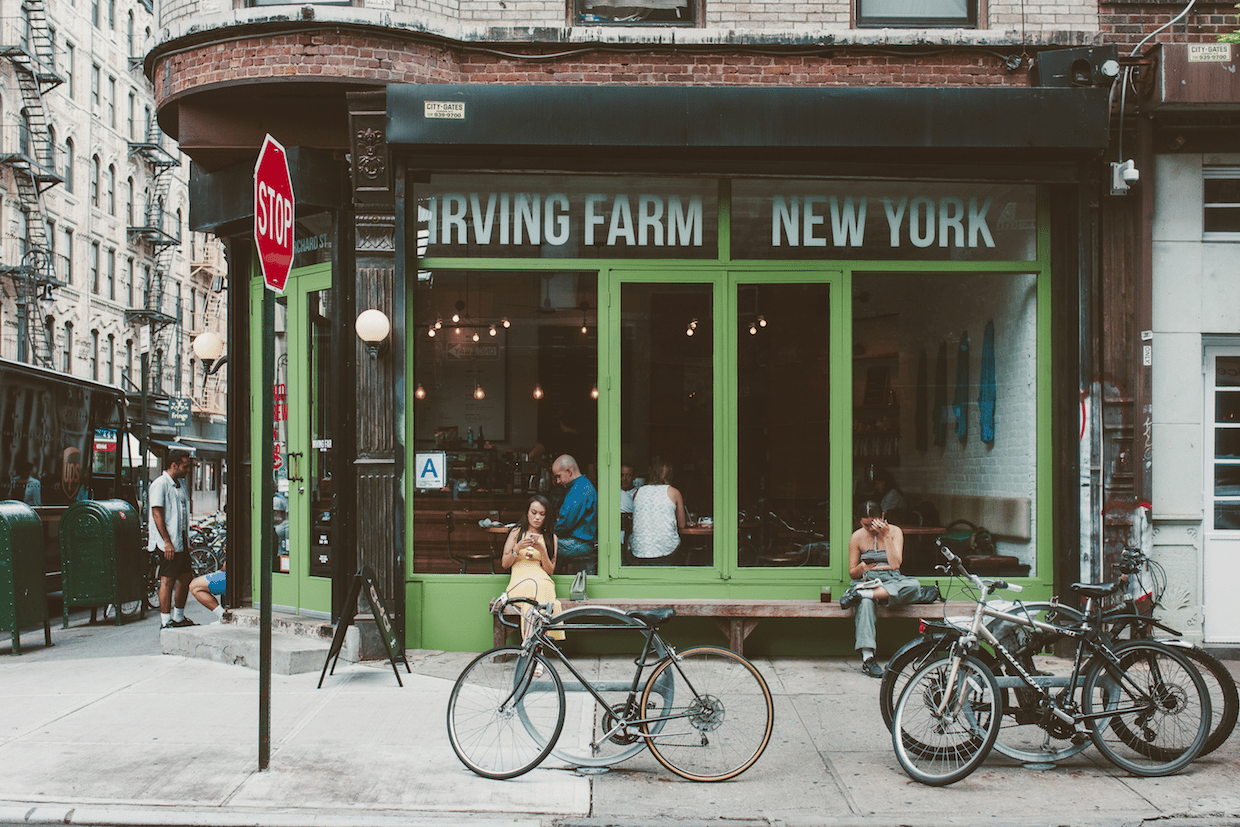
Irving Farm Coffee at 71 Irving Place feels exactly right for the neighborhood.
The cozy café has become a longtime Gramercy fixture, serving espresso, brewed coffee and pastries from a narrow storefront only a few blocks from the park.
It is the kind of place that works best as part of a routine rather than a destination.
Grab a coffee, find a seat if one is free and then take the longer route toward Gramercy Park.
Irving Place is particularly beautiful in the morning before the neighborhood fully wakes up.
Take your time on Irving Place
Irving Place is one of our favorite residential streets in this part of Manhattan.
Beginning near Union Square and running north toward Gramercy Park, it passes restaurants, cafés, landmark buildings and rows of prewar residences beneath mature street trees.
The scale is noticeably smaller than Park Avenue South only a block away.
Walk slowly, turn onto East 18th or 19th Street when something catches your attention and continue around the park before heading back.
This is not a neighborhood that needs an itinerary.
Where We Like to Eat
Gramercy has one of those restaurant scenes that feels remarkably established.
Rather than being defined by a constant cycle of openings, the neighborhood includes dining rooms that have been part of New York for decades alongside newer restaurants that feel carefully integrated into the streets around them.
The result is especially good for dinners that are polished without becoming overly theatrical.
Gramercy Tavern
For a special dinner, Gramercy Tavern remains the neighborhood’s defining restaurant.
Opened in 1994, the landmark restaurant combines warm hospitality with seasonal contemporary American cooking in two distinct spaces: the more casual Tavern and the elegant Dining Room.
Executive chef Michael Anthony’s menus are shaped by relationships with regional farms and producers, allowing the cooking to change naturally throughout the year.
The Dining Room currently holds a Michelin star, but the experience has never depended on formality alone.
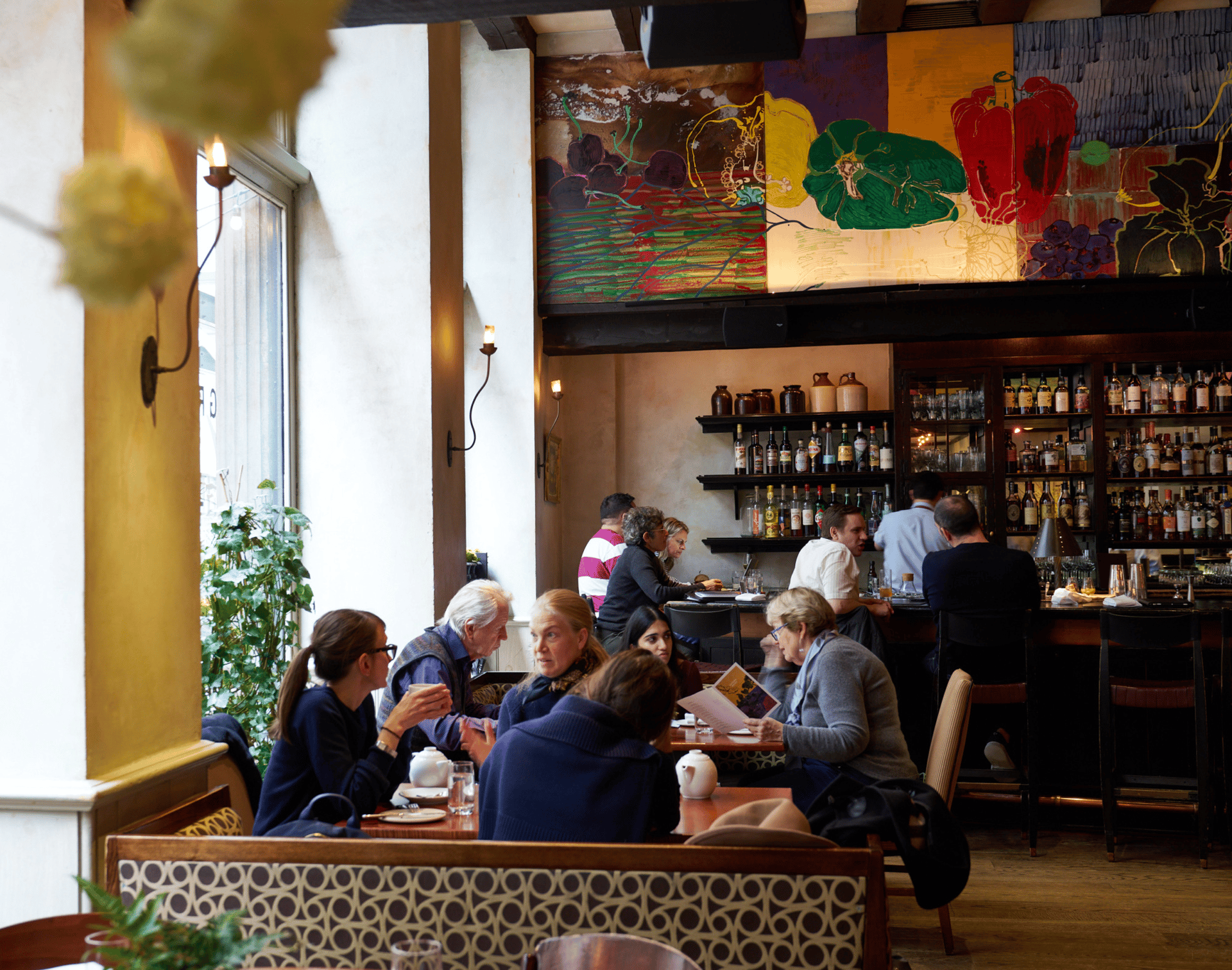
Wood, flowers, artwork and attentive service give the restaurant the feeling of a place that has grown into its surroundings rather than simply occupying them.
For a proper Gramercy evening, this is where we would begin.
Casa Mono
On Irving Place, Casa Mono brings Spanish cooking into one of the neighborhood’s most intimate dining rooms.
The Michelin-starred restaurant draws inspiration from Spain, particularly the cooking of Catalonia and the Costa Brava, with refined small plates designed for sharing.
Seafood, vegetables, meats and an especially thoughtful Spanish wine list give the menu enough depth that dinner can easily turn into a much longer evening than planned.
The room is small, lively and close enough to the kitchen that the energy becomes part of the experience.
It feels sophisticated without losing the casual spirit of tapas.
GupShup
For something more contemporary, GupShup on East 18th Street brings the energy of modern Mumbai to Gramercy.
The menu takes an inventive approach to Indian cooking, balancing familiar flavors with contemporary presentations, shareable plates and a strong cocktail program.
The dining room is colorful and lively, creating a noticeable contrast with the quieter residential streets immediately outside.
It works especially well for a dinner with friends or an evening when you want somewhere with more energy without leaving the neighborhood.
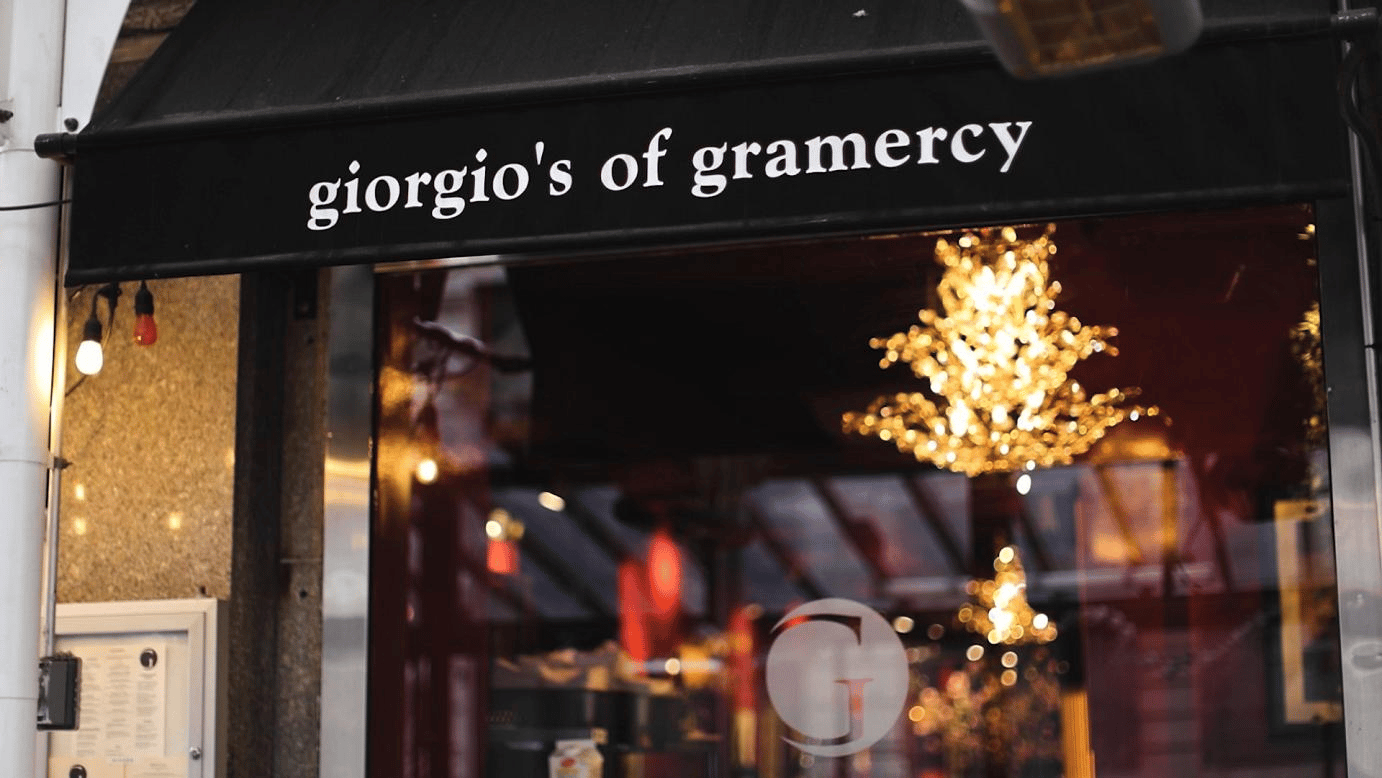
Giorgio’s of Gramercy
Giorgio’s of Gramercy on East 21st Street has the reassuring feel of a restaurant that knows its neighborhood.
Open since 1992, it combines Italian-American cooking with a broader contemporary American menu, moving between handmade pasta, seafood, steaks and familiar seasonal dishes.
The atmosphere is polished but comfortable rather than scene-driven.
It is the kind of place that works for a business lunch, family dinner or an evening when you simply want a reliable neighborhood restaurant.
For something more casual: Friend of a Farmer
Friend of a Farmer has been part of Gramercy since 1986.
The family-owned Irving Place restaurant leans into the feeling of a countryside farmhouse, with rustic interiors, seasonal cooking and menus built around ingredients sourced from regional farms and producers.
Brunch is particularly popular, but the room becomes warmer and quieter in the evening.
Come for pancakes or eggs in the morning, or return later for a relaxed neighborhood dinner.
It is comfortable, familiar and exactly the kind of place that benefits from being around for decades.
History and Culture Around the Park
Gramercy Park is a residential neighborhood, but some of its most important buildings have long been connected to New York’s artistic, literary and cultural life.
Several of those institutions remain clustered directly around the park.
The National Arts Club
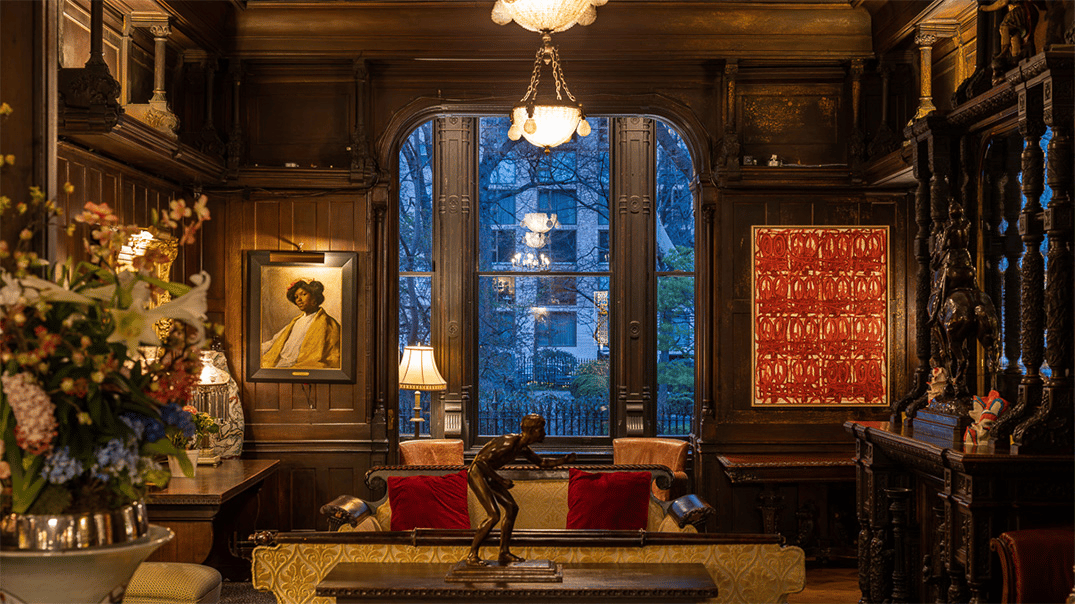
The National Arts Club occupies the extraordinary Samuel Tilden Mansion at 14 and 15 Gramercy Park South.
Founded in 1898 to encourage public interest in the arts, the organization moved into the mansion in 1906.
The building itself is reason enough to stop. Its richly detailed façade, bay windows and decorative stonework reflect a major 19th-century redesign associated with architect Calvert Vaux, while the interiors include elaborate woodwork and stained glass.
Although it is a private membership club, the National Arts Club presents a substantial calendar of exhibitions, lectures, performances and other arts programming that includes events open to the public.
Check what is on before you go.
The Players
Next door at 16 Gramercy Park South, The Players carries another layer of New York cultural history.
Actor Edwin Booth founded the club in 1888 as a gathering place where members of the theatrical profession could meet people from other fields.
Its historic clubhouse remains filled with theatrical art, archives and reminders of generations of performers and writers connected to the institution.
The Players remains a private club, so this is not somewhere to casually wander inside.
But the landmark building and its terrace overlooking Gramercy Park are important parts of the streetscape — and of the neighborhood’s long association with the arts.
Theodore Roosevelt Birthplace
A few blocks west on East 20th Street, the Theodore Roosevelt Birthplace National Historic Site preserves the story of the 26th president’s childhood in Manhattan.
The house is a reconstruction of the brownstone where Roosevelt was born in 1858 and spent the earliest years of his life.
The ground-floor galleries can be explored independently, while the period rooms upstairs are visited on guided tours.
Admission is free.
It is compact enough to combine easily with a longer walk through Gramercy and nearby Flatiron, but interesting enough to deserve more than a quick look.
Pete’s Tavern
Not every piece of neighborhood history needs to be inside a museum.
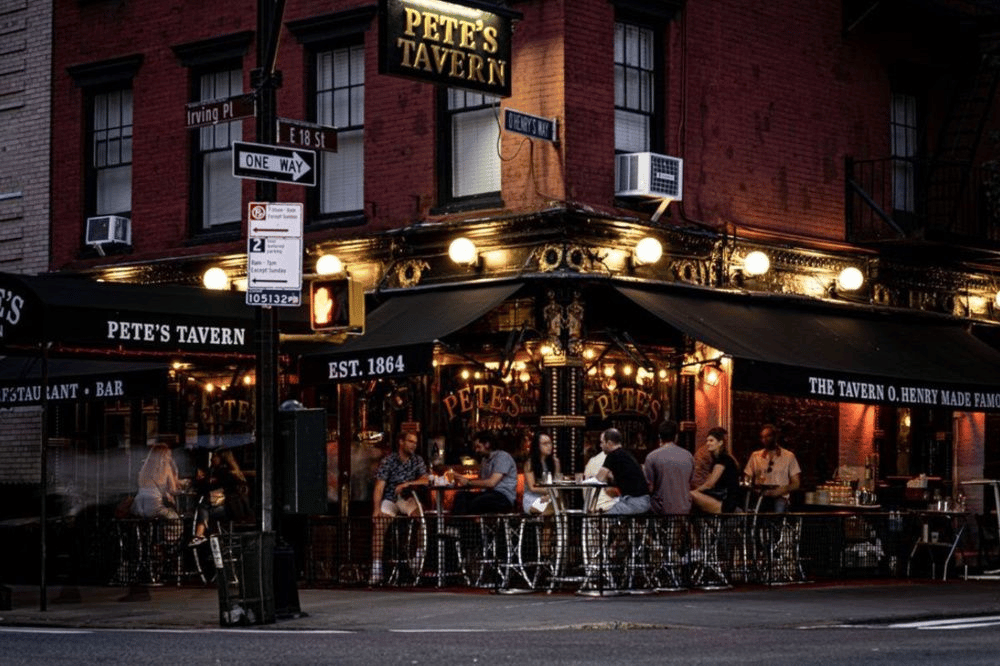
Pete’s Tavern has been serving drinks at the corner of East 18th Street and Irving Place since 1864, making it one of New York’s longest-running taverns.
The dark wood, original bar and old photographs create the kind of atmosphere that would be impossible to manufacture convincingly today.
Writer O. Henry was a neighborhood regular, and the tavern has long been associated with the literary history of Gramercy.
Stop for a drink, look around the room and let the history do most of the work.
When You Want a Drink
Dear Irving
For cocktails, Dear Irving on Irving Place is our pick.
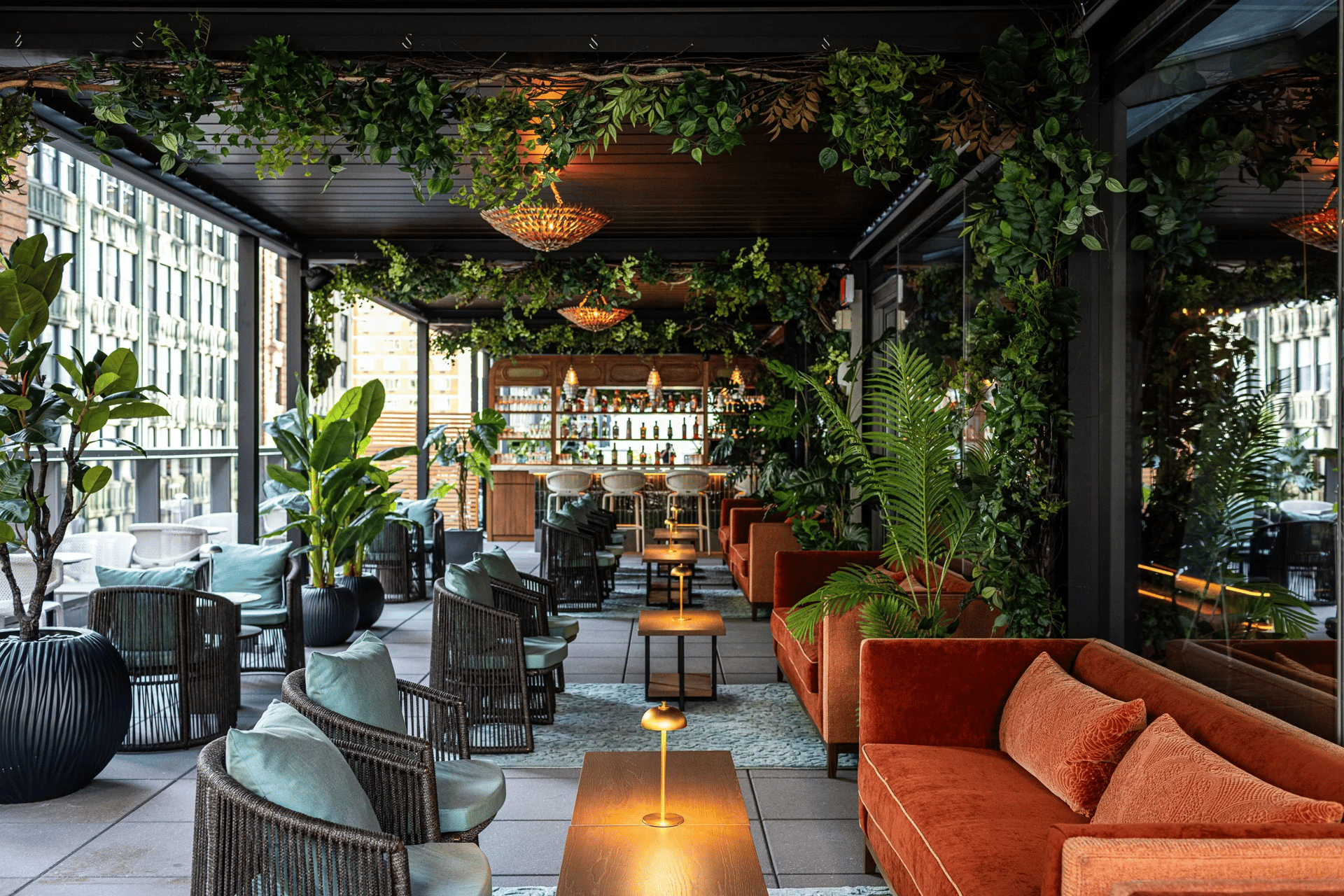
The discreet entrance opens into a collection of richly designed rooms that feel completely removed from the residential street outside.
Velvet seating, low lighting and a serious cocktail program make it particularly well suited to a date night or a proper drink after dinner.
The atmosphere is glamorous without becoming loud, which feels especially appropriate for Gramercy.
Reserve ahead if you want a table later in the evening.
Get Outside
Gramercy Park
The neighborhood’s namesake garden is beautiful precisely because it operates differently from almost every other green space in Manhattan.
Its landscaped paths, mature trees, seasonal plantings and central sculpture create an almost private-square feeling more associated with London than New York.
Access, however, is not automatic.
The park belongs to the surrounding lot-owner properties, and eligible residents, occupants and members of certain institutions enter through arrangements managed by their buildings or organizations. Simply living somewhere in the broader Gramercy neighborhood does not provide a key.
For everyone else, the walk around the perimeter is still worth doing.
The architecture surrounding the park is among the neighborhood’s greatest pleasures.
Stuyvesant Square
When you want a public park, continue a few blocks east to Stuyvesant Square.
The landscaped square sits between East 15th and 17th Streets and is divided by Second Avenue, offering paths, benches, mature trees and a quieter place to sit outside.
Its cast-iron fencing and surrounding historic architecture give it a character that complements Gramercy Park while feeling considerably more open and democratic.
Bring coffee, find a bench and stay awhile.
Streets Worth Wandering
Gramercy rewards slow walking.
Irving Place is the obvious starting point, particularly between East 17th and 20th Streets, where restaurants and cafés occupy the ground floors of handsome residential buildings.
Walk around Gramercy Park South and North to appreciate the mix of townhouses, clubs, institutions and prewar apartment buildings facing the garden.
East 19th Street between Irving Place and Third Avenue is often called the “Block Beautiful,” and it earns the nickname through a particularly attractive collection of historic rowhouses and tree-lined sidewalks.
East 20th and 21st Streets add another layer, with larger apartment buildings and townhouses gradually giving way to the commercial energy of Park Avenue South.
You can cross the entire neighborhood quickly.
The better approach is not to.
Our Gramercy Park Shortlist
- For coffee: Irving Farm Coffee
- For a special dinner: Gramercy Tavern
- For Spanish: Casa Mono
- For modern Indian: GupShup
- For a neighborhood dinner: Giorgio’s of Gramercy
- For brunch: Friend of a Farmer
- For old New York: Pete’s Tavern
- For a cocktail: Dear Irving
- For art and architecture: The National Arts Club
- For theatrical history: The Players
- For American history: Theodore Roosevelt Birthplace
- For architecture: Gramercy Park South
- For a walk: Irving Place and East 19th Street
- For public green space: Stuyvesant Square
Living in Gramercy Park
Residentially, Gramercy Park offers one of Manhattan’s most established and architecturally cohesive environments.
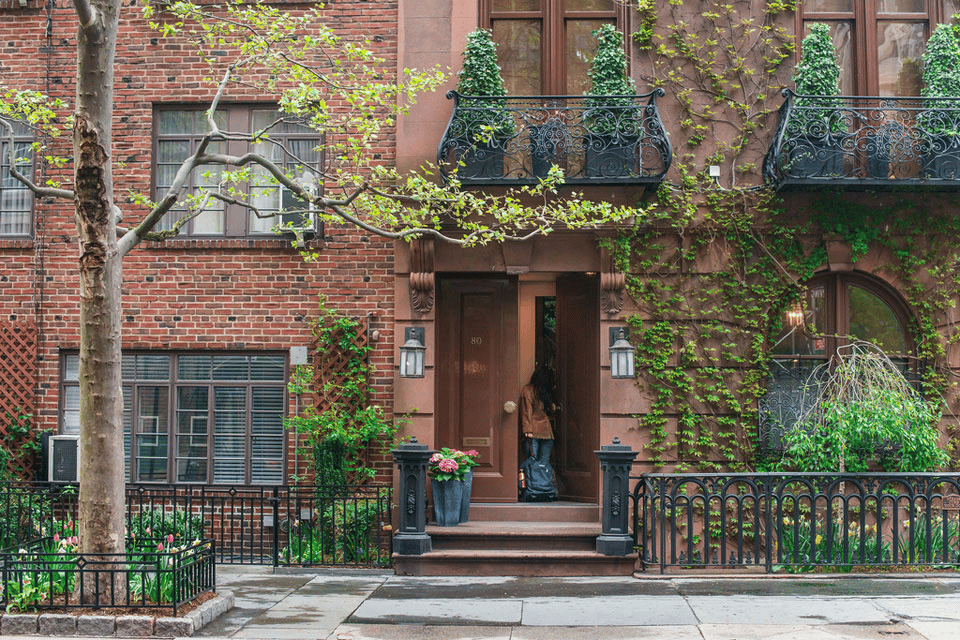
Townhouses and 19th-century rowhouses remain part of the streetscape around the park and on the surrounding side streets, giving parts of the neighborhood a scale that feels remarkably intimate.
Prewar cooperatives make up another important part of the housing stock, ranging from smaller elevator buildings to substantial full-service residences overlooking the park.
Converted townhouses, boutique condominiums and more contemporary residential buildings add additional options as you move toward Park Avenue South and the wider neighborhood boundaries.
The difference between living directly on Gramercy Park and simply living nearby is important.
Park access is attached to eligible lot-owner properties and institutions rather than the neighborhood generally, so a Gramercy address does not automatically include a park key.
For the homes that do carry access, the private garden becomes an unusually valuable extension of residential life.
For everyone else, the neighborhood still offers the architecture, restaurants, tree-lined streets and quiet atmosphere that make Gramercy one of Manhattan’s most distinctive residential enclaves.
The Real Estate
Gramercy Park real estate is defined by scarcity, architecture and an unusually strong sense of place.
The Gramercy Park Historic District was designated in 1966 and expanded in 1988, protecting an exceptional collection of buildings surrounding the park and nearby streets.
Historic townhouses are among the neighborhood’s rarest properties. Many date to the 19th century and retain details such as stoops, brick or brownstone façades, ironwork, fireplaces and gracious interior proportions.
Prewar cooperatives are more common and form a substantial part of the residential landscape. Buildings around the park and along Irving Place can offer high ceilings, traditional layouts and architectural details associated with an older era of Manhattan apartment construction.
There are also condominium conversions and newer luxury residences, although landmark protections and the established scale of the neighborhood make large new developments less common immediately around the park.
Park access creates another unusual layer to the market.
Only eligible properties and institutions tied to the surrounding park lots have access arrangements, meaning two apartments only a few blocks apart can offer fundamentally different relationships with the neighborhood’s most famous amenity.
It is something buyers should confirm building by building rather than assume from an address.
From historic townhouses and classic prewar cooperatives to boutique condominiums and rare park-facing residences, Gramercy Park offers one of Manhattan’s most distinctive — and limited — residential landscapes.
Find a Home in Gramercy Park
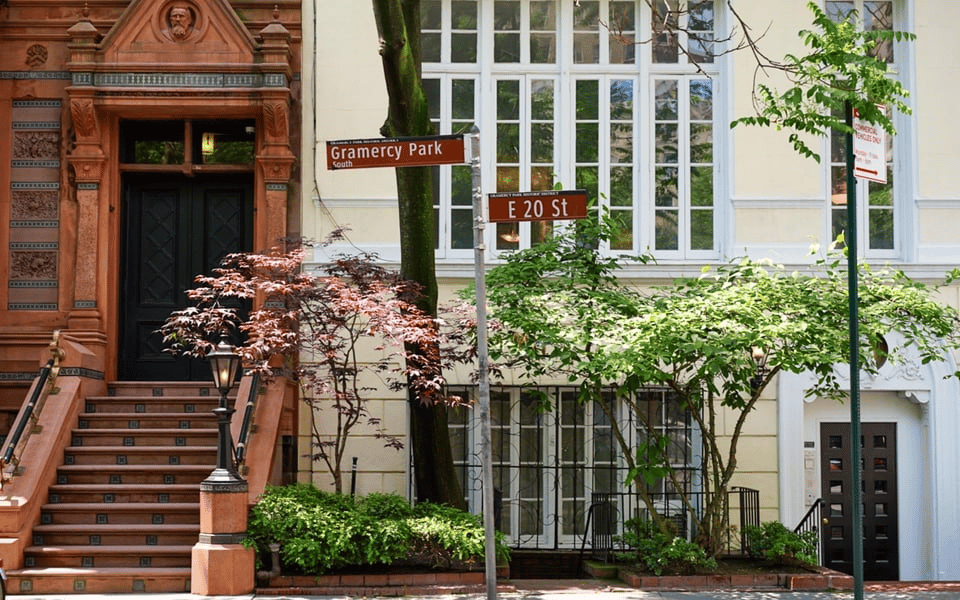
Whether you are drawn to a historic townhouse on a tree-lined street, a classic prewar cooperative or a rare residence with access to Gramercy Park, explore what is currently available across the neighborhood.