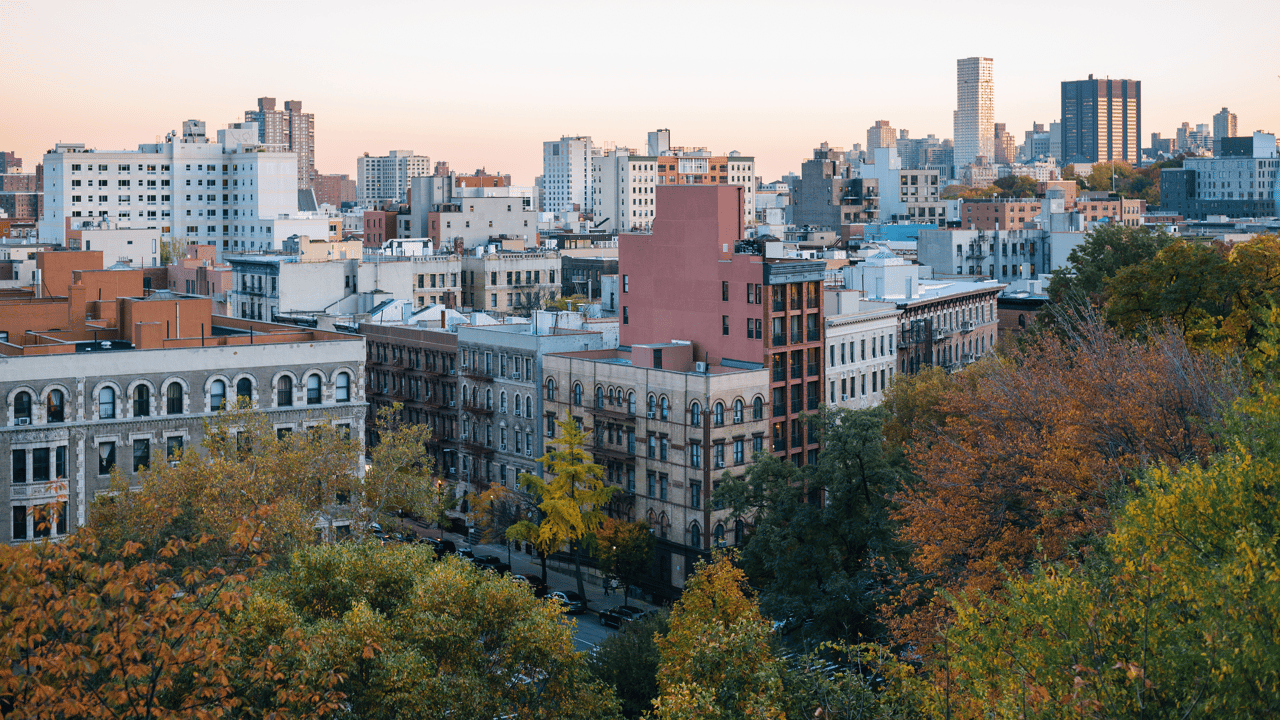
Brownstone Manhattan with an extraordinary cultural legacy: landmark townhouses, jazz and gospel history, destination restaurants, major arts institutions and some of the city’s most beautiful residential streets.
Harlem has an identity unlike anywhere else in Manhattan.
Its architecture alone would make it remarkable — block after block of brownstones, limestone townhouses, prewar apartment buildings and historic churches — but the neighborhood’s cultural influence extends far beyond its streets.
The Harlem Renaissance transformed the area into one of the most important centers of Black art, literature, music and intellectual life in the 20th century, and that history remains deeply connected to the neighborhood today. The Apollo, the Schomburg Center, jazz institutions, churches, restaurants and generations of artists continue to shape how Harlem sees itself and how the rest of the world sees Harlem.
Spend enough time here and you quickly find your own routine: coffee on 125th Street, a walk past the brownstones around Mount Morris Park, lunch on Lenox Avenue, an afternoon at the Studio Museum and dinner somewhere that feels connected to the neighborhood rather than simply located in it.
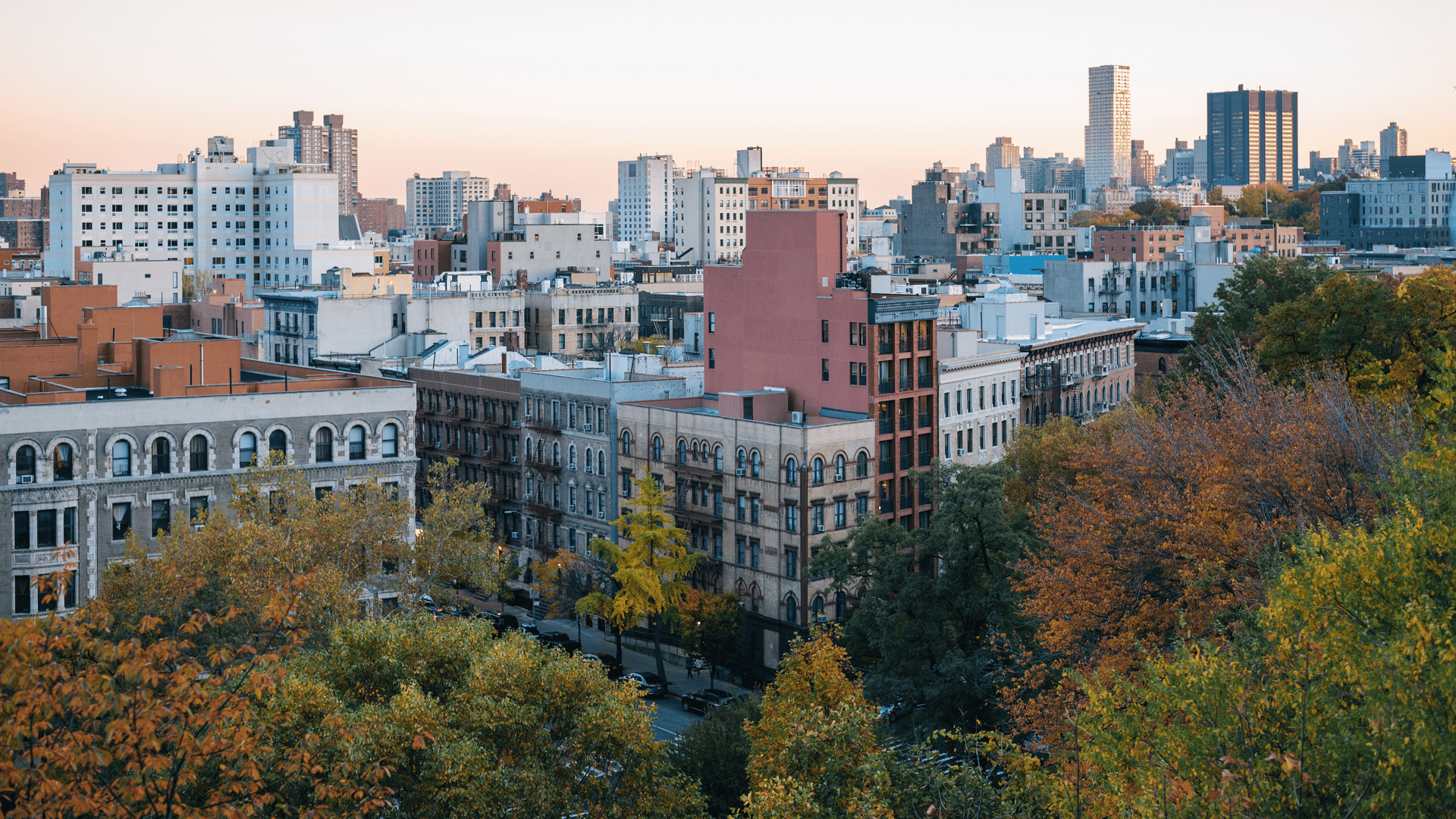
Harlem rewards anyone willing to look beyond its best-known landmarks.
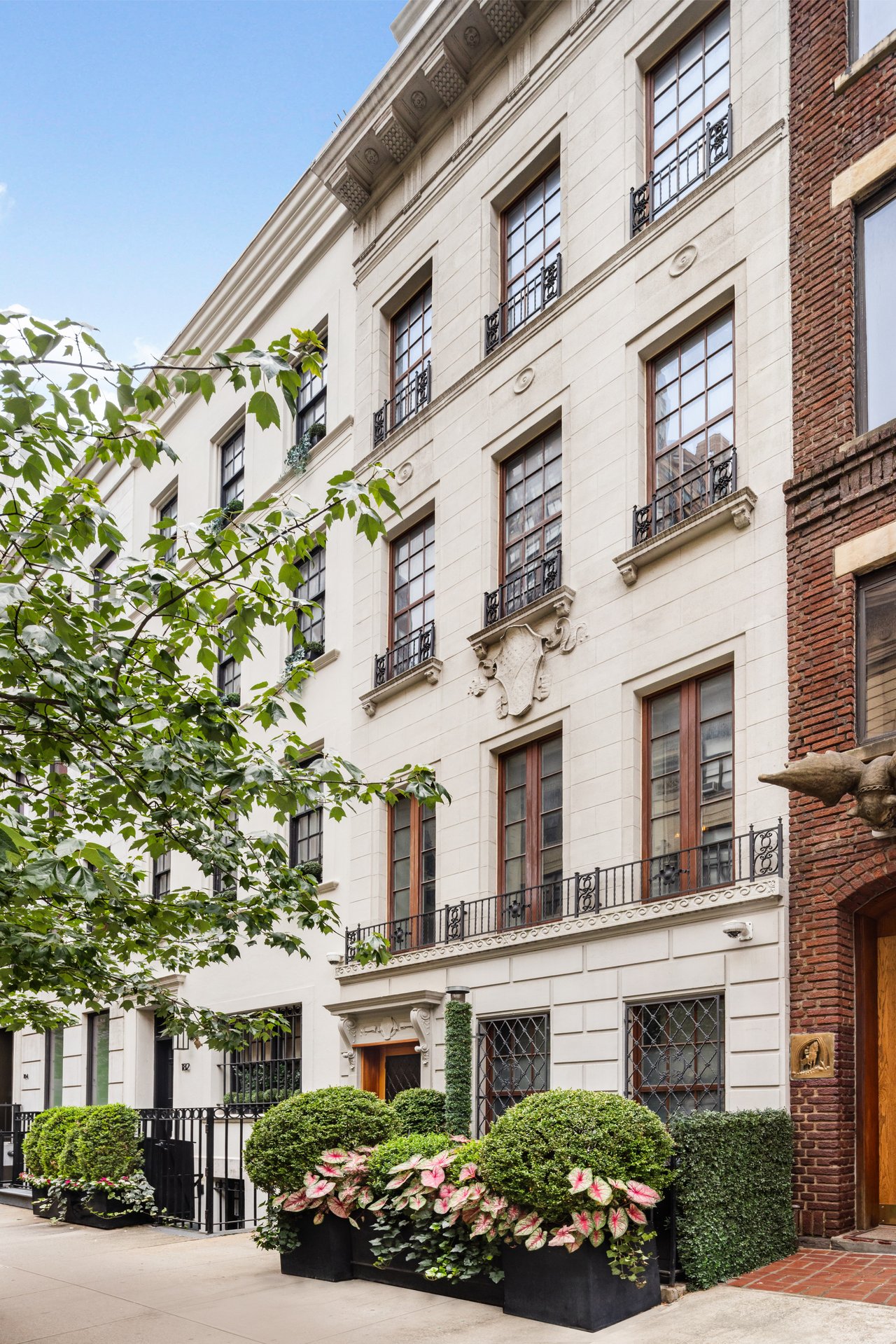
The residential streets are particularly beautiful. Brownstones and rowhouses line blocks beneath mature trees, often with carved stone details, tall stoops and façades that have survived more than a century of New York history.
Around Marcus Garvey Park, the Mount Morris Park Historic District preserves an exceptional concentration of late-19th and early-20th-century architecture. Farther north, Strivers’ Row brings together some of Harlem’s most distinctive townhouses along West 138th and 139th Streets.
Then there is the cultural life.
Harlem’s influence on jazz, literature, theater, visual art, dance, politics and Black intellectual history is enormous, but the neighborhood never feels frozen in a particular era.
Contemporary restaurants, galleries and cultural institutions continue to evolve beside places that have been part of Harlem for generations.
That combination is what makes the neighborhood so compelling.
I Like It Black on West 125th Street is a fitting place to begin a Harlem morning.
Created by the family behind longtime Harlem bakery Make My Cake, the coffee shop has built its identity around excellent coffee and supporting Black and Latinx-owned roasters.
The space is compact and relaxed, making it an easy first stop before continuing east along 125th Street or heading deeper into the residential blocks.
Grab a coffee and pastry, then walk rather than immediately getting back on the subway.
Harlem becomes considerably more interesting once you leave the major intersections behind.
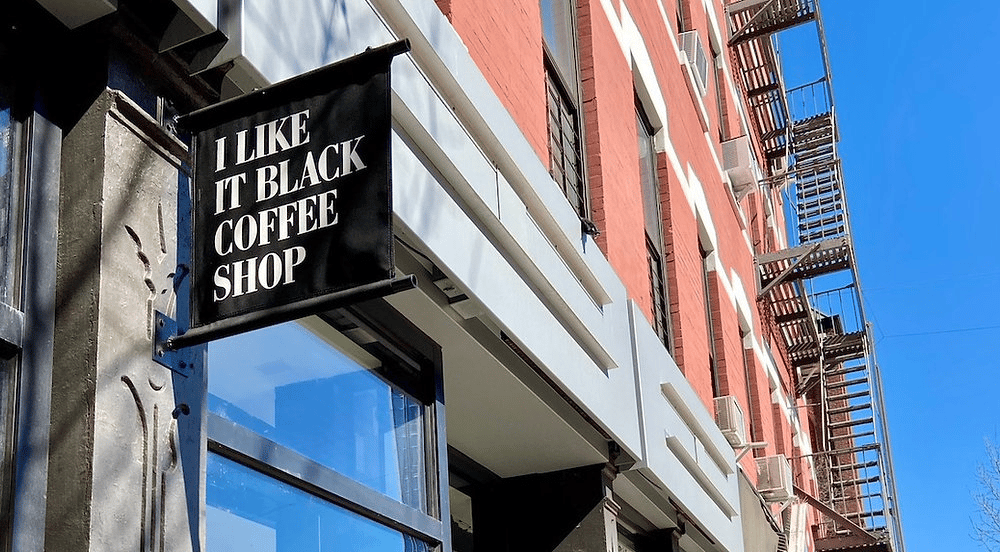
West 125th Street is Harlem’s cultural and commercial spine.
The Apollo, Studio Museum in Harlem, restaurants, shops and generations of neighborhood history all converge along a stretch that is constantly changing while remaining unmistakably Harlem.
Walk it slowly rather than treating it simply as a route across town.
Turn onto Lenox Avenue for restaurants and historic architecture, or head toward Frederick Douglass Boulevard and the quieter residential streets to the west.
Within a few blocks, the neighborhood changes completely.
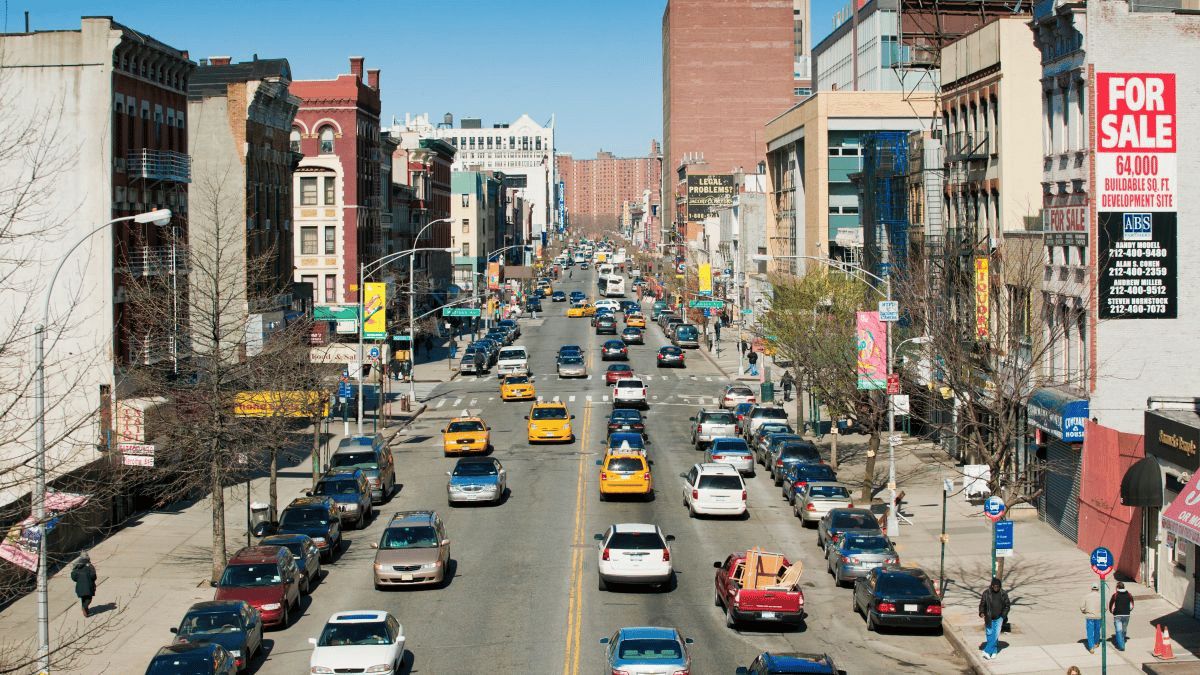
Harlem’s restaurant scene is inseparable from the neighborhood’s larger cultural history.
Soul food remains essential, but it is only part of the story. Contemporary American cooking, Italian restaurants, wine bars and ambitious neighborhood dining rooms now sit alongside institutions that have been serving Harlem for generations.
The best way to experience it is to make room for both.
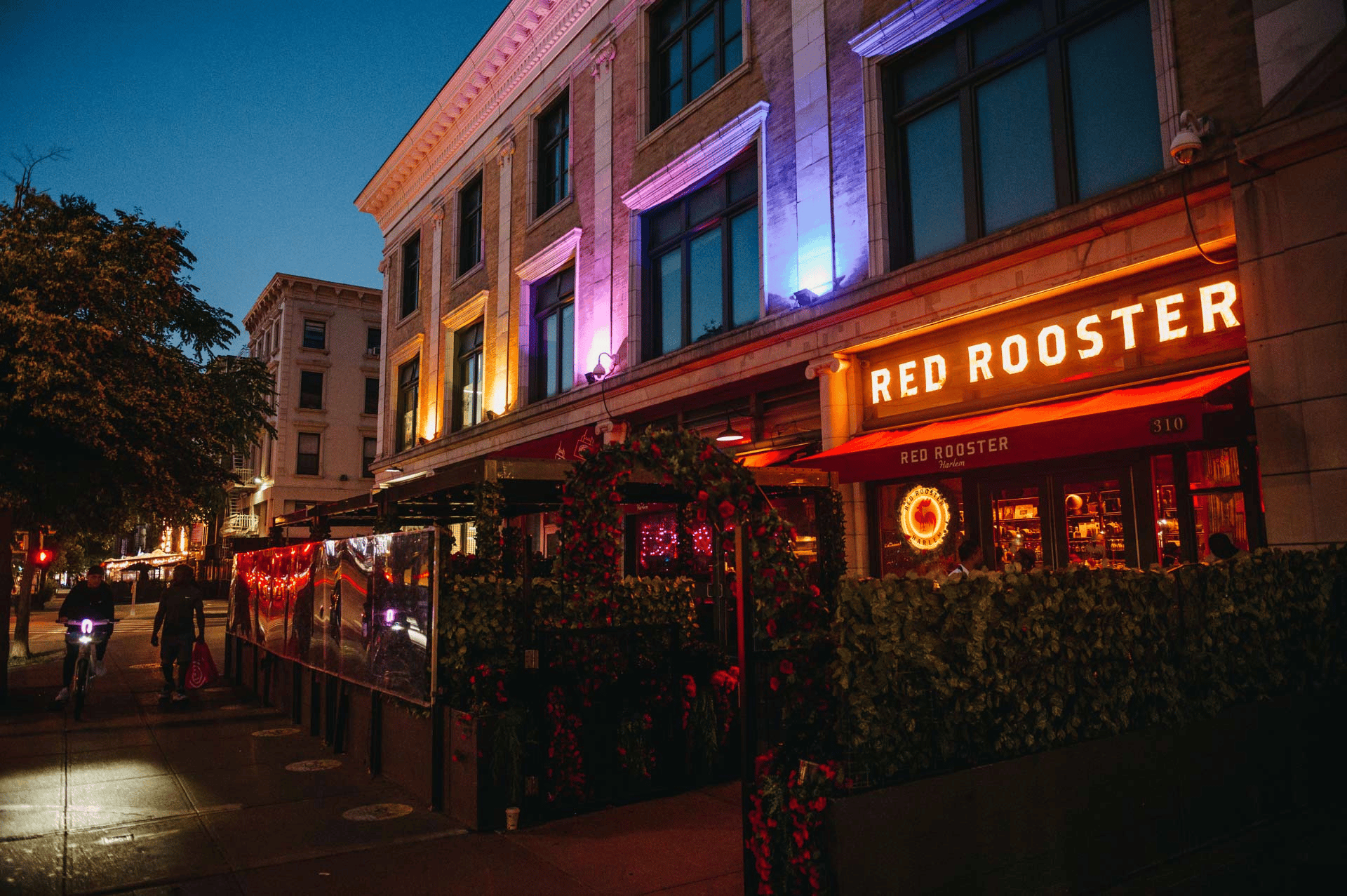
Red Rooster has become one of modern Harlem’s defining restaurants.
Marcus Samuelsson opened the Lenox Avenue restaurant in 2010 with the idea that food, music, art and community should exist together rather than as separate experiences.
The menu draws broadly from American comfort food, Southern traditions and the many cultures that have shaped Harlem, while live music remains an important part of the restaurant’s identity.
The dining room is colorful, energetic and almost always lively.
Come for dinner, but do not treat the meal as something separate from the room around you.
At Red Rooster, the atmosphere is part of the point.
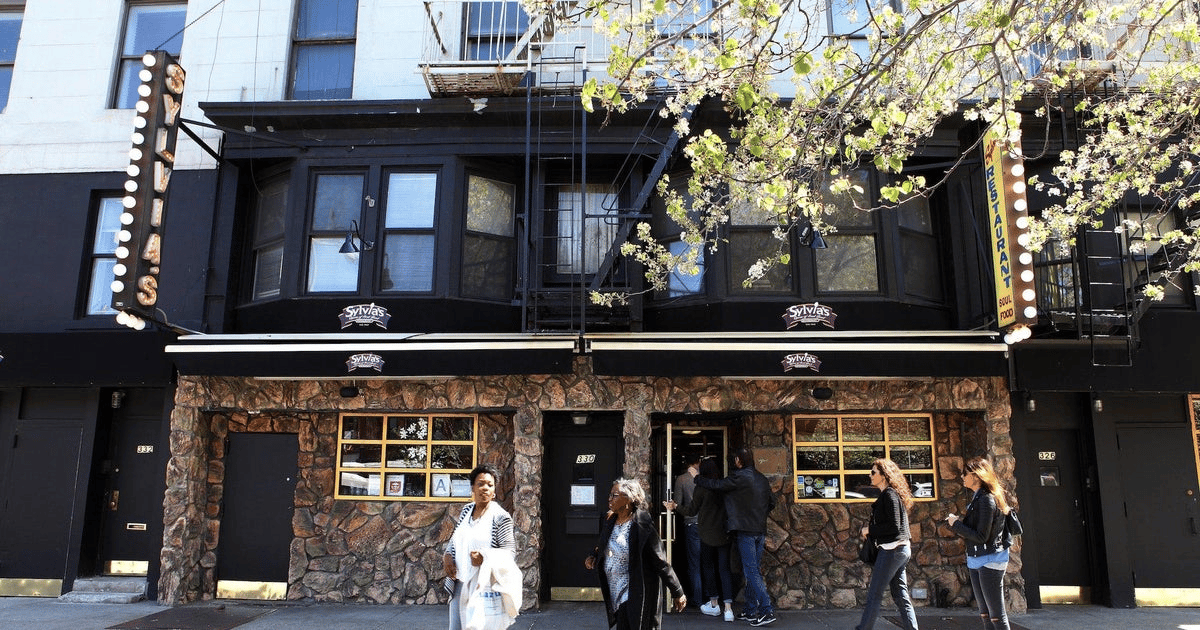
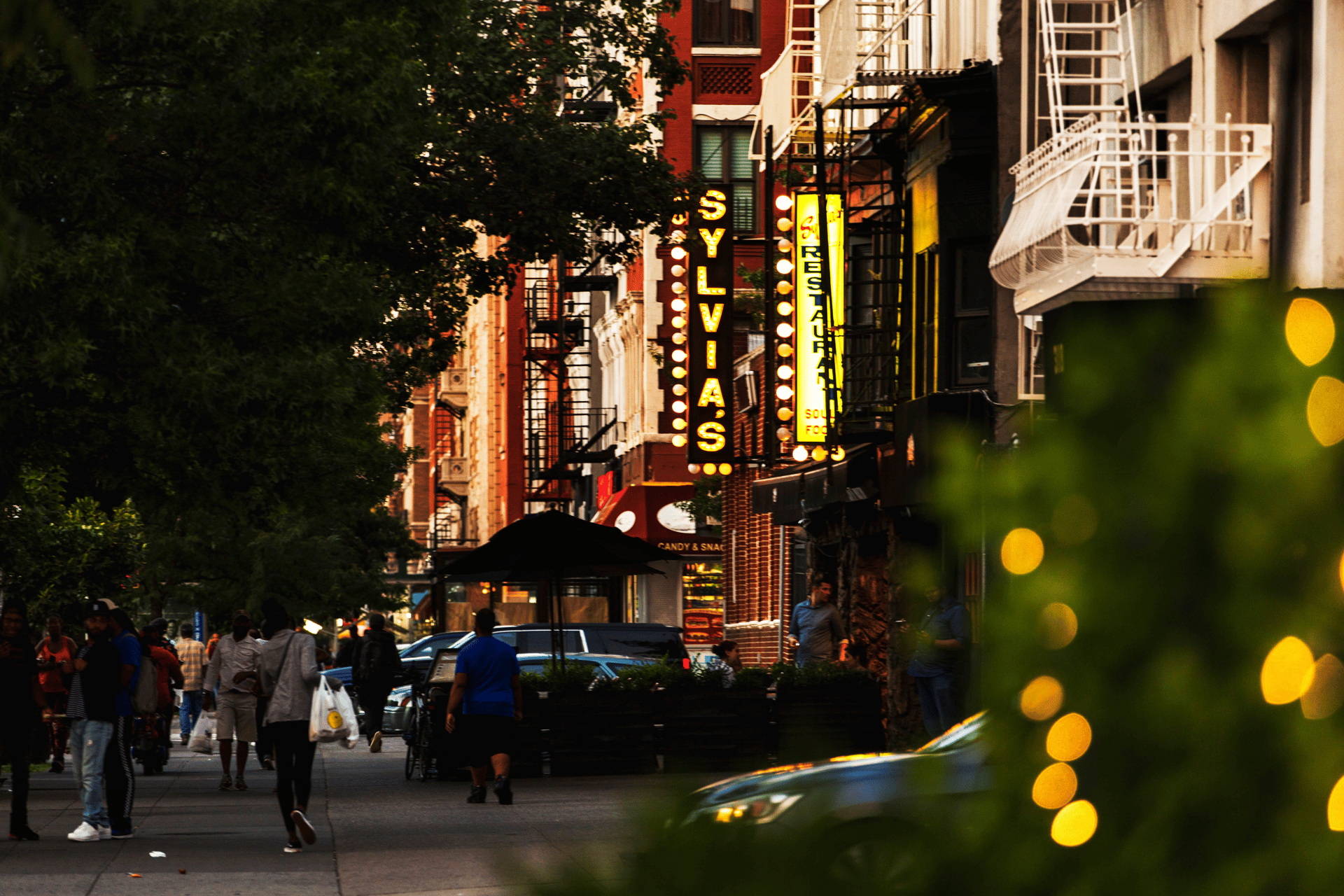
Few restaurants are more closely connected to Harlem than Sylvia’s.
Sylvia Woods opened the Lenox Avenue restaurant in 1962, and more than six decades later it remains family-owned and deeply rooted in the neighborhood.
Fried chicken, ribs, collard greens, macaroni and cheese, cornbread and peach cobbler form the heart of the experience.
In 2024, the James Beard Foundation recognized Sylvia’s with an America’s Classics Award, acknowledging what Harlem already understood: this is more than a famous restaurant.
It is part of the neighborhood’s history.
For a quieter and more contemporary dinner, Clay is one of our favorite choices.
The intimate Manhattan Avenue restaurant approaches American cooking through the seasons, with vegetables, handmade pasta, carefully sourced meats and a serious wine program shaping the menu.
The dining room feels refined but never stiff.
It is especially good for a date night or a dinner where you want something polished without losing the feeling that you are still in a neighborhood restaurant.
Clay represents another side of modern Harlem dining — understated, thoughtful and confident.
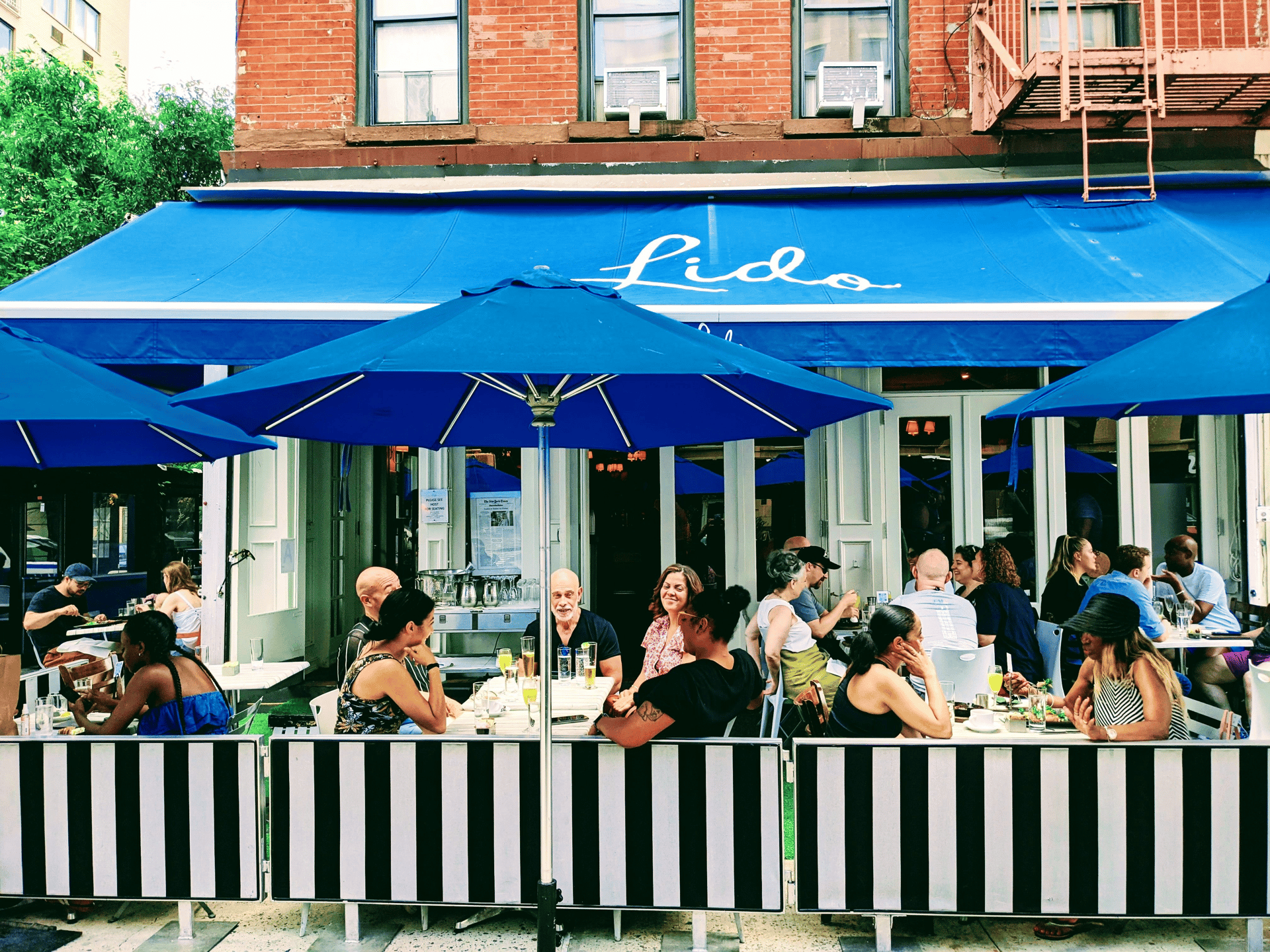
Lido on Frederick Douglass Boulevard has become one of the neighborhood’s dependable Italian restaurants.
The room is elegant but relaxed, with fresh pasta, seafood, Italian-inspired classics and a lively brunch that has developed its own following.
It works especially well when you want somewhere that can move easily between lunch, drinks and dinner.
Outdoor seating adds another layer in warmer weather, when Frederick Douglass Boulevard becomes noticeably more social.
This is the kind of restaurant that quickly becomes part of a neighborhood routine.
A few blocks north, Vinateria brings a wine-driven approach to Mediterranean cooking.
The menu moves between Italian and Spanish influences, with pasta, vegetables, seafood and seasonal plates designed to work particularly well with the restaurant’s thoughtful wine list.
The space feels warm and intimate rather than overly formal.
Come for a glass of wine and something small, then stay for dinner.
It is one of those places that feels especially good when you do not have much of a plan.
Charles Gabriel has been cooking his celebrated pan-fried chicken in Harlem since 1990.
Unlike deep-fried chicken, his method relies on cooking the chicken in cast-iron skillets, producing a deeply seasoned crust and the kind of texture that has made his food a Harlem favorite for decades.
Order the chicken with a couple of sides and cornbread.
There is no reason to make it more complicated than that.
Harlem’s cultural institutions are not simply attractions.
Many of them have played an active role in shaping American art, music, scholarship and public life for generations.
Together, they make this one of the most culturally significant neighborhoods in New York.
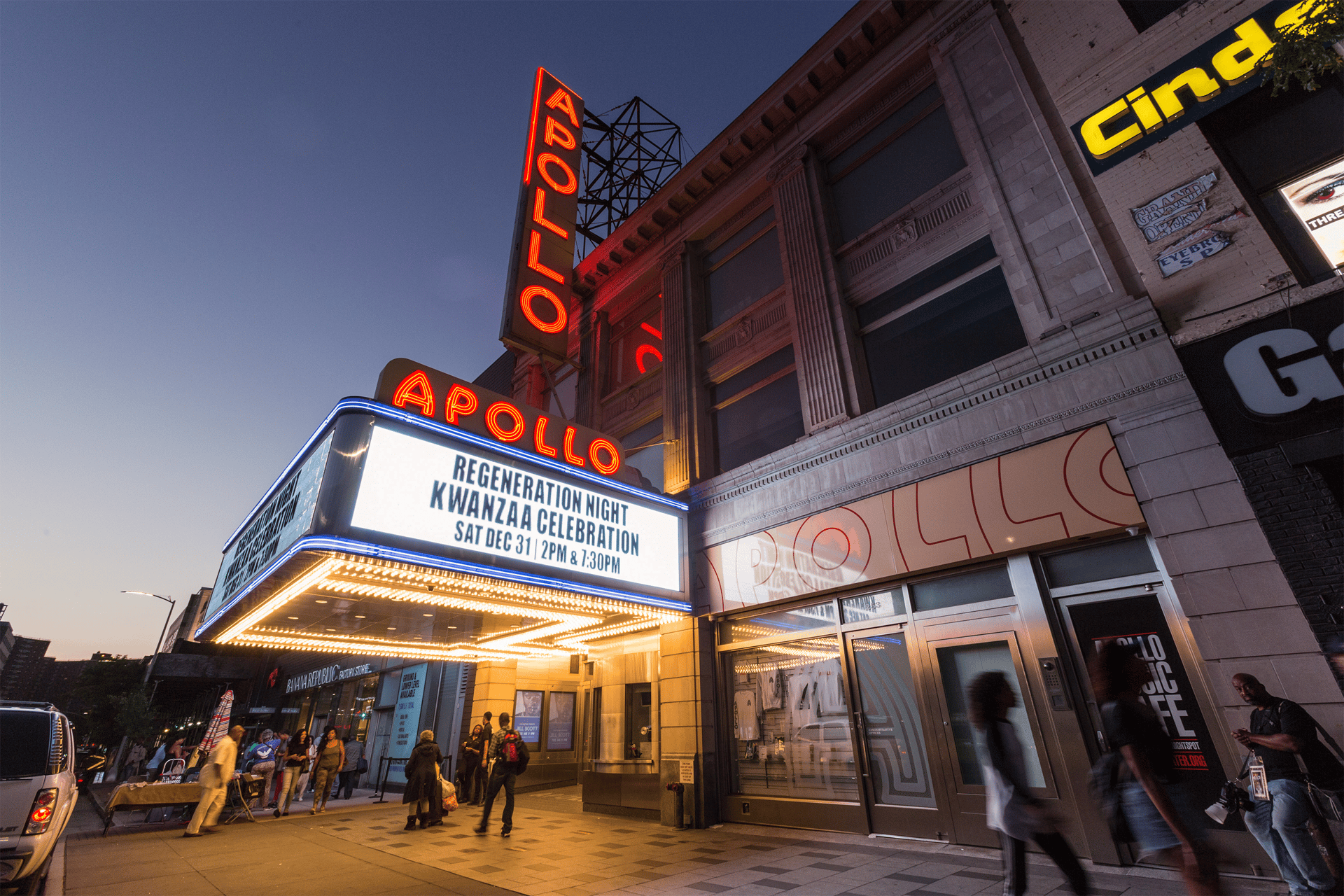
The Apollo on West 125th Street is one of the defining stages in American entertainment.
Its Amateur Night became legendary for introducing audiences to emerging performers, while generations of artists across jazz, soul, R&B, gospel, comedy and popular music have passed through the theater.
The historic theater is currently undergoing its first major renovation and restoration, with a reopening expected later in 2026. In the meantime, Apollo programming continues nearby at The Apollo Stages at The Victoria.
The building may be changing, but the institution remains central to Harlem’s cultural identity.
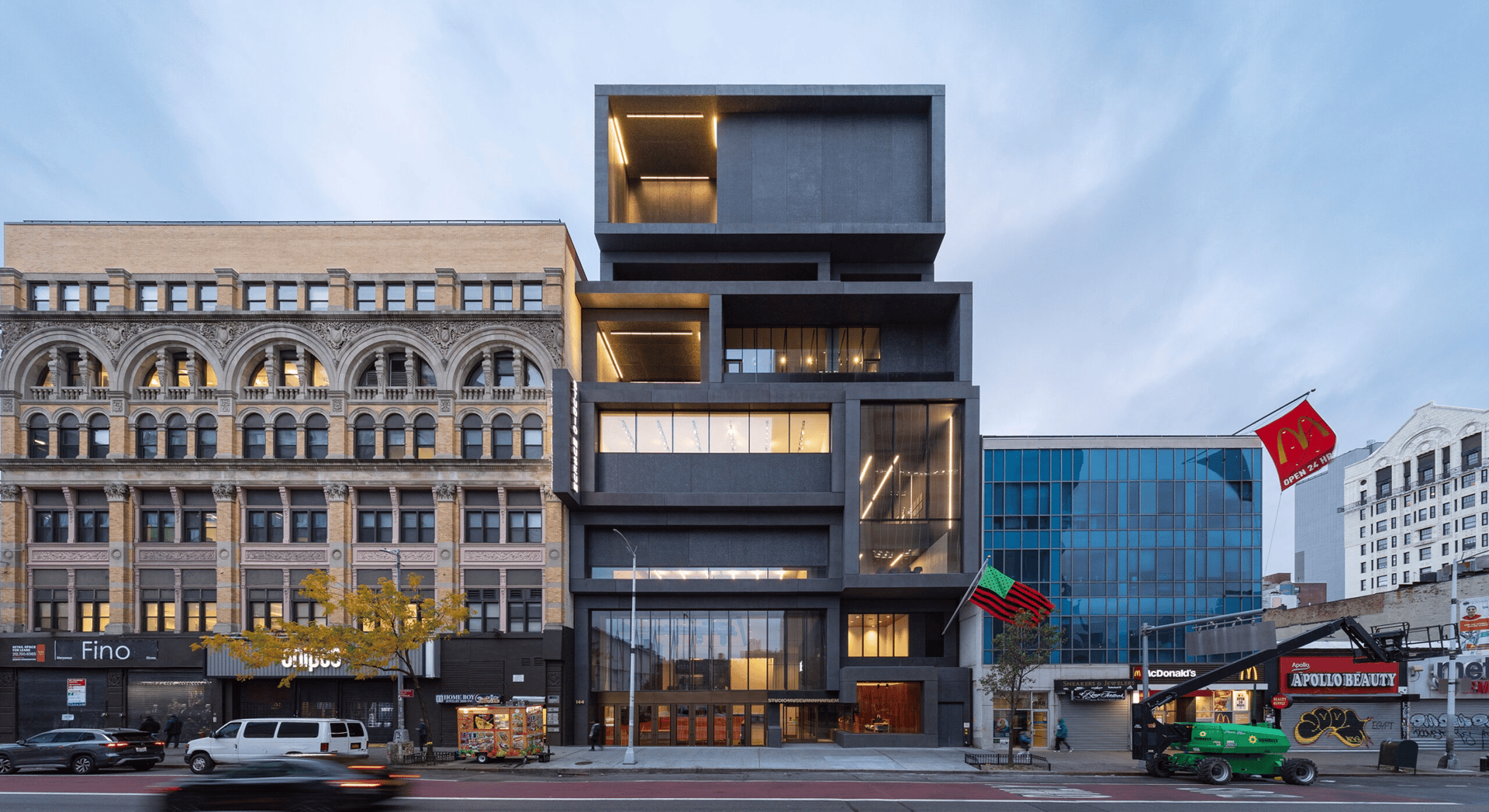
The Studio Museum in Harlem is essential for understanding contemporary art in the neighborhood.
Founded in 1968, the museum has built an international reputation around artists of African descent and has supported generations of emerging artists through its influential Artist-in-Residence program.
Its new purpose-built home at 144 West 125th Street opened in late 2025, returning the museum fully to Harlem after years of construction.
The expanded building now gives its exhibitions, collection and artist studios considerably more room while maintaining the museum’s direct relationship with the street outside.
This should be on any Harlem itinerary.
At 135th Street and Malcolm X Boulevard, the Schomburg Center is one of the world’s leading institutions devoted to Black history and culture.
Part of The New York Public Library, its collections span African American, African Diasporic and African experiences through books, manuscripts, photographs, artworks, recordings and archival material.
The collection now includes more than 11 million items.
In 2026, the Schomburg is celebrating its 100th anniversary — an extraordinary milestone for an institution whose roots reach directly into the Harlem Renaissance.
Check the exhibition and event schedule before visiting.
On West 129th Street, the National Jazz Museum in Harlem offers a more intimate way to explore one of the art forms most closely associated with the neighborhood.
Exhibitions, talks, educational programs and frequent live performances connect jazz history with the musicians carrying the tradition forward today.
The museum presents around 150 live jazz concerts each year, making it as much a place to hear the music as to learn about it.
Allow time to stay for a performance if the schedule works.
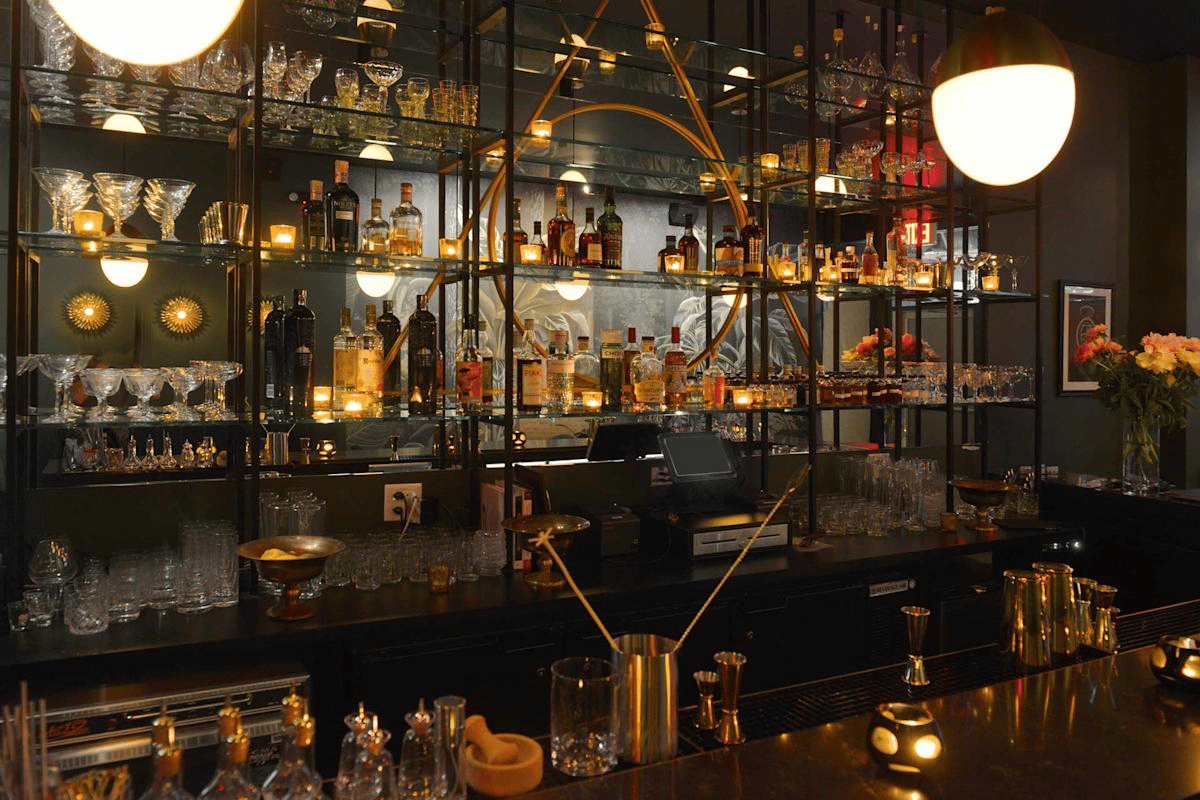
For cocktails, Sugar Monk is our pick.
The intimate Frederick Douglass Boulevard lounge takes inspiration from Harlem’s historic speakeasies without turning the idea into a costume.
House-made bitters, infusions, liqueurs and Amari give the cocktail program a genuinely distinctive point of view, while botanical and foraged ingredients appear throughout the menu.
The room is dark, sophisticated and designed for conversation rather than crowds.
Live jazz on Tuesdays makes an especially good night to go.
Marcus Garvey Park provides more than 20 acres of green space in the middle of Harlem.
Lawns, playgrounds, recreation facilities and the Richard Rodgers Amphitheater make it a genuine neighborhood park rather than somewhere people only visit occasionally.
The rocky rise at its center gives the landscape an unusual topography and supports the historic Mount Morris Fire Watchtower above.
Walk the perimeter as well.
Some of Harlem’s most beautiful residential architecture faces directly onto the park.
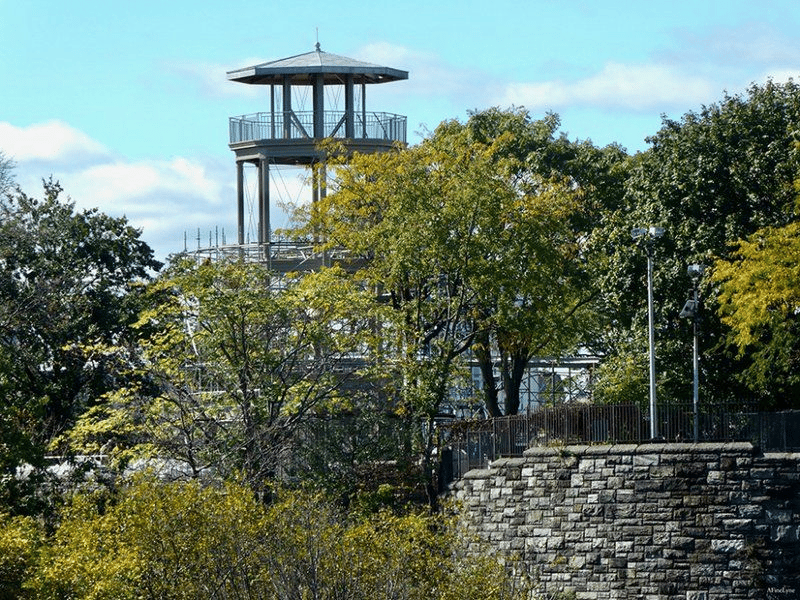
Farther north and west, St. Nicholas Park offers a completely different landscape.
The long, sloping park follows the natural rise between St. Nicholas Avenue and St. Nicholas Terrace, creating wooded paths, recreation spaces and elevated views across surrounding Harlem.
Historic residential streets sit immediately to the east, while the City College campus rises dramatically along its western edge.
It is particularly good when you want a longer walk rather than somewhere simply to sit.
Harlem is large enough that entire sections can feel like different neighborhoods.
Around Marcus Garvey Park, walk West 120th through West 123rd Streets for some of the strongest brownstone and rowhouse architecture in Manhattan.
The original Mount Morris Park Historic District was designated in 1971, with a substantial extension added in 2015 to protect additional late-19th-century residential blocks.
Farther north, West 138th and 139th Streets between Adam Clayton Powell Jr. Boulevard and Frederick Douglass Boulevard contain Strivers’ Row.
Originally developed as the King Model Houses in the 1890s, the blocks include Georgian Revival, Colonial Revival and Italian Renaissance Revival architecture by several prominent architects. The area became especially associated with accomplished Black professionals, artists and intellectuals during the 20th century.
Then walk Lenox Avenue.
The restaurants, churches, institutions and residential buildings along the avenue tell an entirely different part of the Harlem story.
There is far too much here to experience from 125th Street alone.
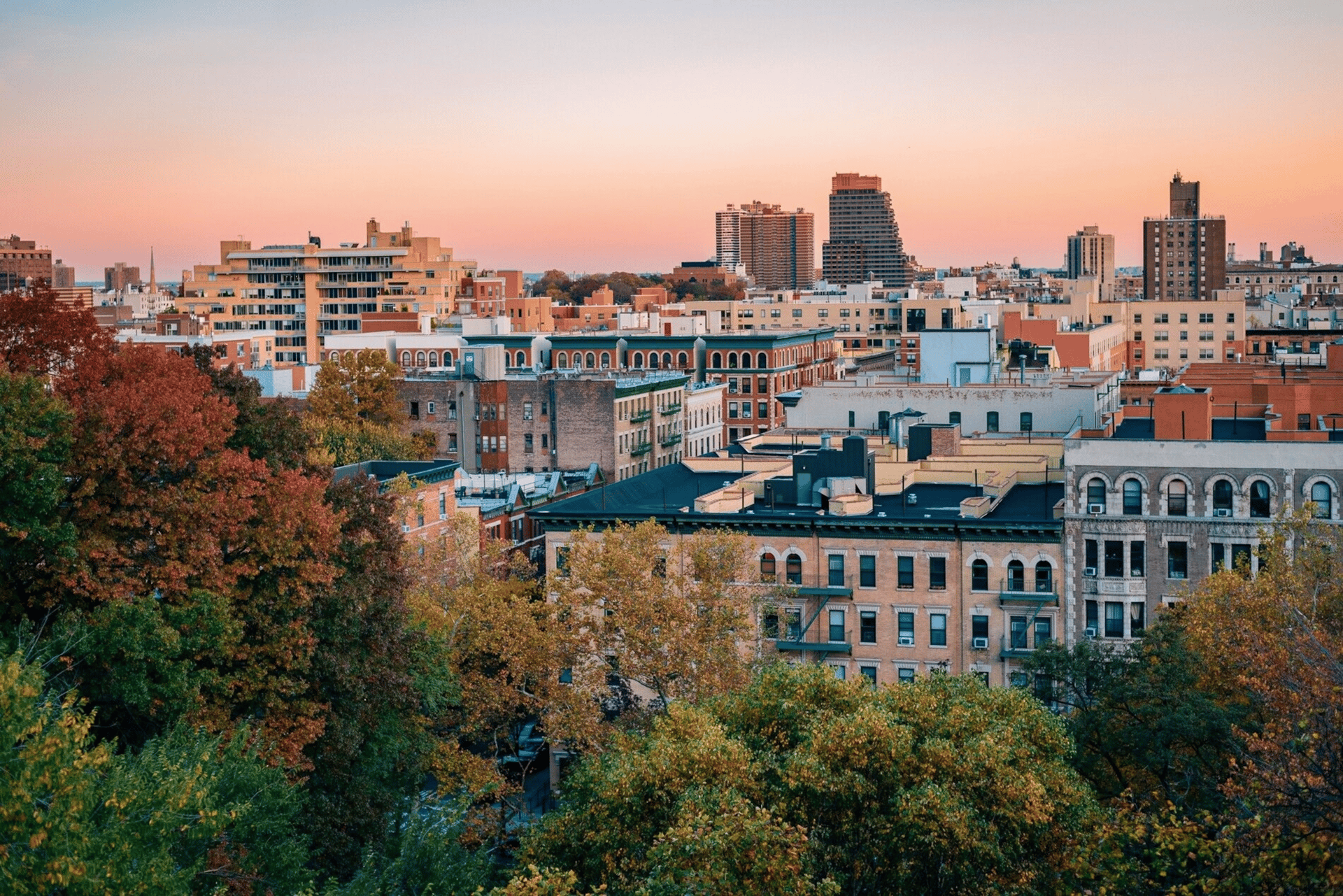
Residentially, Harlem offers considerably more variety than a single neighborhood description might suggest.
Historic brownstones and townhouses define many of the side streets, particularly around Mount Morris Park and Strivers’ Row, while prewar apartment buildings, cooperatives and condominiums create a denser residential landscape along the major avenues.
Newer condominium and rental developments have added modern options, especially around 125th Street, Frederick Douglass Boulevard and other major corridors.
The neighborhood is also exceptionally well connected, with multiple subway lines and Metro-North service at 125th Street.
What makes living here distinctive is the combination: substantial architecture, major cultural institutions, neighborhood restaurants and residential streets that can feel remarkably calm only a few blocks from some of Manhattan’s busiest avenues.
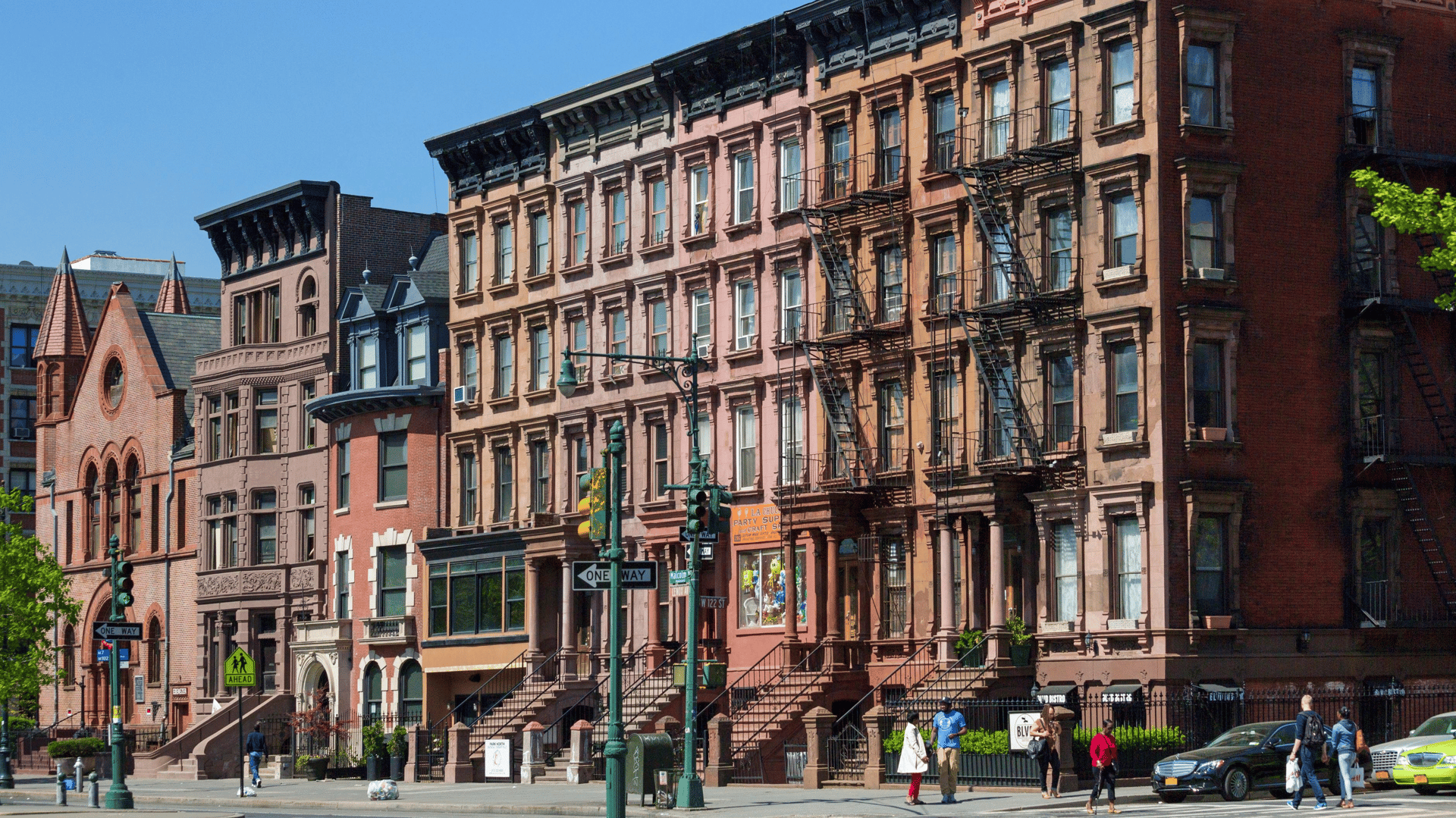
Harlem real estate is especially notable for its historic townhouses and brownstones.
Properties within areas such as the Mount Morris Park Historic District, Strivers’ Row and the Central Harlem historic districts can feature carved stone façades, original stoops, fireplaces, woodwork and unusually generous proportions.
Prewar cooperatives and condominiums provide another major part of the housing stock, while newer developments introduce elevators, contemporary layouts, terraces and full-service amenities.
Harlem’s landmark districts protect many of its most important streetscapes, so exterior work on properties within those districts can be subject to Landmarks Preservation Commission review.
From full townhouses and brownstone apartments to classic prewar residences and contemporary condominiums, Harlem offers one of Manhattan’s most architecturally varied residential markets.
Whether you are drawn to a historic brownstone on a tree-lined block, a classic prewar residence or a contemporary condominium close to Harlem’s restaurants and cultural institutions, explore what is currently available across the neighborhood.
324,377 people live in Harlem, where the median age is 39 and the average individual income is $41,710. Data provided by the U.S. Census Bureau.
Total Population
Median Age
Population Density
Average individual Income
There's plenty to do around Harlem, including shopping, dining, nightlife, parks, and more. Data provided by Walk Score and Yelp.
Explore popular things to do in the area, including Grab & Go Food, Grab & Go Food, and Sing's Food Corporation.
| Name | Category | Distance | Reviews |
Ratings by
Yelp
|
|---|---|---|---|---|
| Dining | 0.21 miles | 0 reviews | 0/5 stars | |
| Dining | 0.27 miles | 0 reviews | 0/5 stars | |
| Dining | 0.39 miles | 0 reviews | 0/5 stars | |
| Dining | 0.42 miles | 0 reviews | 0/5 stars | |
| Dining | 0.6 miles | 0 reviews | 0/5 stars | |
| Dining | 0.64 miles | 0 reviews | 0/5 stars | |
| Dining · $ | 0.68 miles | 1 review | 4/5 stars | |
| Dining | 0.72 miles | 0 reviews | 0/5 stars | |
| Dining | 0.75 miles | 0 reviews | 0/5 stars | |
| Dining | 0.84 miles | 0 reviews | 0/5 stars | |
| Dining | 0.94 miles | 0 reviews | 0/5 stars | |
| Dining | 0.95 miles | 0 reviews | 0/5 stars | |
| Dining | 1.03 miles | 0 reviews | 0/5 stars | |
| Dining | 1.12 miles | 0 reviews | 0/5 stars | |
| Shopping | 0.11 miles | 4 reviews | 4.3/5 stars | |
| Shopping | 0.77 miles | 0 reviews | 0/5 stars | |
| Active | 0.19 miles | 0 reviews | 0/5 stars | |
| Active | 0.6 miles | 37 reviews | 3.8/5 stars | |
| Nightlife | 0.39 miles | 5 reviews | 4/5 stars | |
| Nightlife | 0.48 miles | 0 reviews | 0/5 stars | |
| Nightlife | 0.83 miles | 1 review | 2/5 stars | |
| Beauty | 0.55 miles | 0 reviews | 0/5 stars | |
|
|
||||
|
|
||||
|
|
||||
|
|
||||
|
|
||||
|
|
Harlem has 137,466 households, with an average household size of 2. Data provided by the U.S. Census Bureau. Here’s what the people living in Harlem do for work — and how long it takes them to get there. Data provided by the U.S. Census Bureau. 324,377 people call Harlem home. The population density is 106,805 and the largest age group is Data provided by the U.S. Census Bureau.
Total Population
Population Density Population Density This is the number of people per square mile in a neighborhood.
Median Age
Men vs Women
Population by Age Group
0-9 Years
10-17 Years
18-24 Years
25-64 Years
65-74 Years
75+ Years
Education Level
Total Households
Average Household Size
Average individual Income
Households with Children
With Children:
Without Children:
Blue vs White Collar Workers
Blue Collar:
White Collar:
590 Madison Ave, Floor 8 New York, NY10022
590 Madison Ave, Floor 8 New York, NY10022