Hudson Yards Neighborhood Guide
Modern Manhattan on the Hudson: striking architecture, destination restaurants, the High Line, contemporary culture and some of the city’s most dramatic skyline views.
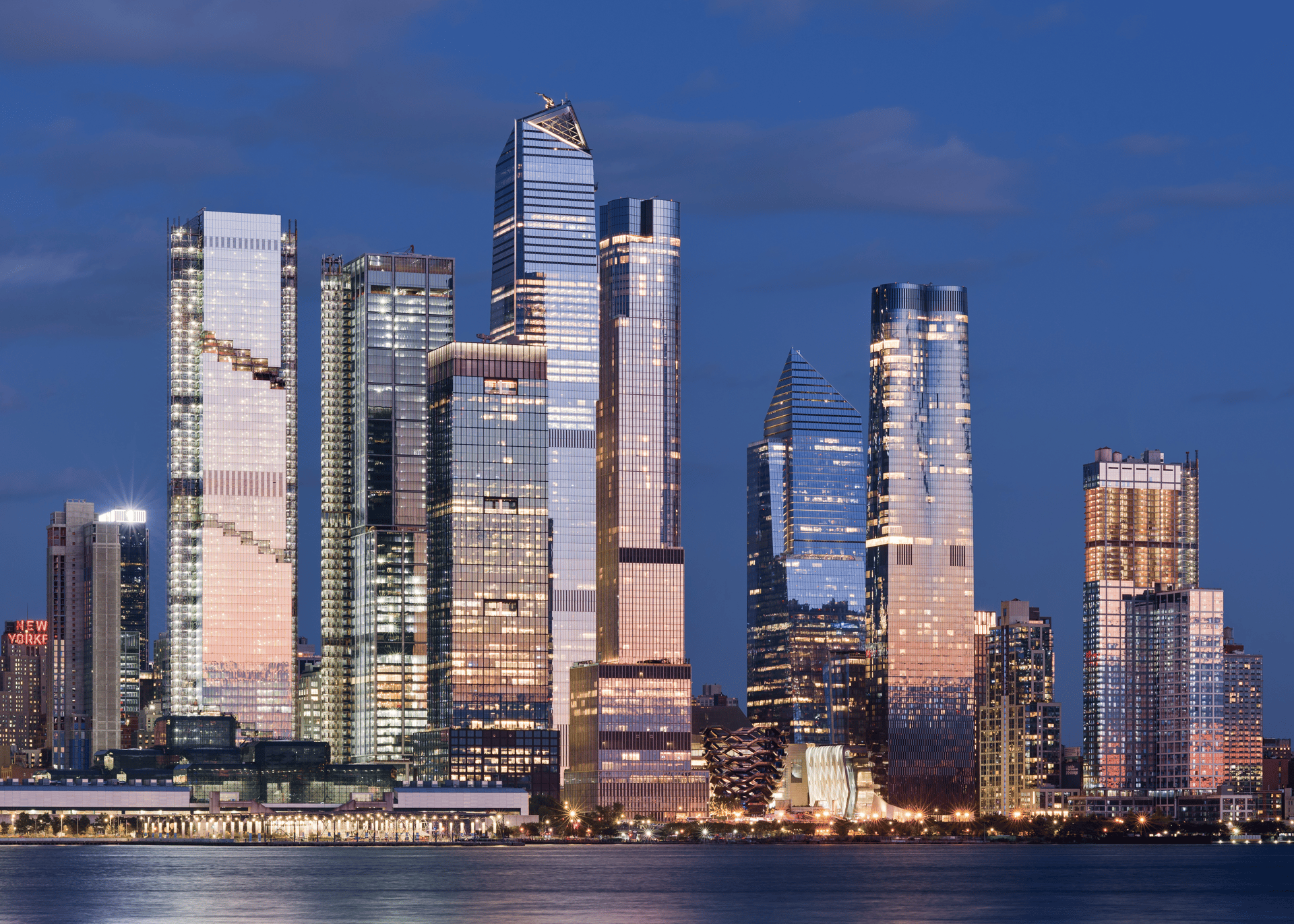
Hudson Yards has transformed Manhattan’s far west side into one of the city’s most distinctive new neighborhoods. Rising above active rail yards between Chelsea and Midtown, its glass towers, landscaped public spaces and cultural institutions have created an entirely different version of New York living.
It is polished, architectural and unusually connected to the outdoors for such a vertical part of Manhattan. Spend enough time here and you quickly find your own routine: coffee before a walk along the High Line, lunch overlooking the Public Square, an afternoon at The Shed, dinner somewhere high above the city and a final walk toward the Hudson as the sun begins to set.
What We Love About Hudson Yards
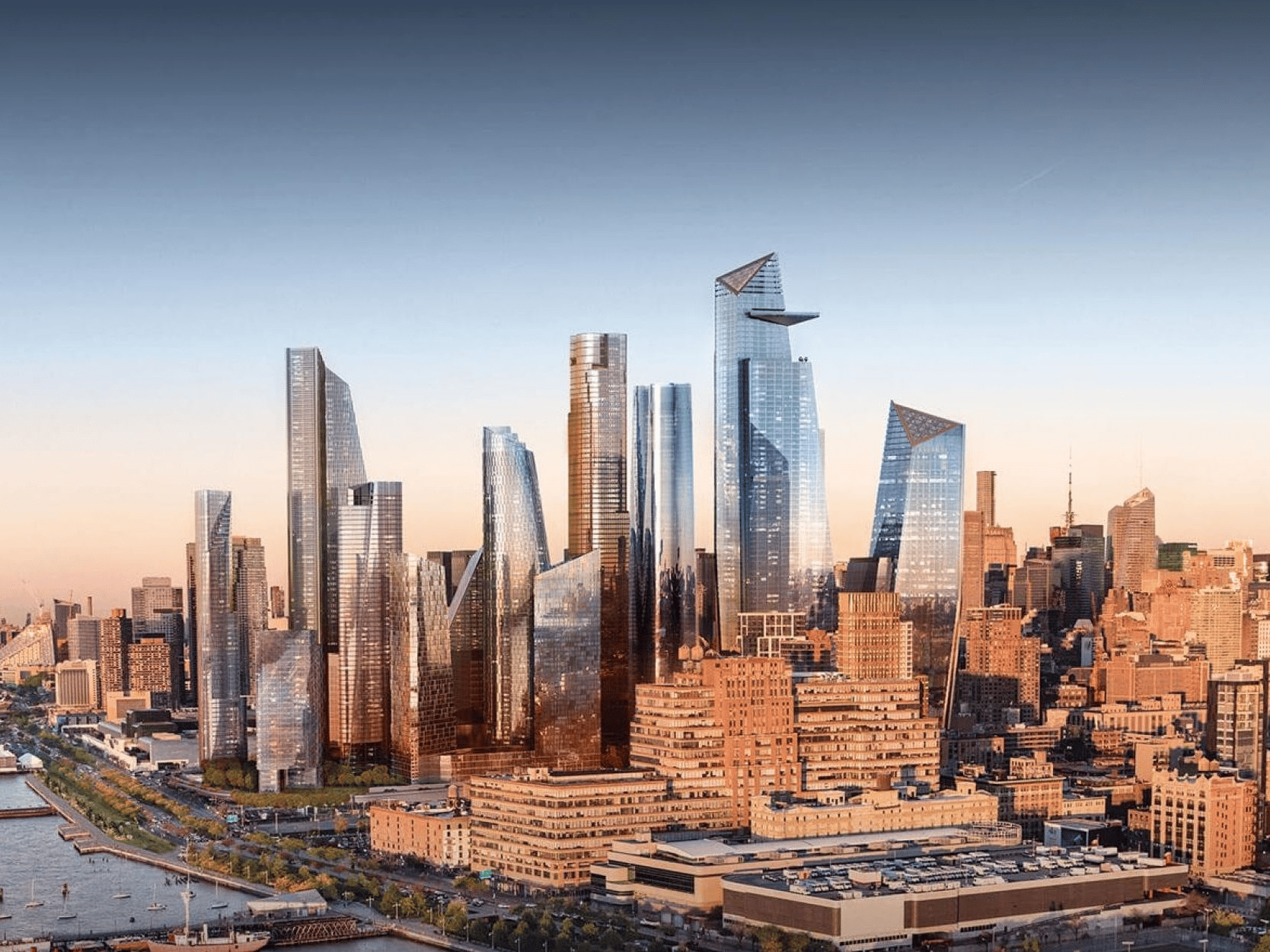
The architecture is impossible to ignore.
Hudson Yards was planned at a scale rarely seen in Manhattan, with residential towers, offices, public spaces, restaurants, cultural institutions and transportation developed together around the active rail yards below.
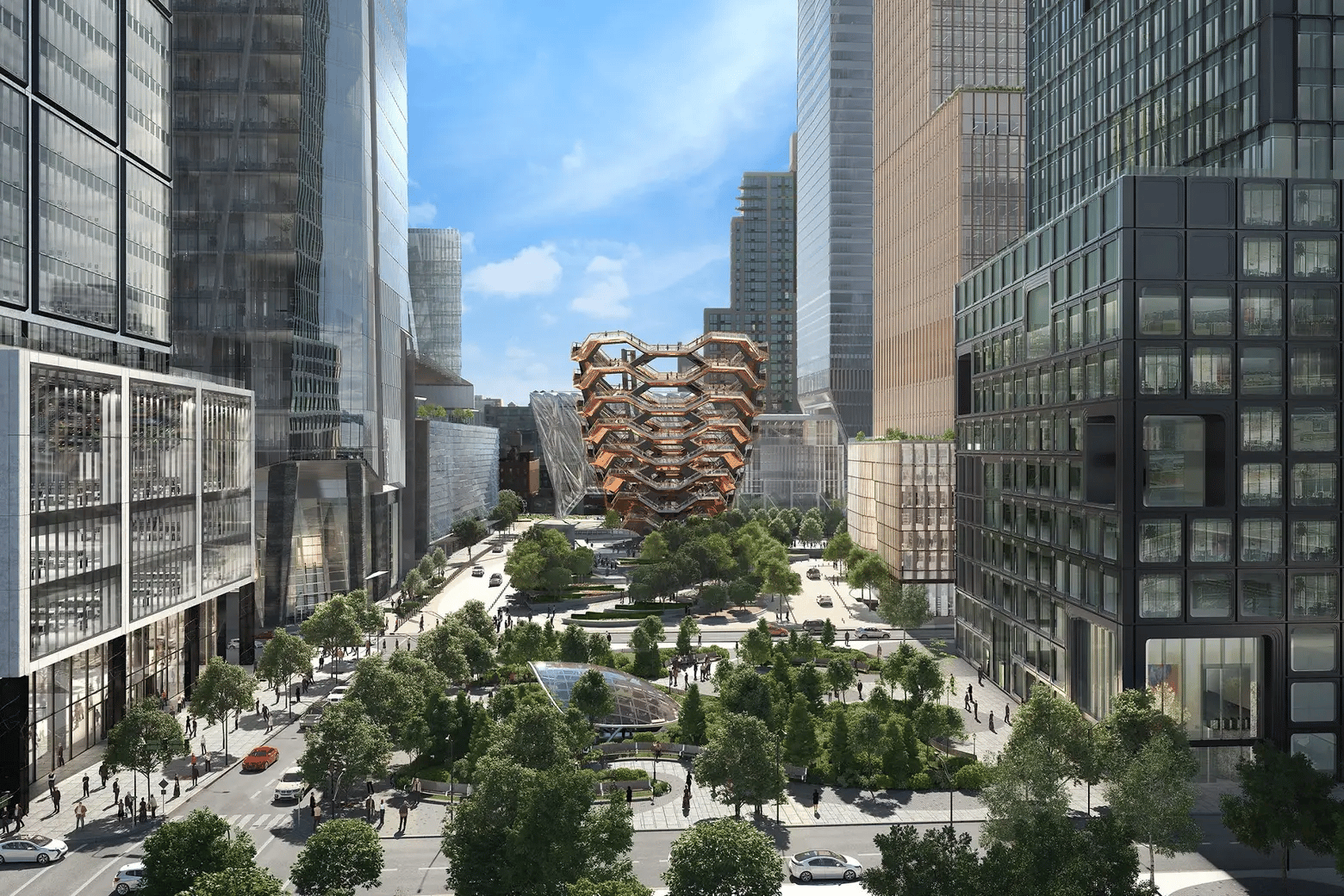
But what makes the neighborhood more interesting than its skyline is how much happens between the towers. The High Line arrives from Chelsea and wraps around the western rail yards, the Public Square and Gardens introduces landscaped open space at the center of the development, and Hudson Boulevard creates a green north-south connection through the neighborhood.
The Hudson River is never far away either. Walk west toward Eleventh Avenue and the city begins to open, with the Javits Center, riverfront paths and expansive western views giving this part of Manhattan a scale that feels noticeably different from Midtown only a few blocks east.
A Few of Our Favorite Places
Start with coffee at Bluestone Lane
Bluestone Lane at 55 Hudson Yards is an easy place to begin the morning.
The Australian-inspired café serves espresso, coffee and lighter breakfast options in the middle of the neighborhood, making it particularly convenient before heading toward the Public Square, the High Line or the Hudson River.
Take your coffee outside when the weather allows. Hudson Yards makes the most sense when you experience it on foot.
Take your time along Hudson Boulevard
Hudson Boulevard gives the neighborhood a softer side that can be easy to miss among all the glass towers.
Running north from Hudson Yards toward West 39th Street, the landscaped boulevard connects public spaces including Bella Abzug Park while creating a pedestrian route through a part of Manhattan once dominated by rail infrastructure, parking lots and industrial uses.
Walk north from the Public Square and the neighborhood gradually changes around you, with residential buildings, restaurants and the Javits Center appearing along the way.
Where We Like to Eat
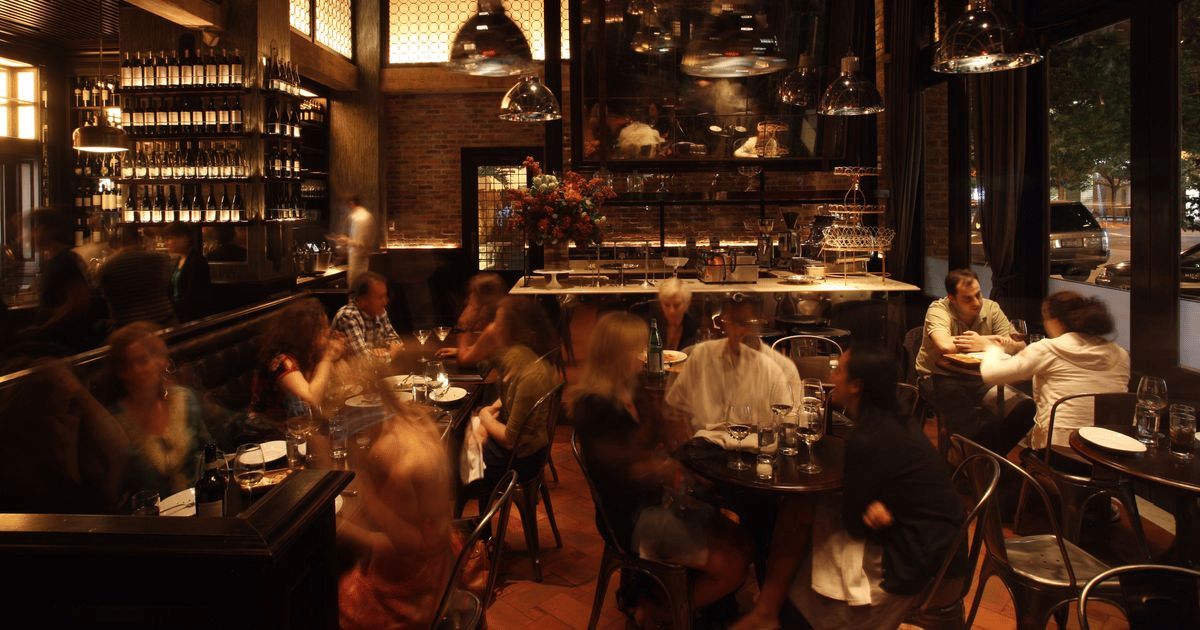
Hudson Yards has developed one of Manhattan’s most concentrated collections of polished restaurants, with serious seafood, Italian cooking, Japanese dining and sky-high destination restaurants all within only a few blocks.
Estiatorio Milos
For seafood, Estiatorio Milos remains one of the neighborhood’s most elegant dining rooms.
The Greek restaurant centers its menu around exceptionally fresh fish and shellfish, much of it displayed on ice and selected before being simply grilled or prepared with olive oil, lemon and Mediterranean ingredients.
The light-filled room and elevated setting make it particularly good for a long lunch, client dinner or special evening when you want the food to feel as polished as the surroundings.
Locanda Verde
At 50 Hudson Yards, Locanda Verde brings Andrew Carmellini’s Italian cooking to the neighborhood in a warm, sophisticated setting.
The menu moves through antipasti, handmade pasta, seafood and meat with the relaxed approach of an Italian osteria rather than a formal dining room.
It also works throughout the day, from breakfast and lunch to a proper dinner, which makes it one of the more useful restaurants to have nearby if you live or work in Hudson Yards.
Greywind
Greywind on Tenth Avenue is chef Dan Kluger’s contemporary American restaurant built around seasonal ingredients and live-fire cooking.
Vegetables receive just as much attention as the larger dishes, while the rotisserie and wood-fired elements give much of the menu a comforting quality without making the restaurant feel heavy.
The room is polished but relaxed, making it particularly good when you want somewhere that feels like a neighborhood restaurant rather than a destination designed only for visitors.
BONDST
For Japanese, BONDST brings its downtown energy to the fifth floor of The Shops at Hudson Yards.
The menu combines sushi and sashimi with cooked Japanese dishes and several of the signatures that made the original NoHo restaurant a longtime New York favorite.
The Hudson Yards dining room adds expansive views and a livelier atmosphere, making it especially well suited to dinner with friends, a celebration or an evening when you want somewhere that feels a little more energetic.
Peak with Priceless
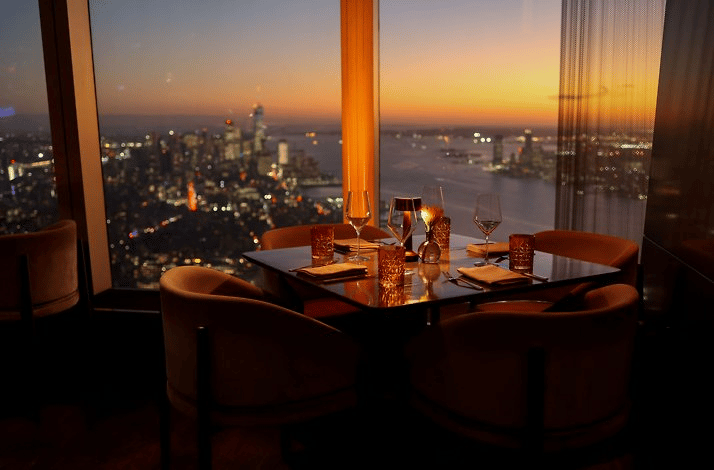
Few restaurants can compete with Peak when the view is part of the plan.
Located on the 101st floor of 30 Hudson Yards, the contemporary American restaurant sits directly above Edge and looks across Manhattan, the Hudson River and beyond.
The dining room is sleek and understated enough to let the skyline do most of the work.
Book around sunset if you can. Watching the city shift from daylight to evening from this height is one of the neighborhood’s most memorable experiences.
For something more casual: Mercado Little Spain
Mercado Little Spain at 10 Hudson Yards is the place to go when everyone wants something slightly different.
Created as a celebration of Spanish food and culture, the sprawling market brings together tapas, paella, jamón, seafood, pastries, wine and several bars and dining counters under one roof.
Come for one quick bite or turn it into a long, informal meal by ordering from several places.
Either approach works.
Culture and Architecture at Hudson Yards
Hudson Yards was designed with culture and architecture as part of the neighborhood rather than something added afterward.
The result is a collection of spaces that feels distinctly contemporary — sometimes monumental, sometimes experimental and almost always unlike the Manhattan streets surrounding it.
The Shed
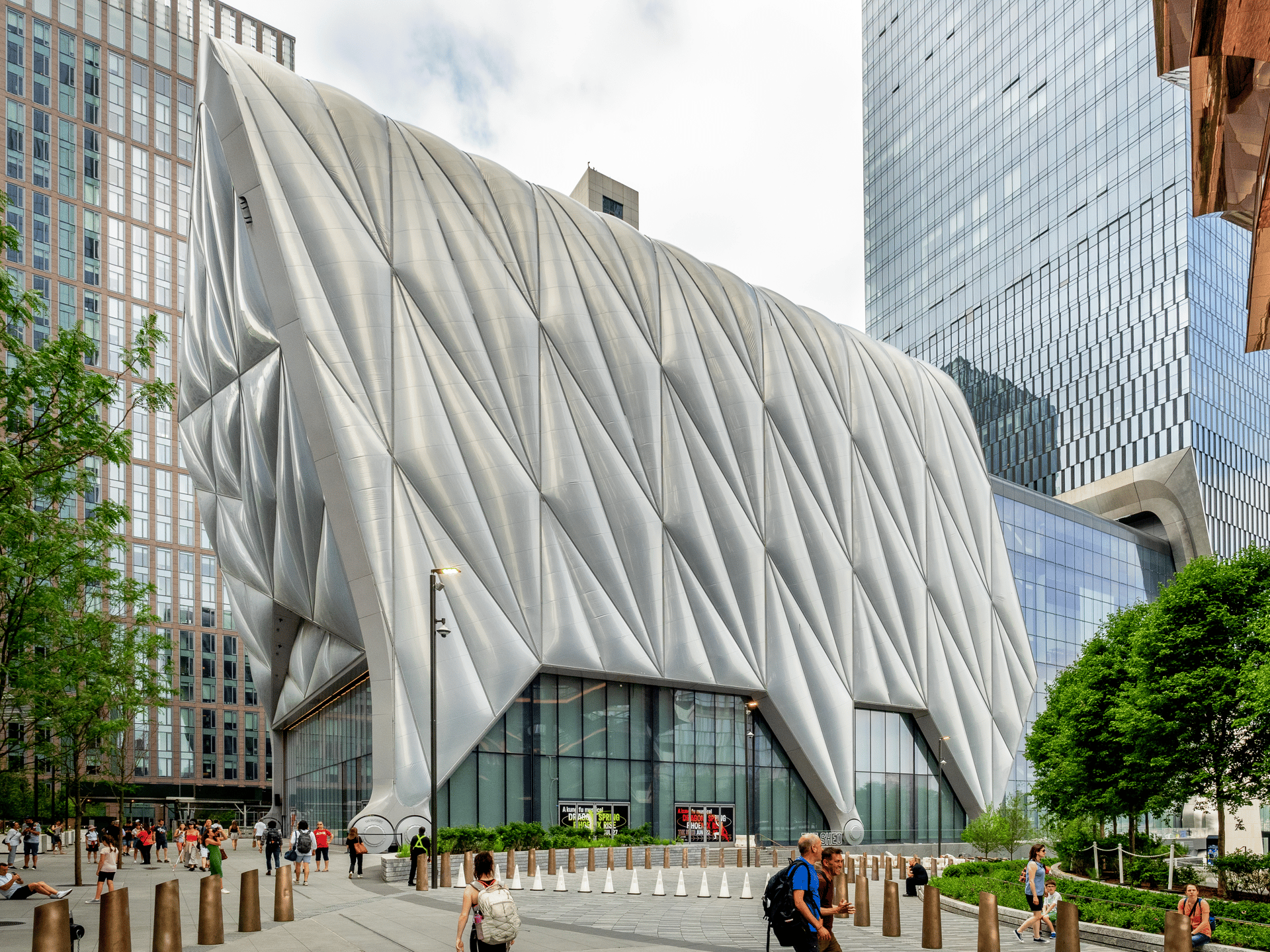
The Shed is the neighborhood’s cultural anchor.
The multidisciplinary arts center presents work across visual art, music, theater, dance and performance inside a remarkably flexible building designed by Diller Scofidio + Renfro in collaboration with Rockwell Group.
Its most recognizable feature is the enormous movable outer shell, which can roll over the adjoining plaza to create The McCourt, a large-scale performance and installation space.
Check what is showing before you go. The building is impressive, but the constantly changing programming is the real reason to return.
Vessel
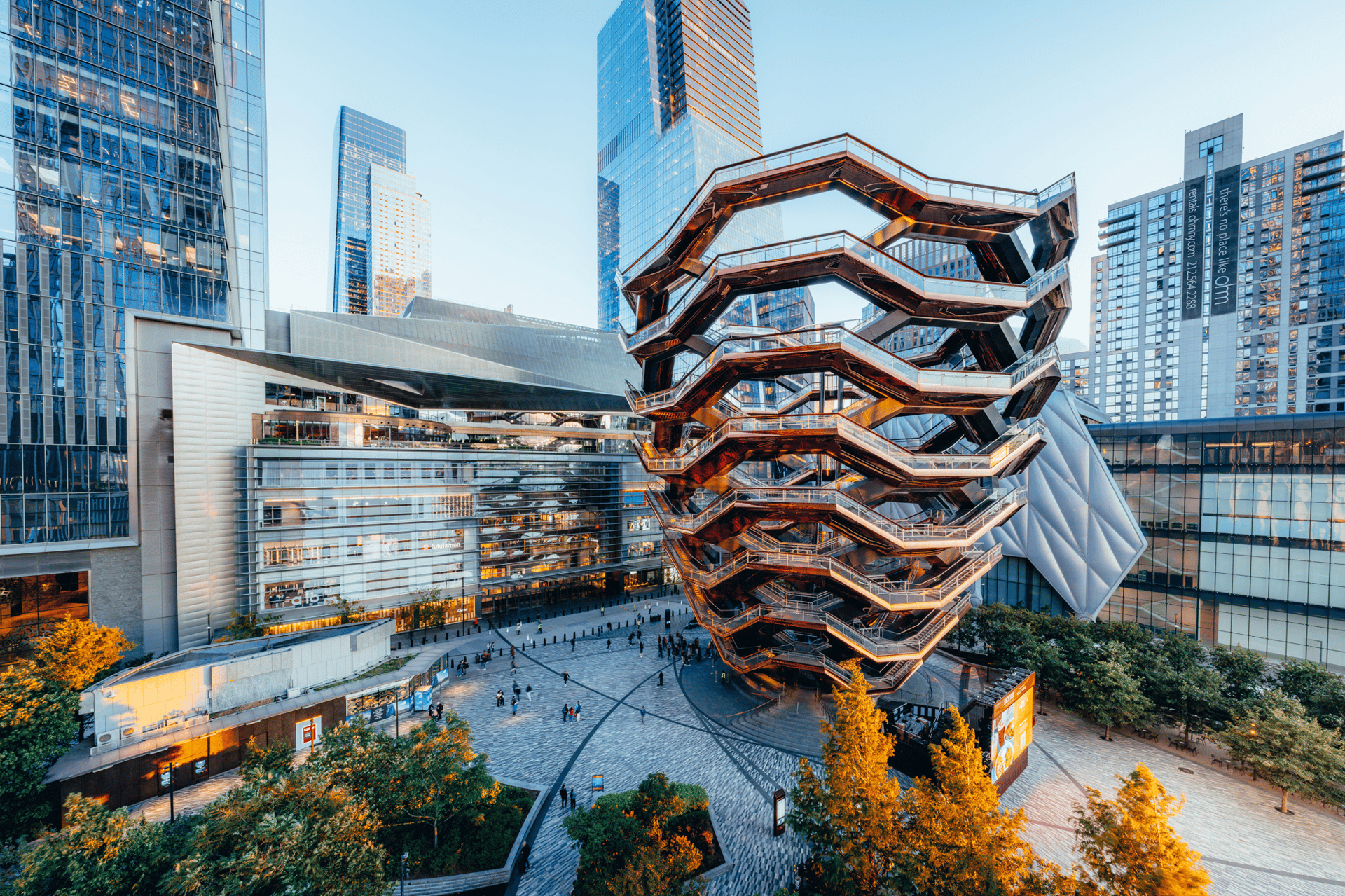
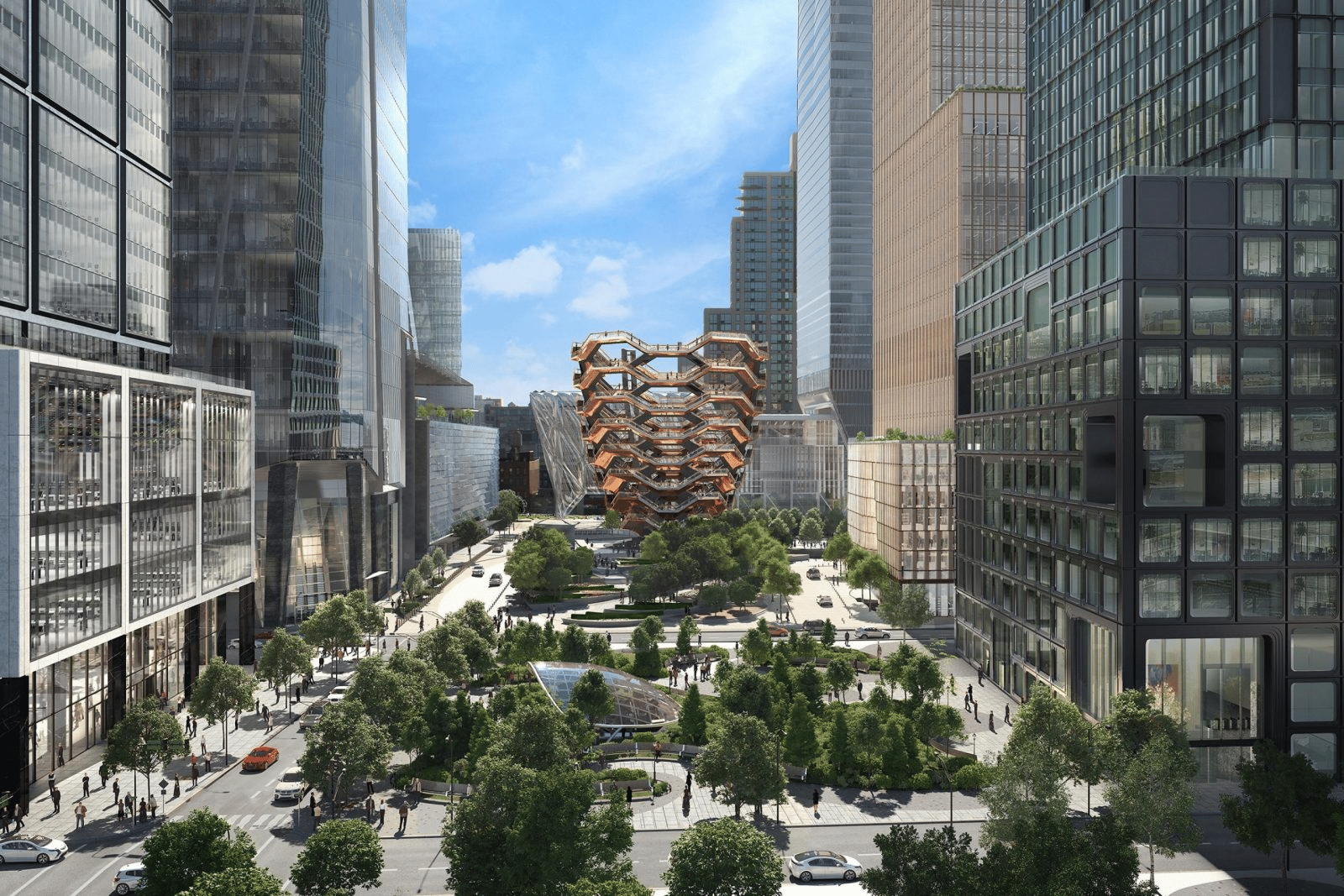
At the center of the Public Square, Vessel remains Hudson Yards’ most recognizable piece of architecture.
Designed by Heatherwick Studio, the 150-foot structure is made up of interconnecting staircases and landings that create constantly shifting views across the surrounding towers and toward the river.
Vessel is once again open to visitors, with ticketed access allowing guests to climb through the structure.
Even if you do not go inside, walking around its base offers some of the neighborhood’s most distinctive architectural views.
Edge
For the skyline, head up.
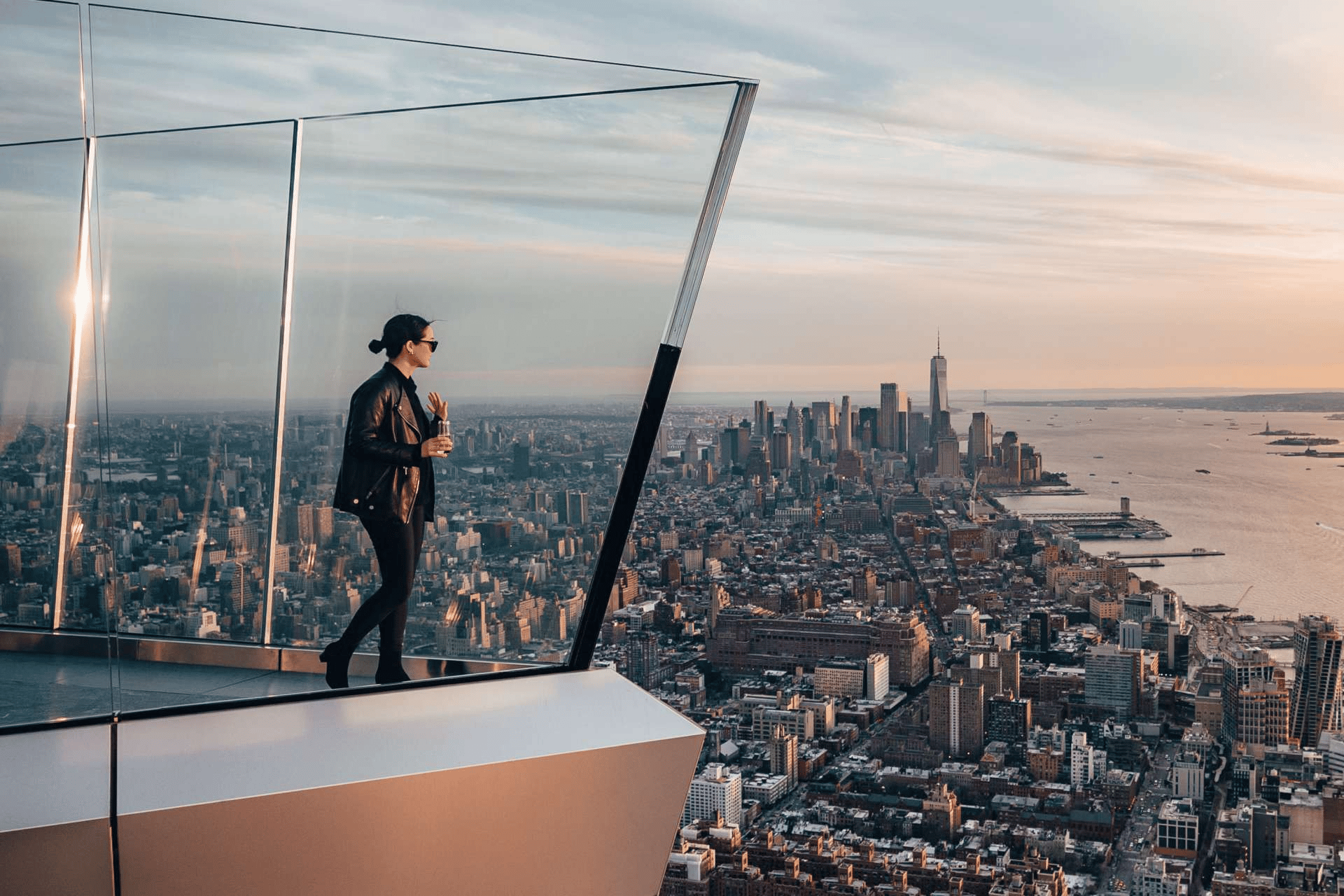
Edge rises from the 100th floor of 30 Hudson Yards, more than 1,100 feet above Manhattan, with an outdoor sky deck that projects outward from the building.
The glass floor, angled glass walls and open-air setting create an entirely different experience from viewing the city through a traditional observation-deck window.
In 2026, Edge introduced a series of permanent immersive indoor installations built around light, color, sound and movement, making the experience more substantial even before you step outside.
Go on a clear day or just before sunset.
The High Line Spur
At West 30th Street and Tenth Avenue, the High Line opens into the Spur, one of its largest gathering spaces.
The Spur is home to the Plinth, a site dedicated to rotating monumental contemporary art commissions.
It is a particularly good place to pause before continuing north around the rail yards or heading down through Chelsea.
The contrast between the planted elevated park, large-scale public art and Hudson Yards’ new architecture captures the neighborhood especially well.
When You Want a Drink
Electric Lemon
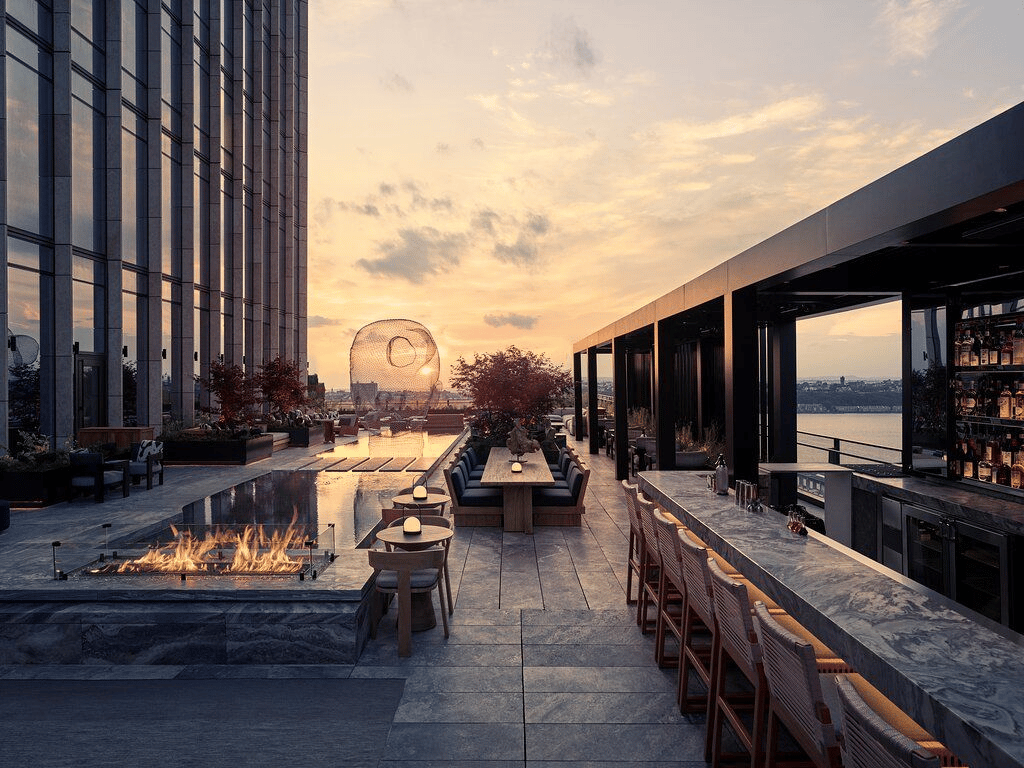
For cocktails, Electric Lemon inside the Equinox Hotel is our pick.
Set high above the neighborhood, the seasonal American restaurant includes an expansive outdoor terrace with views across the Hudson River and Manhattan.
The setting feels polished but less theatrical than an observation deck, making it especially good when you want the skyline without making the skyline the entire event.
Come for a cocktail around golden hour and stay as the lights begin to come on across the city.
Get Outside
The High Line
Hudson Yards marks the northern end of one of New York’s most successful public spaces.
The High Line approaches the neighborhood from Chelsea before turning west along West 30th Street and curving around the rail yards toward West 34th Street.
This northern section feels different from the stretches farther south. The city becomes more open, the plantings feel slightly wilder and views stretch across the rail yards toward the Hudson and the surrounding towers.
Start at Hudson Yards and walk south when you want the full experience, or simply use the northern loop as a neighborhood walk.
Public Square and Gardens
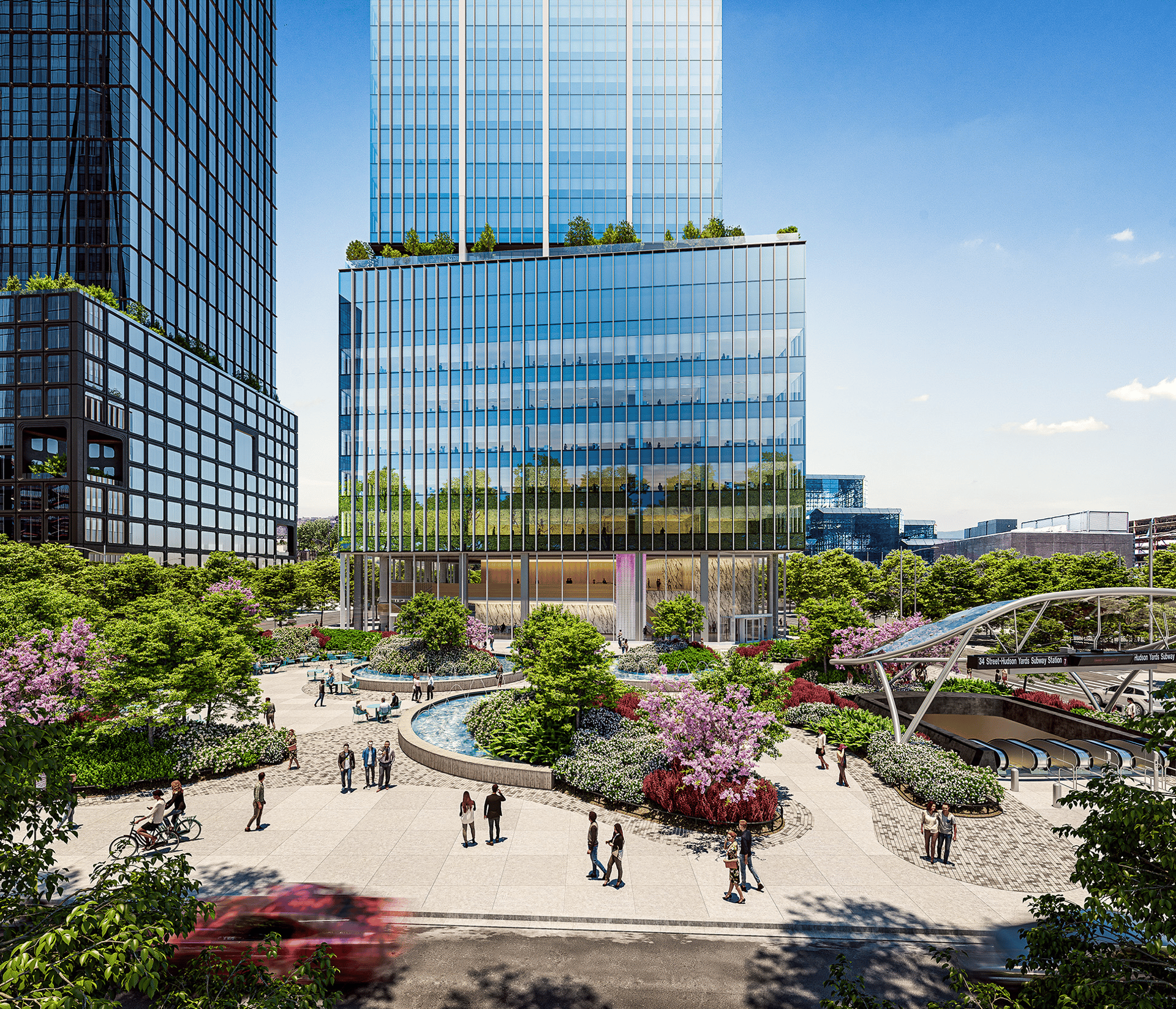
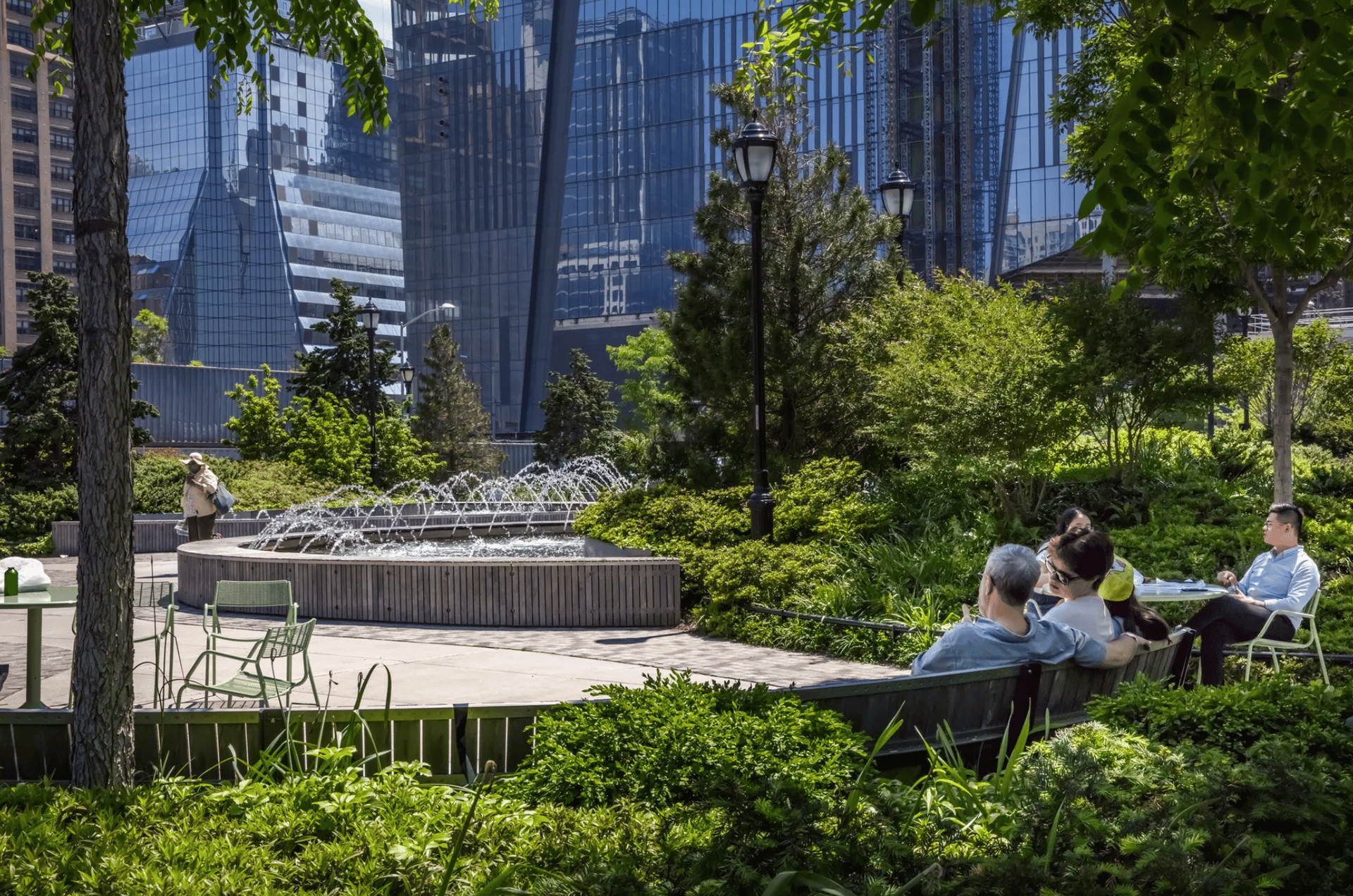
At the center of Hudson Yards, the Public Square and Gardens introduces five acres of landscaped outdoor space between the surrounding towers.
Trees, perennial gardens, paths and seating areas soften what could otherwise feel like an entirely architectural environment.
The engineering beneath it is nearly as impressive as the landscape above: the gardens sit on a platform over active rail infrastructure, requiring specially designed systems to support trees, manage heat and collect water.
It is an unusual park because almost nothing about the ground beneath it is ordinary.
Bella Abzug Park
Continue north along Hudson Boulevard and you reach Bella Abzug Park.
The landscaped park runs through several blocks of the Hudson Yards district and provides lawns, seating, fountains and gathering spaces among the surrounding residential and commercial buildings.
It feels less monumental than the Public Square and more like a neighborhood park — somewhere to sit with lunch, walk the dog or simply take the slower route north.
Streets Worth Wandering
Hudson Yards is too new to offer the layers of historic streets found in neighborhoods like the West Village or Chinatown, but walking remains the best way to understand it.
West 30th Street is a natural starting point, where the High Line, The Shed and the southern edge of Hudson Yards meet.
Around West 33rd and 34th Streets, the neighborhood becomes more vertical, framed by towers, the Public Square and the entrance to the 7 train.
Hudson Boulevard offers the most landscaped route north, while Eleventh Avenue puts the scale of the neighborhood into perspective beside the Javits Center and the open western edge of Manhattan.
Walk west whenever possible.
The closer you get to the Hudson, the more the neighborhood seems to breathe.
Our Hudson Yards Shortlist
- For coffee: Bluestone Lane
- For seafood: Estiatorio Milos
- For Italian: Locanda Verde
- For seasonal American: Greywind
- For Japanese: BONDST
- For dinner with a view: Peak with Priceless
- For something casual: Mercado Little Spain
- For a cocktail: Electric Lemon
- For contemporary culture: The Shed
- For architecture: Vessel
- For skyline views: Edge
- For public art: the High Line Spur
- For a morning walk: the High Line
- For landscaped open space: the Public Square and Gardens
- For something quieter: Bella Abzug Park
- For sunset: the Hudson River
Living in Hudson Yards
Residentially, Hudson Yards represents a very different version of Manhattan living.
Rather than developing gradually over generations, much of the neighborhood was planned as a coordinated mixed-use district, with residential towers, offices, restaurants, cultural spaces and public parks arriving together around major new infrastructure.
The homes reflect that modern approach.
Buildings such as 15 Hudson Yards and 35 Hudson Yards emphasize floor-to-ceiling glass, expansive views, full-service staffing and extensive private amenities. Many residences sit high enough to look across the Hudson River, Midtown skyline or downtown Manhattan rather than directly toward another building.
Newer rental and condominium developments extend beyond the central Hudson Yards complex along Hudson Boulevard, Tenth and Eleventh Avenues, creating a broader residential district around the original development.
What ties it together is convenience: the 7 train, the High Line, restaurants, shopping, parks, The Shed and the Hudson River are all within a remarkably compact area.
The Real Estate
Hudson Yards real estate is defined primarily by contemporary condominiums and luxury rental towers.
Unlike Manhattan neighborhoods dominated by prewar apartment buildings, the housing stock here is overwhelmingly modern, with glass façades, high ceilings, large windows and layouts designed around light and views.
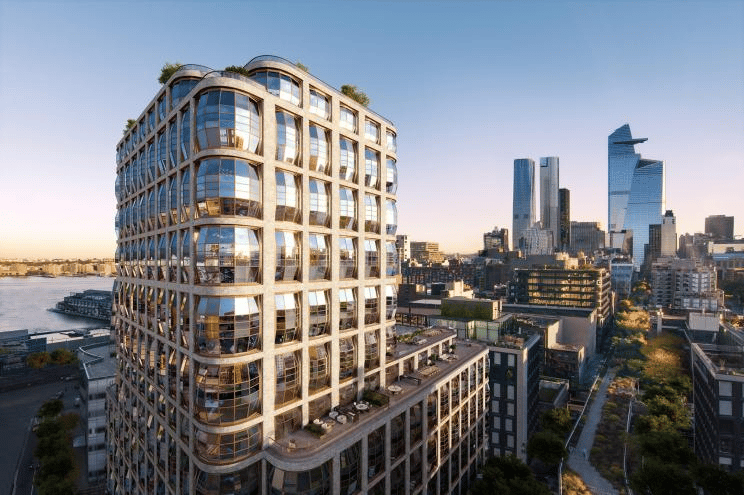
At 15 Hudson Yards, the curved glass residential tower rises directly beside The Shed and the High Line. Nearby, 35 Hudson Yards combines luxury residences with the Equinox Hotel, fitness club and spa within the same tower.
Throughout the wider Hudson Yards district, additional condominium and rental buildings offer another range of modern options, particularly along Hudson Boulevard and the avenues leading toward Midtown West.
Amenity packages tend to be substantial. Pools, fitness centers, lounges, roof terraces, private dining rooms and staffed lobbies are common among the neighborhood’s newer luxury properties.
The neighborhood’s development is also closely connected to transportation and infrastructure. Much of Hudson Yards exists because platforms were constructed above active rail yards, allowing an entirely new district to rise where conventional development had previously been difficult.
The extension of the 7 subway line to 34th Street–Hudson Yards in 2015 helped connect that new district directly to the rest of Manhattan.
From glass-walled condominiums with panoramic Hudson River views to full-service rental towers close to the High Line, Hudson Yards offers one of Manhattan’s most contemporary residential environments.
Find a Home in Hudson Yards
Whether you are drawn to a high-floor condominium with panoramic river views, a contemporary residence beside the High Line or a full-service rental in one of Manhattan’s newest residential districts, explore what is currently available across Hudson Yards.