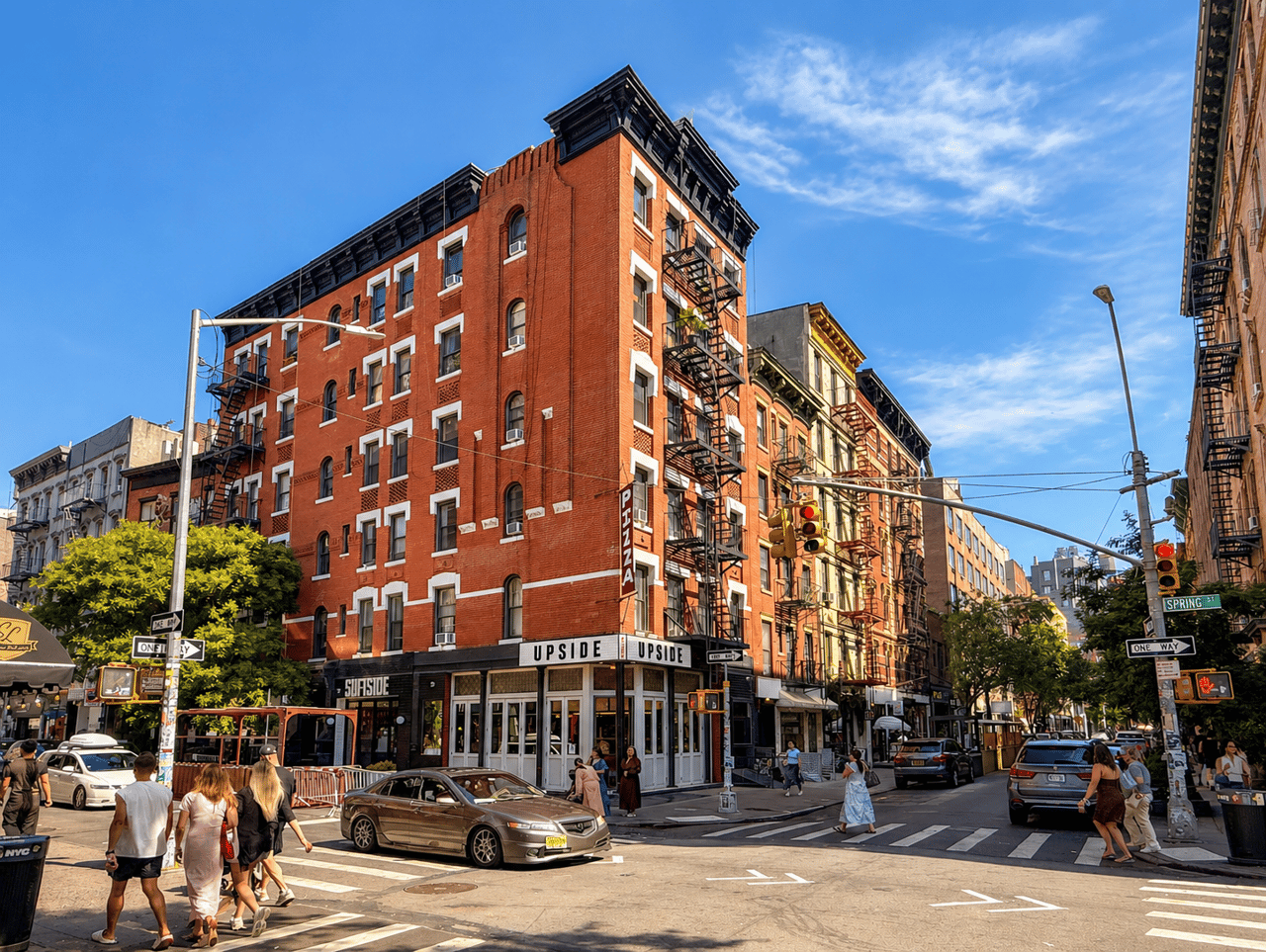
Downtown Manhattan at its most effortlessly stylish: intimate streets, independent boutiques, destination restaurants, historic architecture and one of the city’s most distinctive community gardens.
Nolita may be small, but it has an identity that feels remarkably complete.
Short for “North of Little Italy,” the neighborhood sits between Lafayette Street and the Bowery, roughly from Broome Street to East Houston. Its streets carry traces of the Italian-American community that once defined much of this part of Lower Manhattan, but today Nolita has evolved into something distinctly its own.
Historic walk-ups and former commercial buildings rise above independent shops, cafés and some of downtown’s most sought-after restaurants. Mott and Elizabeth Streets feel intimate and residential, while Prince, Spring and Mulberry bring more energy without reaching the crowds of neighboring SoHo.
Spend enough time here and you quickly find your own routine: coffee on Elizabeth Street, a walk through the garden, lunch somewhere small, an afternoon browsing shops along Prince and Mott, and dinner on Mulberry Street before the neighborhood settles into the evening.
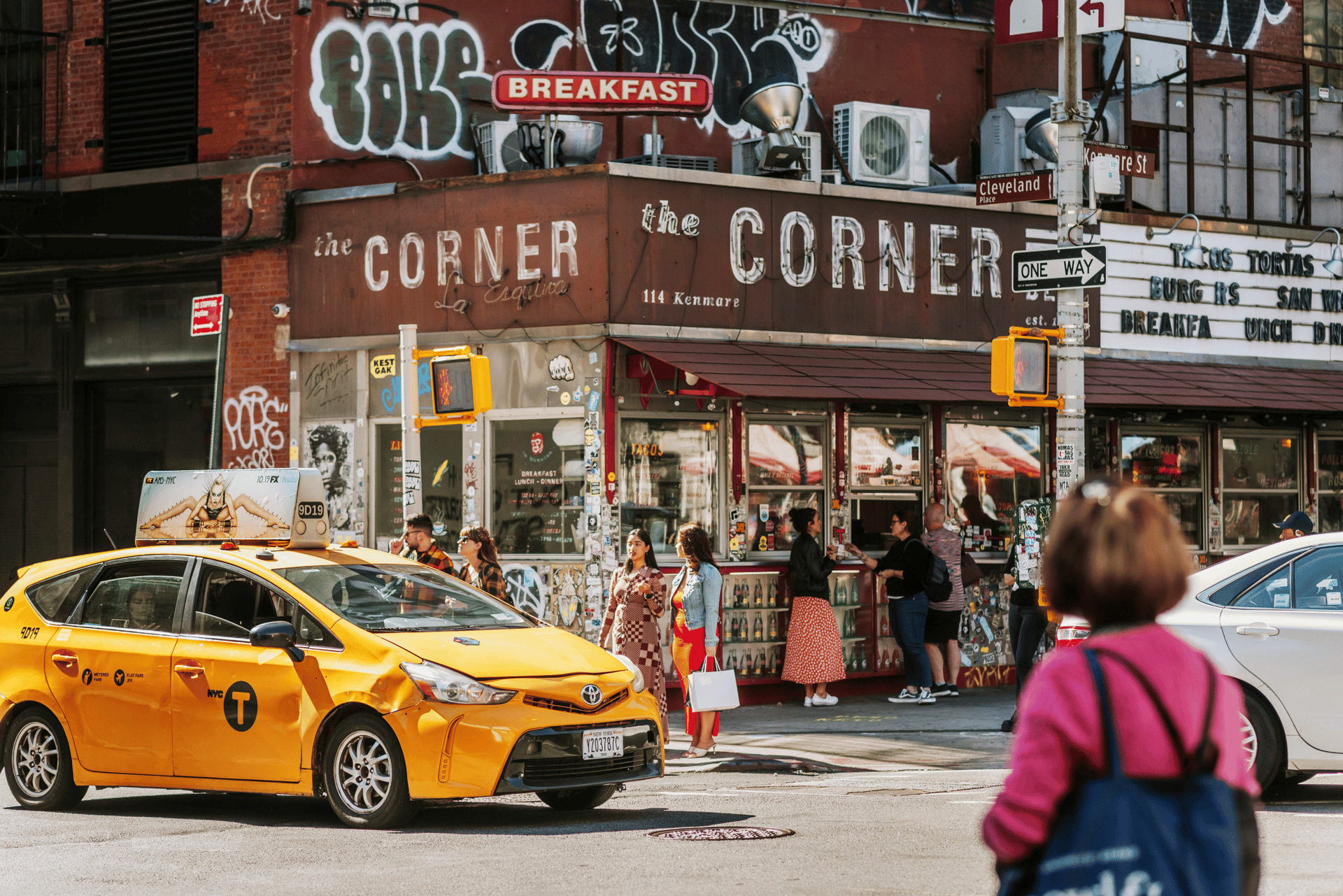
Nolita feels polished without feeling overproduced.
The neighborhood’s scale is one of its greatest strengths. Most buildings remain relatively low, with four- to six-story walk-ups and mixed-use properties creating streets that feel intimate even in the middle of downtown Manhattan.
Ground-floor retail is woven directly into residential life.
A tiny boutique may sit beneath apartments, a restaurant may occupy a former storefront and a coffee shop can feel like an extension of the sidewalk outside.
Then there is the location.
SoHo, NoHo, Chinatown, Little Italy, the Bowery and the Lower East Side are all within a few minutes’ walk, yet Nolita rarely feels like an extension of any one of them.
The neighborhood has enough personality to stand entirely on its own.
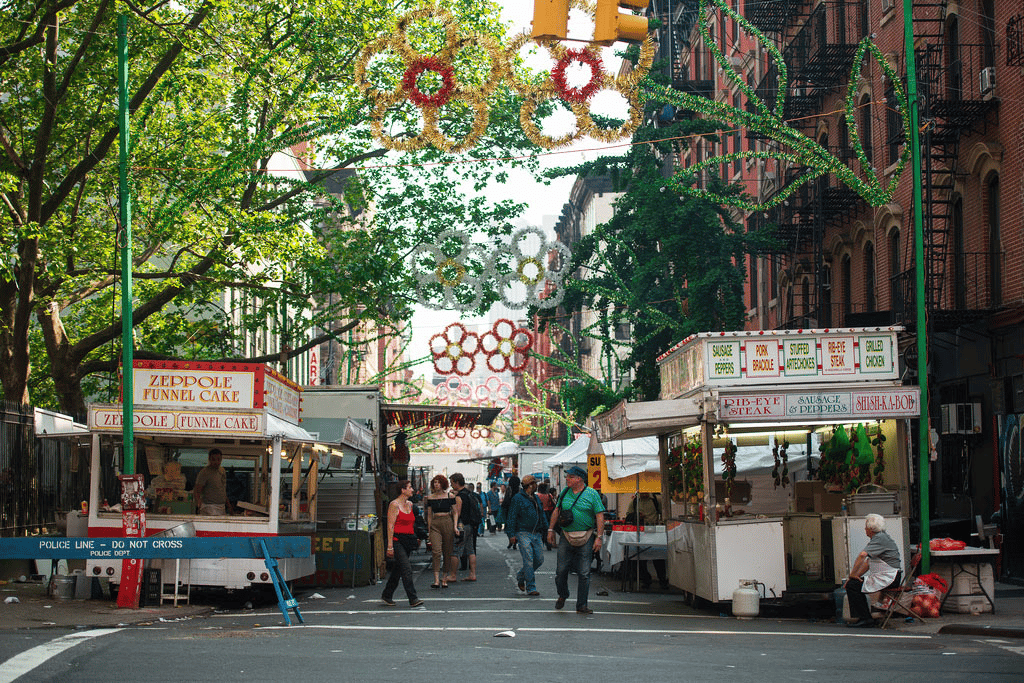
Café Integral on Elizabeth Street is one of our favorite ways to begin a Nolita morning.
Founded in 2012, the café specializes in carefully sourced Nicaraguan coffee and has built a devoted following around its espresso and rotating single-origin offerings.
The room is small and understated, fitting naturally into the neighborhood rather than competing with it.
Order a coffee, step back outside and continue along Elizabeth Street toward Prince.
Nolita is especially good before the shops and restaurants fully wake up.
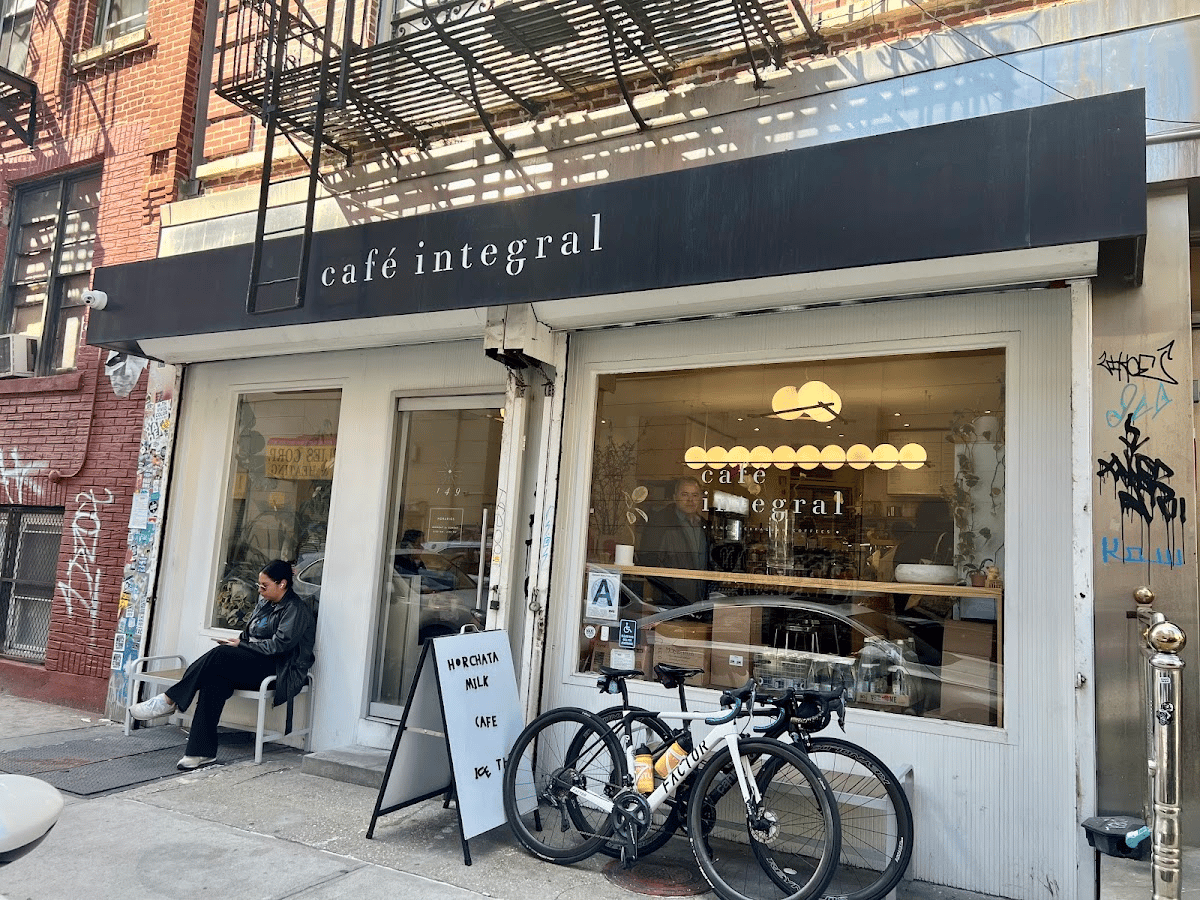
Elizabeth and Mott Streets capture the neighborhood at its best.
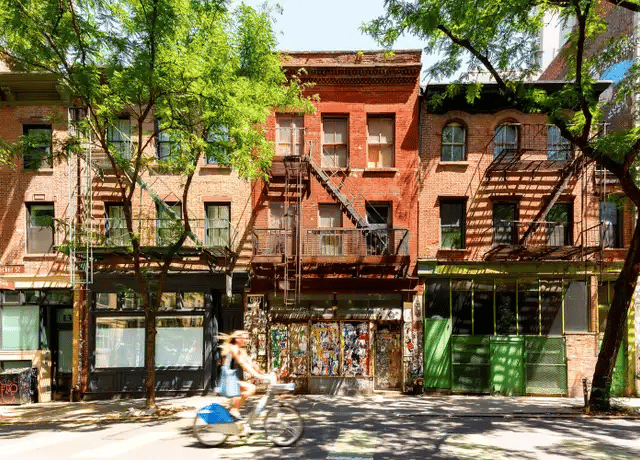
Historic brick buildings, fire escapes, independent boutiques, cafés and restaurant storefronts line blocks narrow enough to feel distinctly downtown.
Elizabeth Street is quieter and more residential, particularly around the garden, while Mott carries more energy as it runs toward Houston and south toward Little Italy.
Turn onto Prince or Spring whenever something catches your attention.
The distances are short enough that there is never much reason to plan a route.
Nolita has one of the strongest restaurant scenes of any neighborhood its size.
Italian cooking remains important, but contemporary Indonesian, Thai and New York-inspired restaurants have expanded the neighborhood far beyond its historical roots.
The best places range from difficult reservations to neighborhood institutions that have been around long enough to become part of Nolita’s identity.
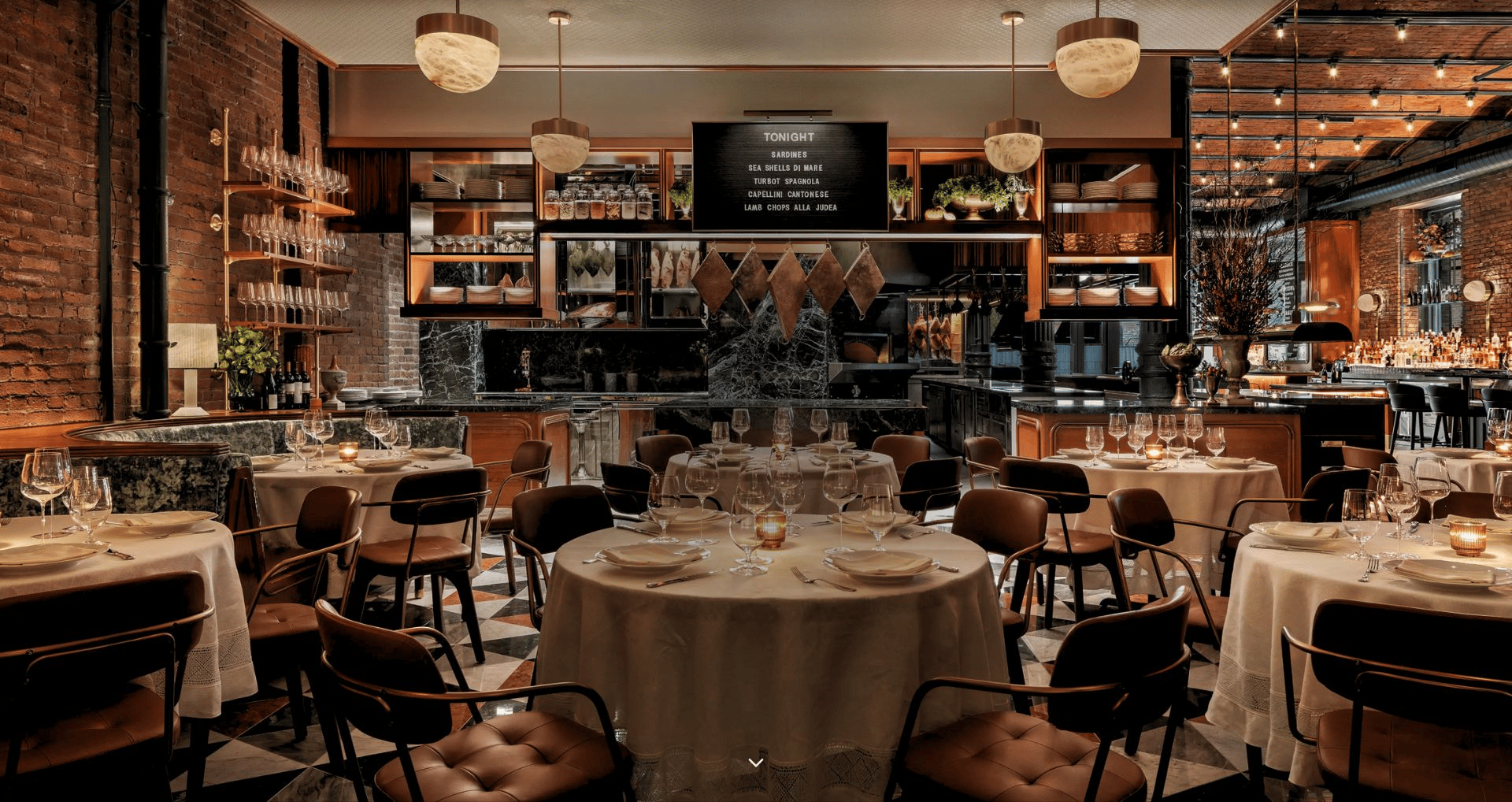
For a special dinner, Torrisi is one of downtown Manhattan’s most sought-after reservations.
The restaurant occupies the Mulberry Street side of the landmark Puck Building, bringing contemporary Italian-American cooking into a grand room with vaulted ceilings and artwork that gives the space an unmistakably New York sense of occasion.
The menu approaches Italian cuisine through the history and cultural influences of New York itself, resulting in dishes that feel familiar and unexpected at the same time.
Service is polished, the room is lively and reservations require planning.
Come dressed for dinner and give the evening enough time.
Torrisi is not somewhere to rush.
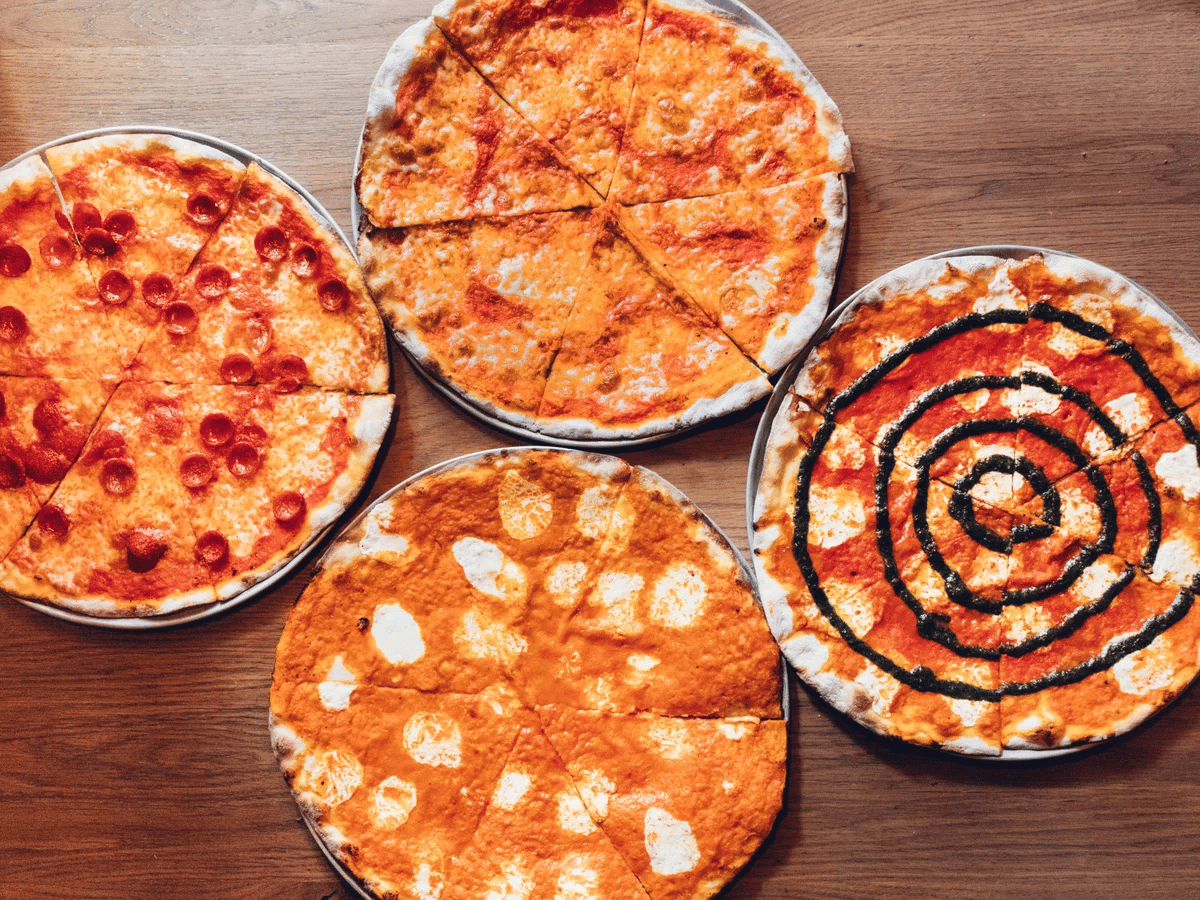
Rubirosa is one of those restaurants that feels inseparable from Mulberry Street.
The family-run restaurant is best known for its exceptionally thin-crust pizza, alongside handmade pasta and Italian-American classics.
The room is narrow, warm and almost always busy, with tables packed closely enough together to create exactly the kind of downtown energy you want from dinner here.
Pizza is essential.
Order one for the table, add a pasta or two and do not overcomplicate things.
Some neighborhood institutions earn their status by changing constantly.
Rubirosa succeeds by knowing exactly what it is.
On Spring Street, Wayan offers a completely different kind of Nolita dinner.
Chef Cédric Vongerichten combines Indonesian flavors with modern French technique, creating a menu built for sharing.
Satays, seafood, vegetables and richly seasoned Southeast Asian dishes arrive in a dining room filled with teak, greenery and softly textured interiors.
The food is sophisticated without making the experience feel formal.
It is particularly good for a date night or dinner with a few people willing to order across the menu.
Nolita is at its best when several culinary traditions exist within only a few blocks, and Wayan is an excellent example.
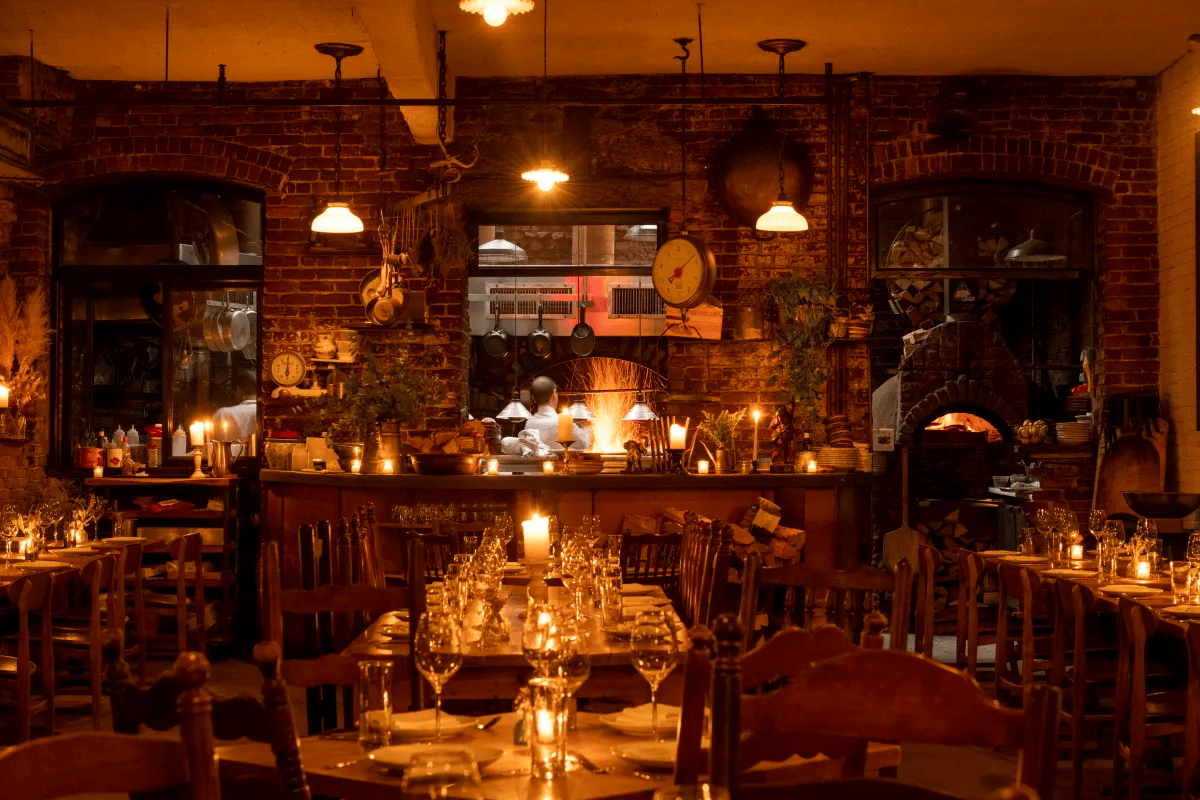
Peasant on Elizabeth Street has been part of the neighborhood since 1999.
Today, chef Marc Forgione carries forward the restaurant’s rustic Italian identity with handmade pasta and dishes cooked over live fire and in the wood-burning oven.
The downstairs dining room feels warm and almost subterranean, with brick, candlelight and the smell of the open kitchen giving the restaurant considerably more atmosphere than its understated exterior suggests.
The food is substantial and deeply satisfying.
Come hungry and order something touched by the fire.
Thai Diner on Mott Street takes the familiar language of an American diner and completely rewrites it through Thai cooking.
Breakfast can mean an egg sandwich wrapped in roti, while later meals move through curries, noodles, seafood, fried chicken and playful dishes that borrow from both Bangkok and New York.
The room is casual, colorful and constantly energetic.
It works for brunch, lunch or dinner without feeling like three different restaurants.
That flexibility makes it one of the most useful places in the neighborhood.
Prince Street Pizza is not where you go for a quiet meal.
The original Prince Street slice shop has become famous for its thick Sicilian-style squares, particularly the pepperoni-covered Spicy Spring.
Expect a line.
Order at the counter and eat the slice while it is still hot rather than carrying it around downtown for twenty minutes.
Sometimes that is all lunch needs to be.
Nolita’s cultural life is less concentrated than in museum-heavy neighborhoods farther uptown.
Instead, history, architecture, art and religion are embedded directly into its streets.
A church wall, a former publishing building or an experimental gallery can tell as much about downtown Manhattan as a conventional museum.
At Prince and Mott Streets, the Basilica of St. Patrick’s Old Cathedral is one of the neighborhood’s most important landmarks.
Built between 1809 and 1815, it served as New York’s original Catholic cathedral long before the current St. Patrick’s Cathedral opened on Fifth Avenue.
The Gothic Revival church sits behind massive stone walls, with its historic cemetery and grounds creating an extraordinary sense of separation from the streets outside.
Over generations, the parish served Irish, Italian, Black, Chinese, Vietnamese and other Catholic communities as Lower Manhattan changed around it.
Step through the gates and the neighborhood suddenly feels two centuries older.
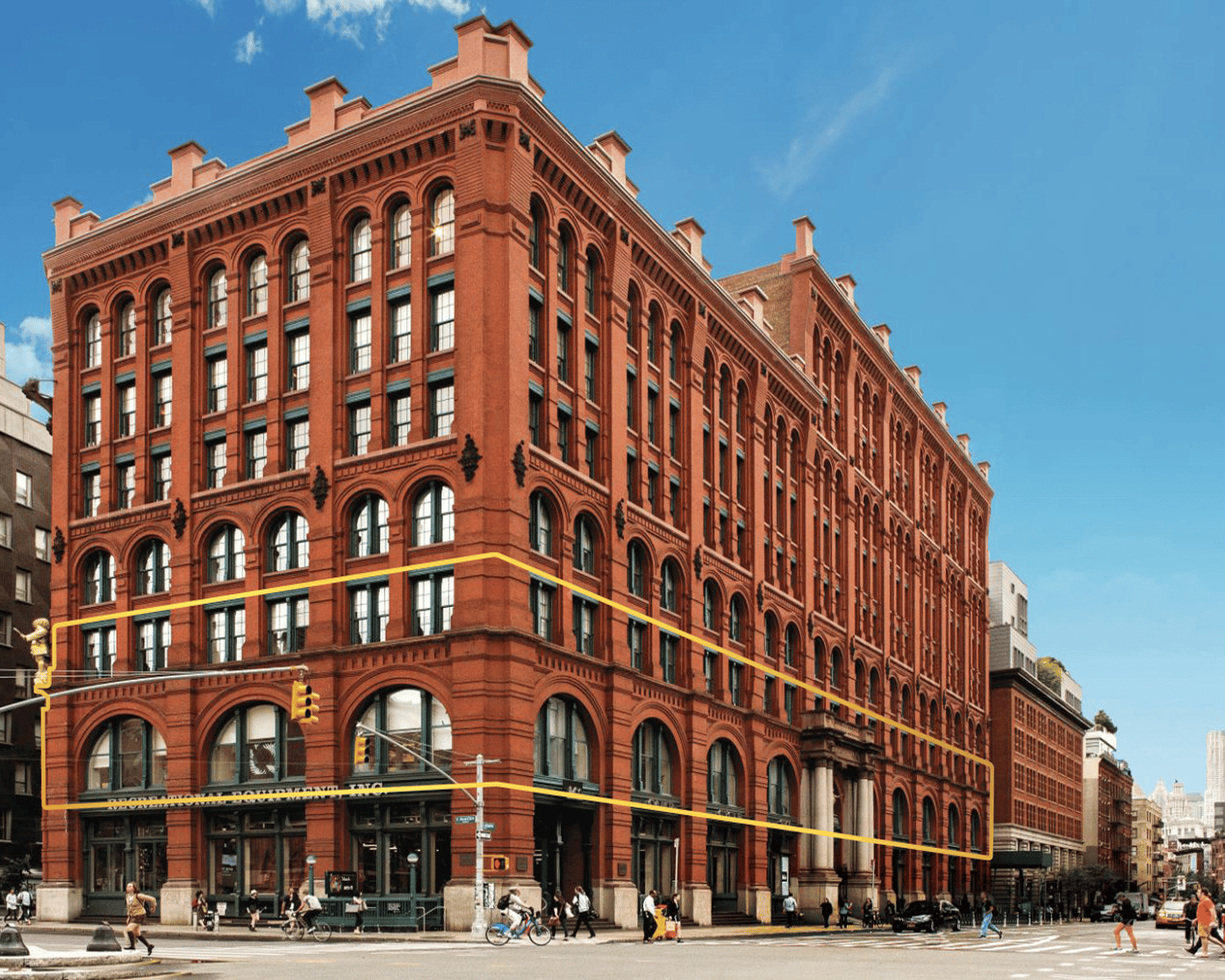
At Nolita’s northern edge, the Puck Building is impossible to miss.
The enormous red-brick Romanesque Revival structure was built beginning in 1885 as the headquarters and printing facility of Puck, the influential satirical magazine.
Round-arched windows, elaborate brickwork and gilded figures of Shakespeare’s mischievous Puck give the building a personality unlike almost anything nearby.
The structure is an individual New York City landmark and remains one of the great surviving buildings from downtown Manhattan’s publishing and printing era.
Today it mixes commercial space with extraordinary residences at the top — and Torrisi at street level.
Look up when you pass it.
The building deserves considerably more than a glance.
On Kenmare Street, Storefront for Art and Architecture offers one of downtown’s most unusual cultural spaces.
Founded in 1982, the nonprofit focuses on experimental ideas in architecture, design, art and the built environment.
Its narrow triangular gallery is especially famous for the façade designed by artist Vito Acconci and architect Steven Holl, made from rotating panels that can physically open the gallery toward the street.
Exhibitions and programs change regularly, and admission to the gallery is free.
It is small enough to visit spontaneously.
Check what is showing and step inside.
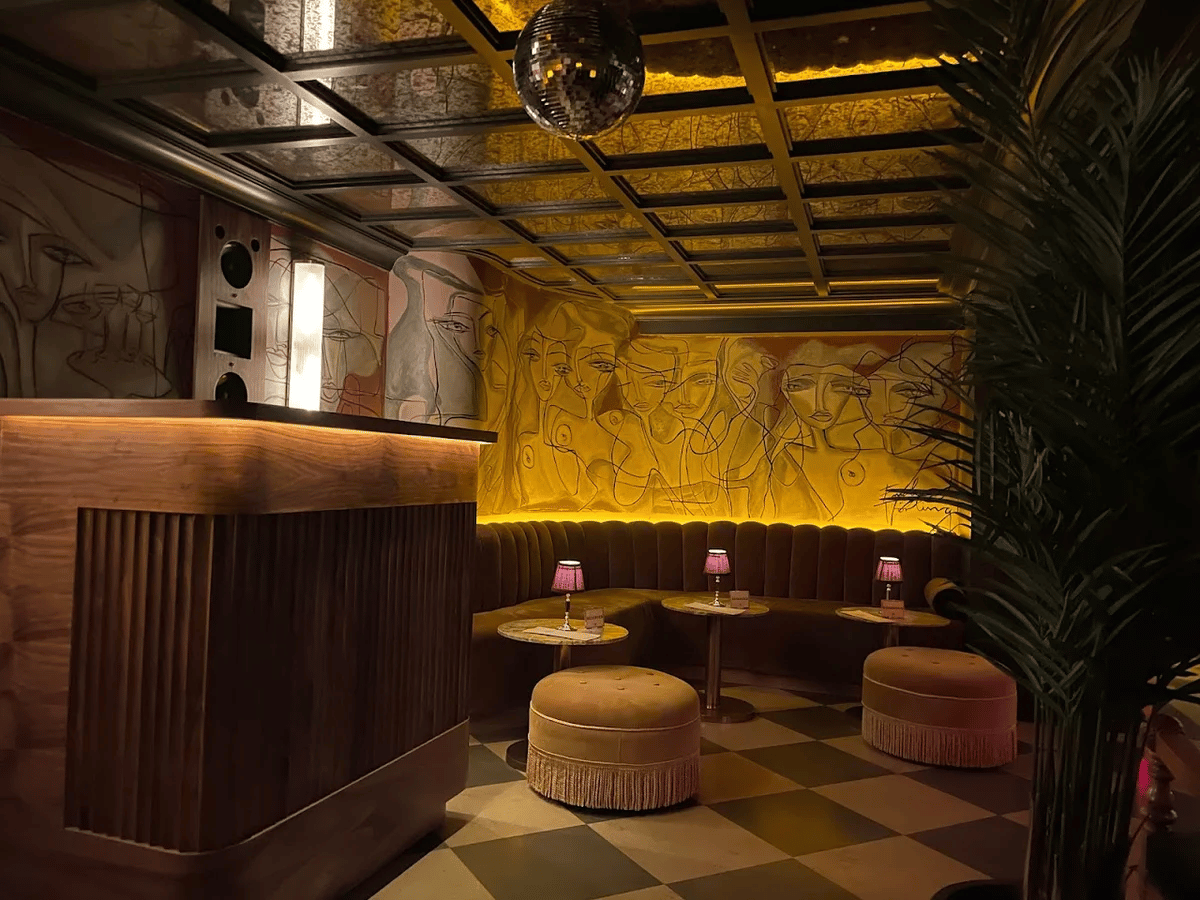
For cocktails, The Mulberry brings a more polished late-night mood to Mulberry Street.
The subterranean bar combines dark wood, banquettes and low lighting with a cocktail menu that moves from excellent martinis and Vespers to more playful house creations.
The room feels glamorous without becoming overly theatrical.
Come after dinner, order something classic and settle into one of the corners.
It is exactly the sort of bar Nolita does well: discreet from the street, considerably more interesting once you are inside.
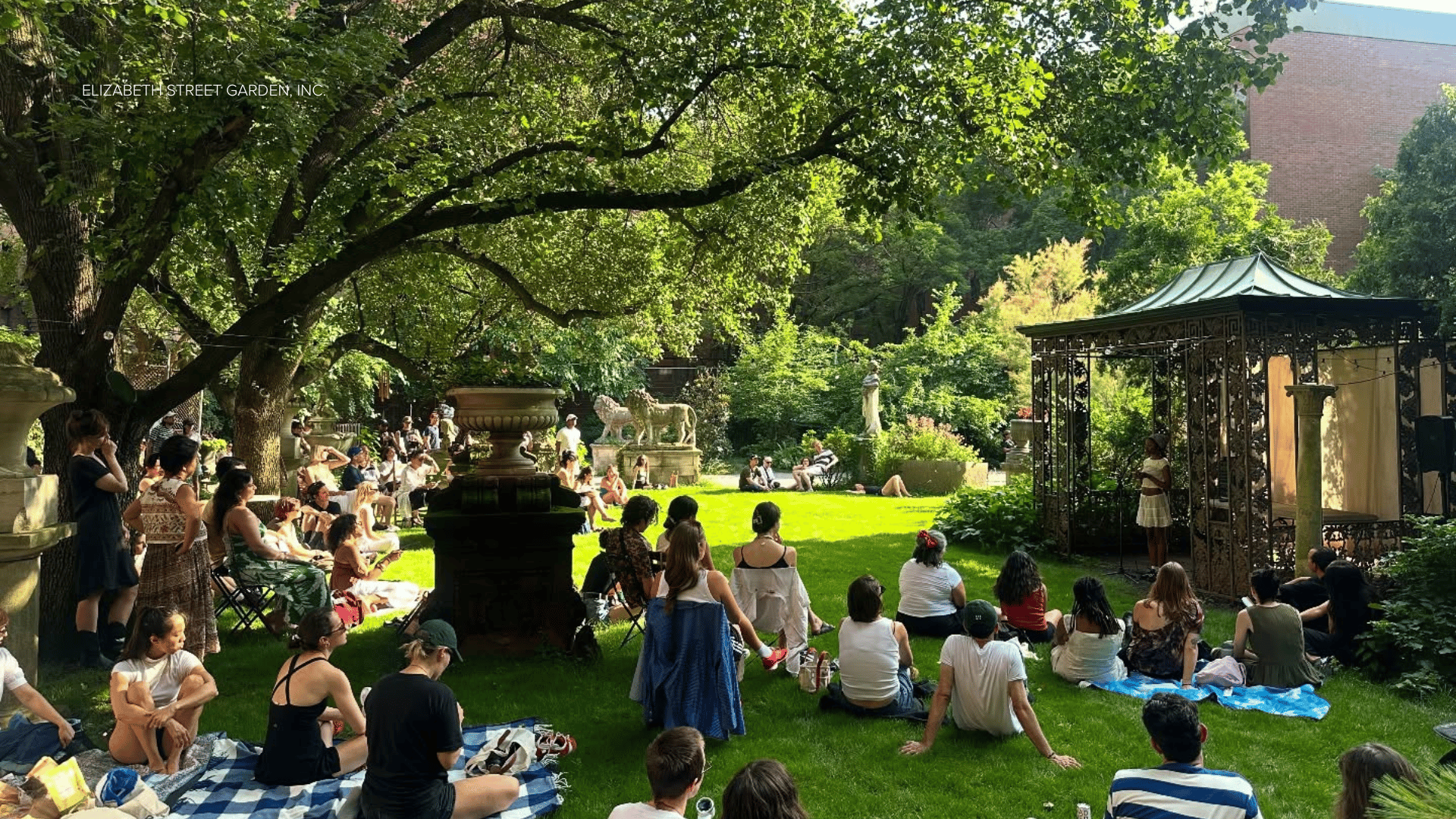
Elizabeth Street Garden is one of Nolita’s defining places.
The community garden occupies a rare stretch of open space between Elizabeth and Mott Streets, filled with mature trees, architectural fragments, sculptures, tables and winding paths.
For years, its future was uncertain as the city pursued plans to develop housing on the site.
That changed in 2025, when the city reached an agreement preserving the garden while shifting a larger affordable-housing plan to other Lower Manhattan sites.
Today, the garden remains open to the public and continues to host community programming.
Come with coffee, find somewhere beneath the trees and stay for a while.
In a neighborhood with very little green space, it feels especially valuable.
At Spring and Mulberry Streets, DeSalvio Playground offers a very different kind of neighborhood open space.
The compact park includes play equipment, seating and recreation space, making it especially connected to families living nearby.
It is not somewhere you cross Manhattan to visit.
That is exactly what makes it useful.
In a neighborhood where almost every square foot seems occupied by a shop, restaurant or apartment building, even a small public space becomes part of daily life.
Nolita is best experienced one block at a time.
Elizabeth Street is our favorite starting point, particularly between Houston and Kenmare, where boutiques, historic walk-ups, restaurants and the Elizabeth Street Garden create a remarkably intimate streetscape.
Mott Street feels more animated, moving from cafés and restaurants in the north toward the Italian-American history of the blocks farther south.
Prince Street connects Nolita directly with SoHo but feels noticeably smaller east of Lafayette, with boutiques, pizza and the walls of St. Patrick’s Old Cathedral defining the blocks.
Spring Street brings restaurants and everyday neighborhood energy, while Mulberry Street creates the clearest transition between Nolita and Little Italy.
Kenmare has a completely different scale, carrying more traffic but also giving the neighborhood one of its most interesting architectural spaces at Storefront for Art and Architecture.
You can cross Nolita in minutes.
The better approach is to keep turning corners.
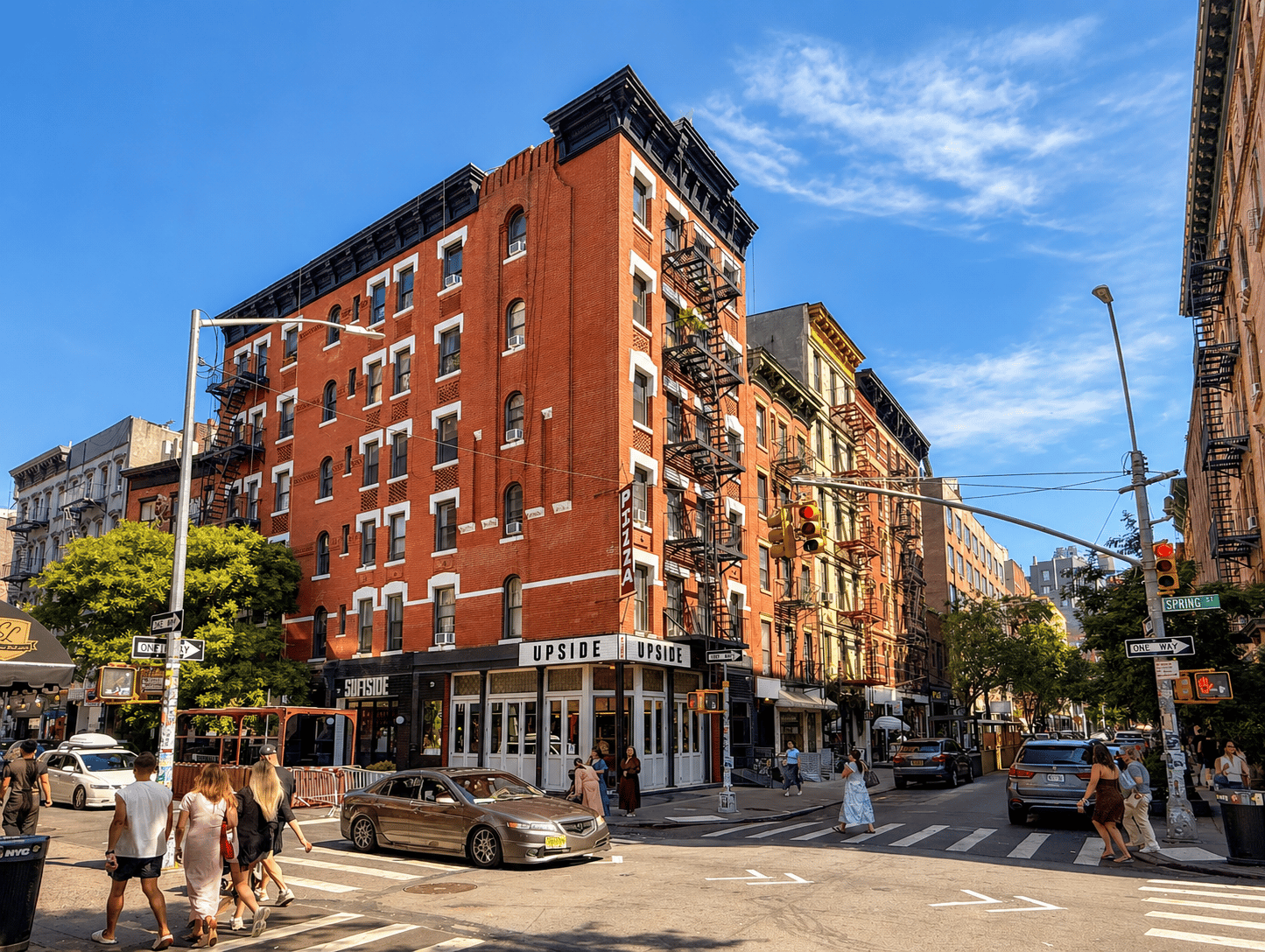
Residentially, Nolita feels intimate even by downtown Manhattan standards.
Four- to six-story walk-ups and mixed-use buildings define much of the neighborhood, with apartments sitting directly above boutiques, cafés and restaurants.
Historic tenements and prewar buildings remain common, while renovated loft-style apartments, condominium conversions and a limited number of newer boutique residences provide more contemporary options.
The location is exceptional: SoHo, NoHo, Chinatown, Little Italy and the Lower East Side are all within an easy walk, with several subway lines nearby.
Despite that centrality, the smaller side streets can feel surprisingly residential once the evening crowds disappear.
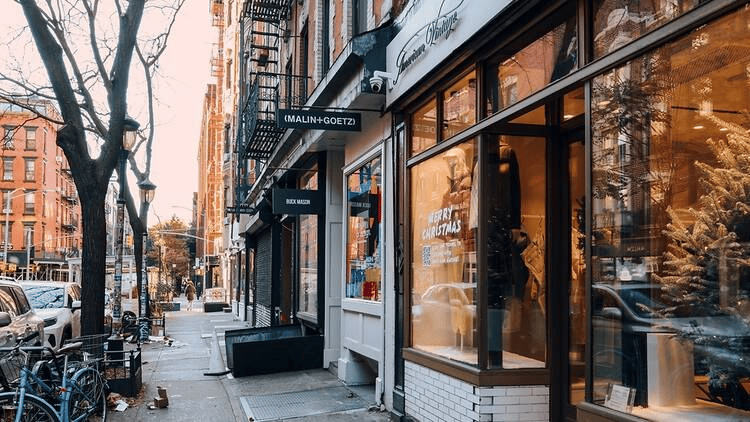
Nolita real estate is defined by limited inventory and downtown character.
Older walk-ups and mixed-use buildings make up much of the housing stock, often with brick façades, fire escapes and apartments above ground-floor retail.
Larger former commercial buildings can offer loft-style residences with higher ceilings and oversized windows, while boutique condominiums and carefully renovated properties introduce more modern interiors and amenities.
Unlike neighboring SoHo, Nolita is not dominated by enormous industrial loft buildings. Its residential scale is generally smaller and more intimate.
From classic downtown walk-ups and renovated prewar apartments to rare lofts and contemporary condominiums, Nolita offers a highly distinctive way to live within one of Lower Manhattan’s most walkable neighborhoods.
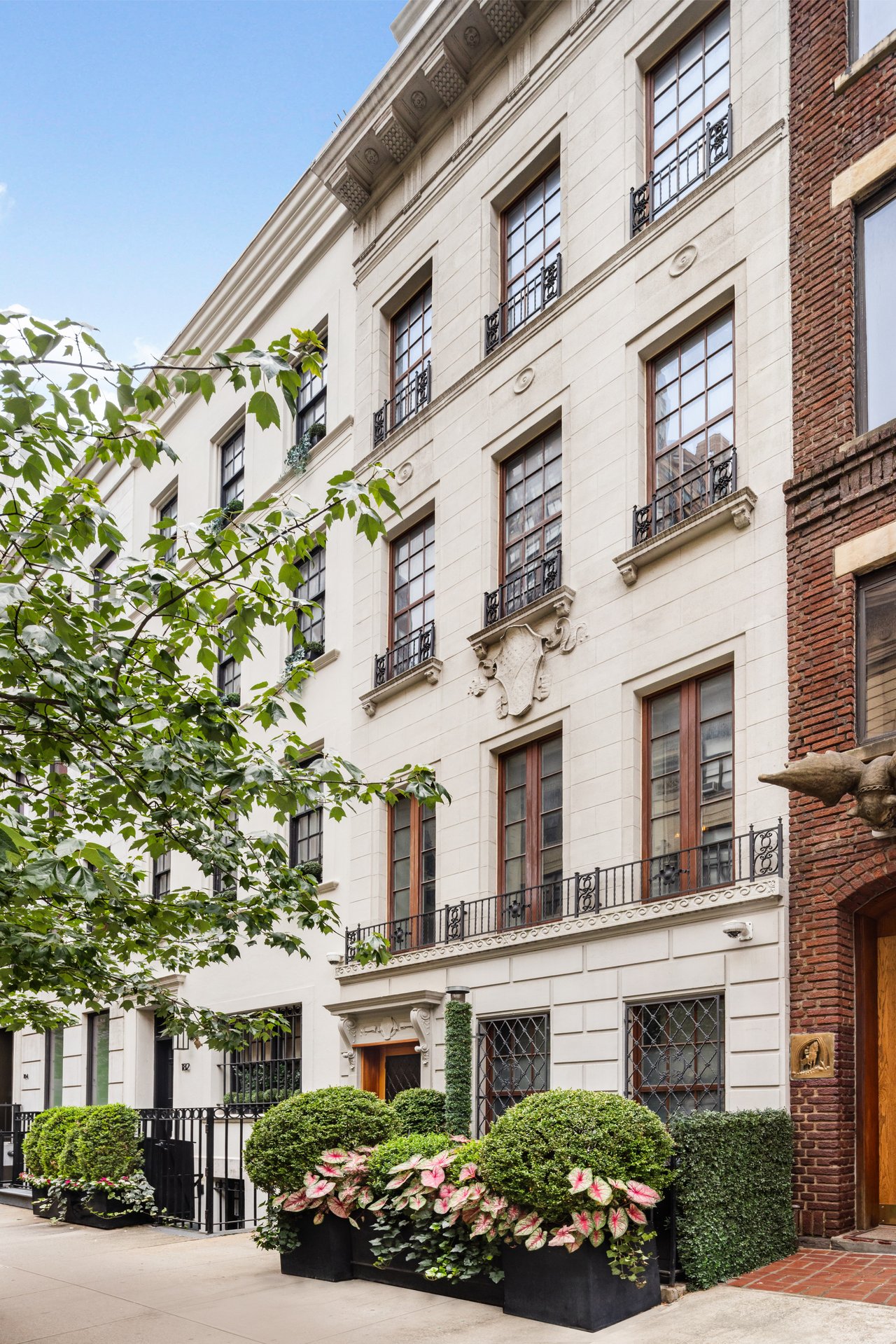
Whether you are drawn to a historic downtown walk-up, a loft-style residence or a boutique condominium above one of Nolita’s intimate streets, explore what is currently available across the neighborhood.
5,984 people live in Nolita, where the median age is 37 and the average individual income is $103,493. Data provided by the U.S. Census Bureau.
Total Population
Median Age
Population Density
Average individual Income
There's plenty to do around Nolita, including shopping, dining, nightlife, parks, and more. Data provided by Walk Score and Yelp.
Explore popular things to do in the area, including Ethik Clothing Co, and Inbodied Yoga.
| Name | Category | Distance | Reviews |
Ratings by
Yelp
|
|---|---|---|---|---|
| Shopping | 0.06 miles | 10 reviews | 2.3/5 stars | |
| Active | 0.08 miles | 0 reviews | 0/5 stars | |
|
|
||||
|
|
||||
|
|
||||
|
|
||||
|
|
||||
|
|
Nolita has 3,361 households, with an average household size of 2. Data provided by the U.S. Census Bureau. Here’s what the people living in Nolita do for work — and how long it takes them to get there. Data provided by the U.S. Census Bureau. 5,984 people call Nolita home. The population density is 109,778 and the largest age group is Data provided by the U.S. Census Bureau.
Total Population
Population Density Population Density This is the number of people per square mile in a neighborhood.
Median Age
Men vs Women
Population by Age Group
0-9 Years
10-17 Years
18-24 Years
25-64 Years
65-74 Years
75+ Years
Education Level
Total Households
Average Household Size
Average individual Income
Households with Children
With Children:
Without Children:
Blue vs White Collar Workers
Blue Collar:
White Collar:
590 Madison Ave, Floor 8 New York, NY10022
590 Madison Ave, Floor 8 New York, NY10022
