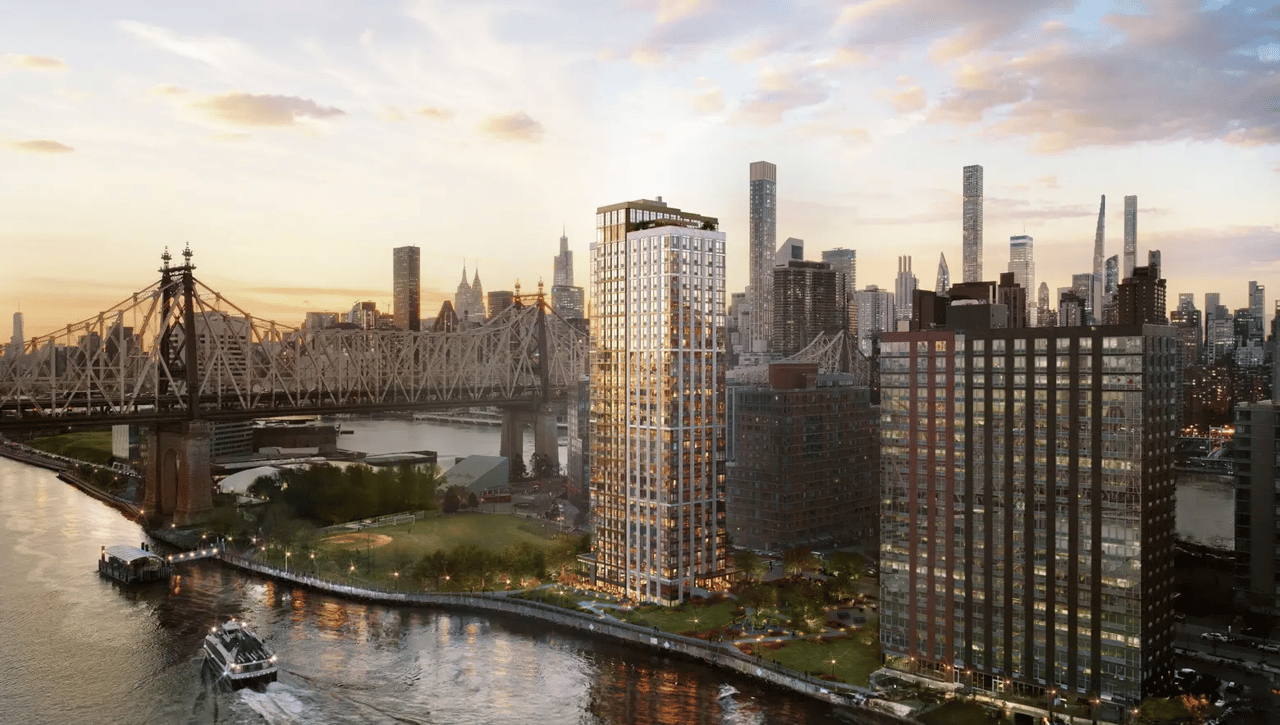
A quieter side of Manhattan in the middle of the East River: waterfront promenades, skyline views, landmark architecture, modern residences and the iconic Roosevelt Island Tramway overhead.
Roosevelt Island feels different from almost anywhere else in Manhattan.
The narrow, two-mile-long island sits between Manhattan and Queens, close enough to Midtown that the skyline dominates the western view but separated from it by enough water to create an entirely different pace of life.
Its history is unusually layered. Once home to hospitals, an asylum and other city institutions, the island was transformed beginning in the 1970s into a planned residential community built around pedestrian space, parks and mixed-income housing. Cornell Tech has since added another chapter, bringing contemporary architecture, technology and new public spaces to the southern end.
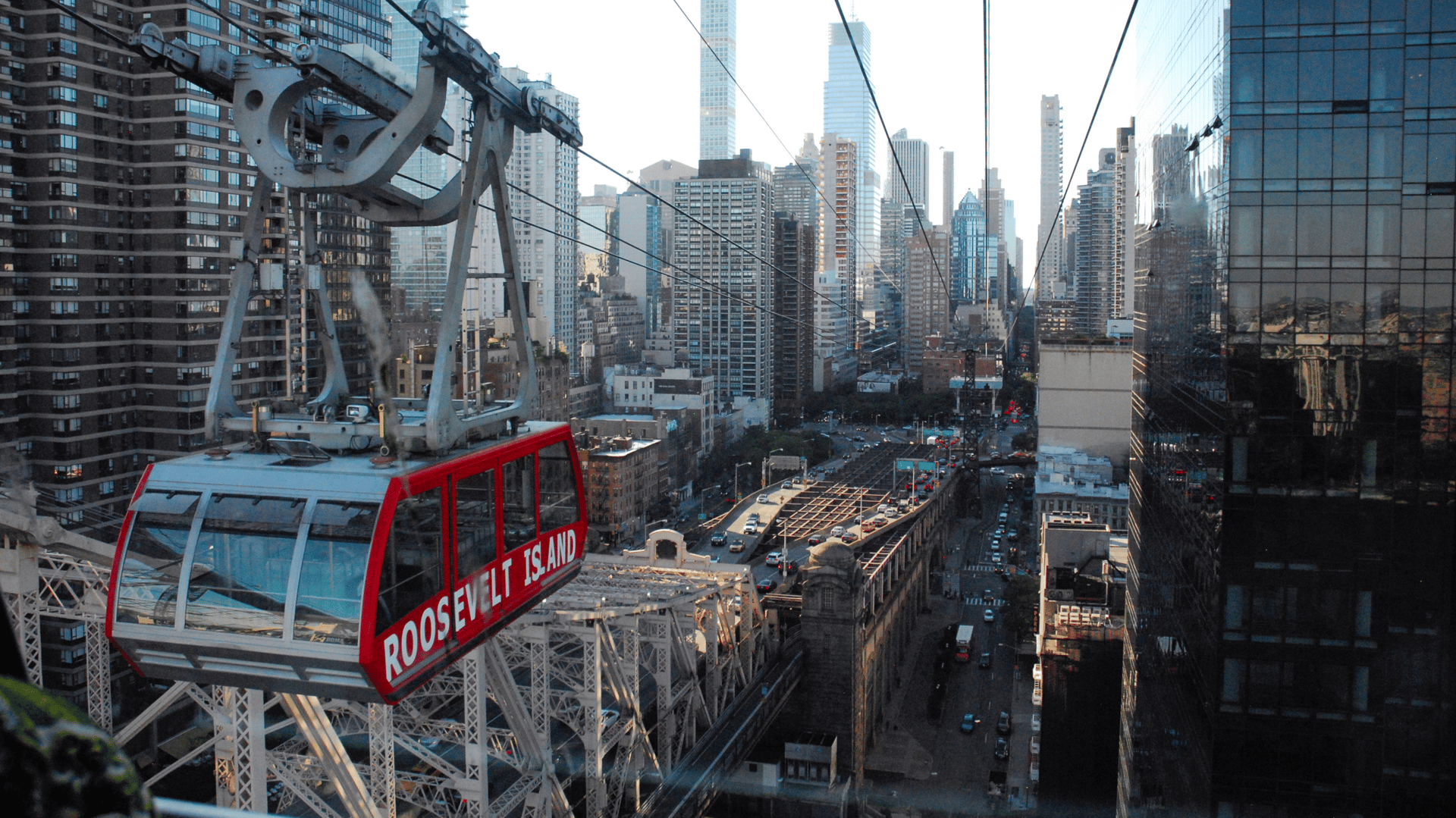
And then there is the Roosevelt Island Tramway. More than transportation, the red aerial cabins gliding above the East River have become part of the island’s identity and one of the most distinctive commutes in New York.
Spend enough time here and you quickly find your own routine: coffee overlooking the river, a walk along the waterfront, lunch on Main Street, an afternoon at Four Freedoms Park and the tram home as Manhattan begins to light up across the water.
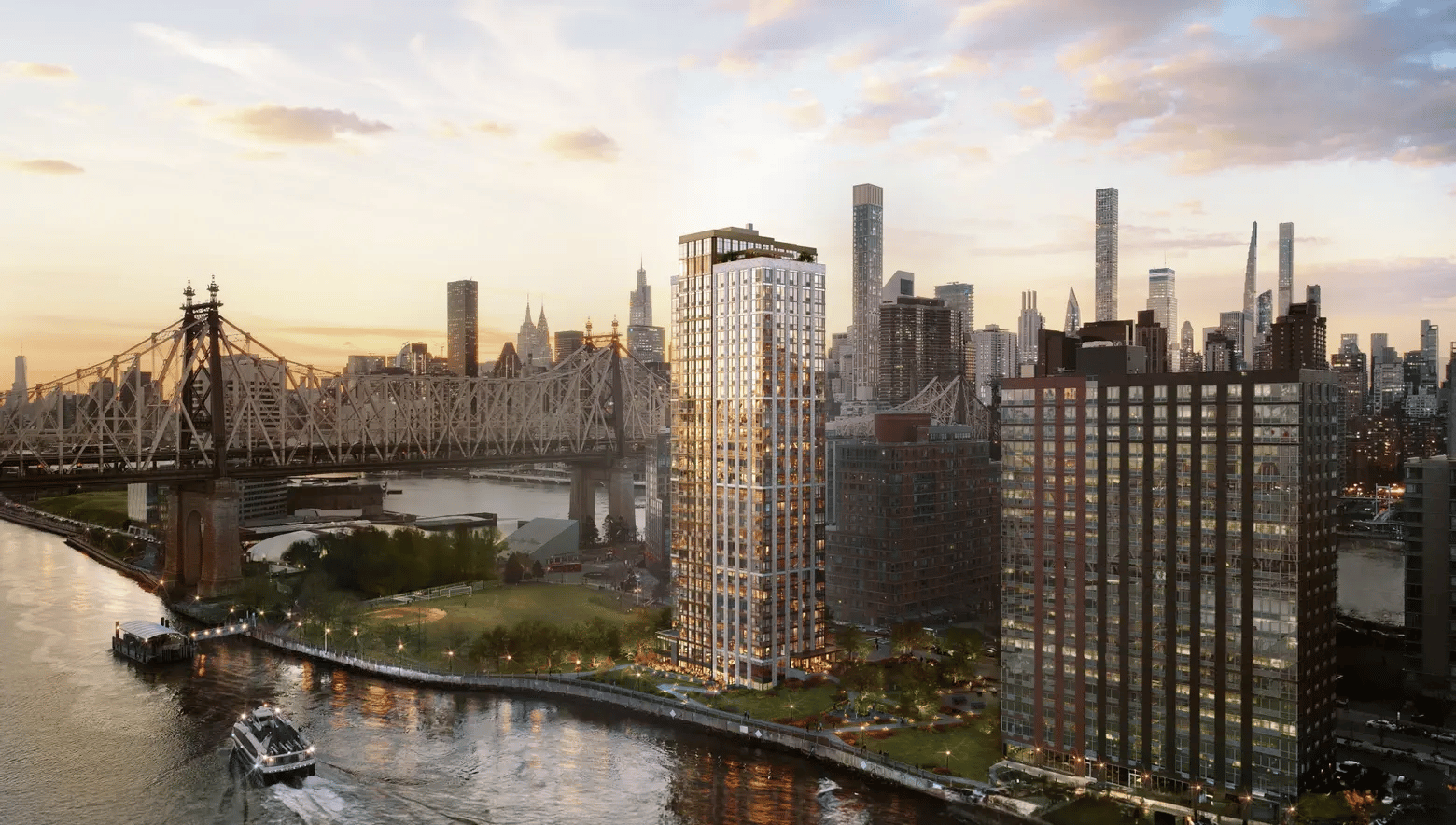
The setting is the obvious place to start.
Few Manhattan neighborhoods are surrounded by this much open water. Waterfront promenades run along both sides of the island, giving residents views toward the Upper East Side and Midtown in one direction and Long Island City and Queens in the other.
The island was also deliberately planned around pedestrians. Much of daily life happens along Main Street and the surrounding paths rather than on traffic-heavy avenues, creating a noticeably calmer atmosphere than the neighborhoods directly across the river.
Then there is the architecture.
Historic landmarks from very different periods remain scattered throughout Roosevelt Island: the 18th-century Blackwell House, the Gothic ruins of the former Smallpox Hospital, the 19th-century lighthouse and the Octagon of the former New York City Lunatic Asylum.
At the southern end, Cornell Tech and Franklin D. Roosevelt Four Freedoms State Park introduce an entirely different architectural language.
Very few neighborhoods allow you to move through this many chapters of New York history during a single waterfront walk.
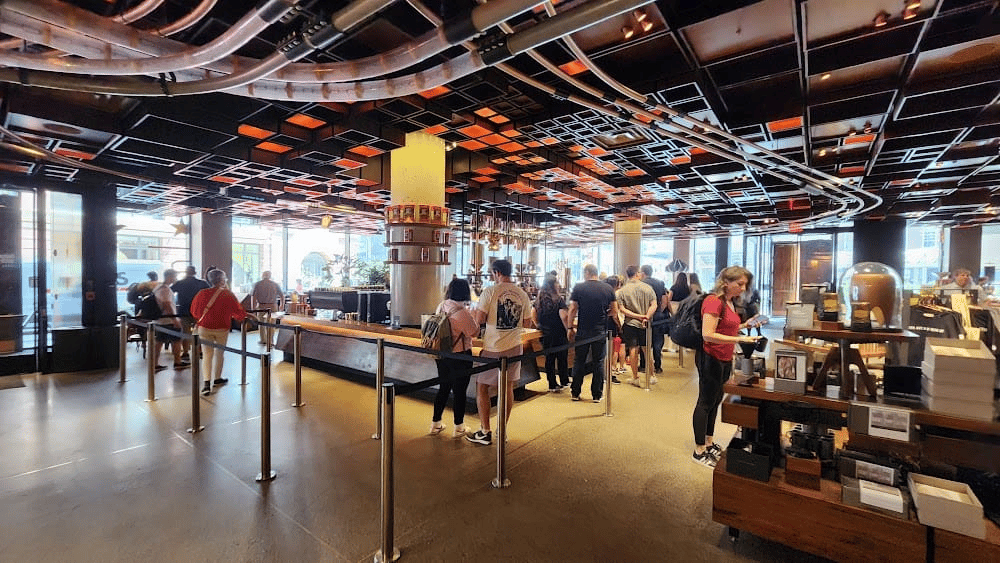
The Café inside Cornell Tech’s Bloomberg Center is one of our favorite places to begin a Roosevelt Island morning.
The airy, contemporary space is open to the public and serves espresso alongside a changing menu of breakfast, lunch and lighter dishes.
Large windows and the surrounding campus architecture make it feel completely different from a traditional neighborhood coffee shop.
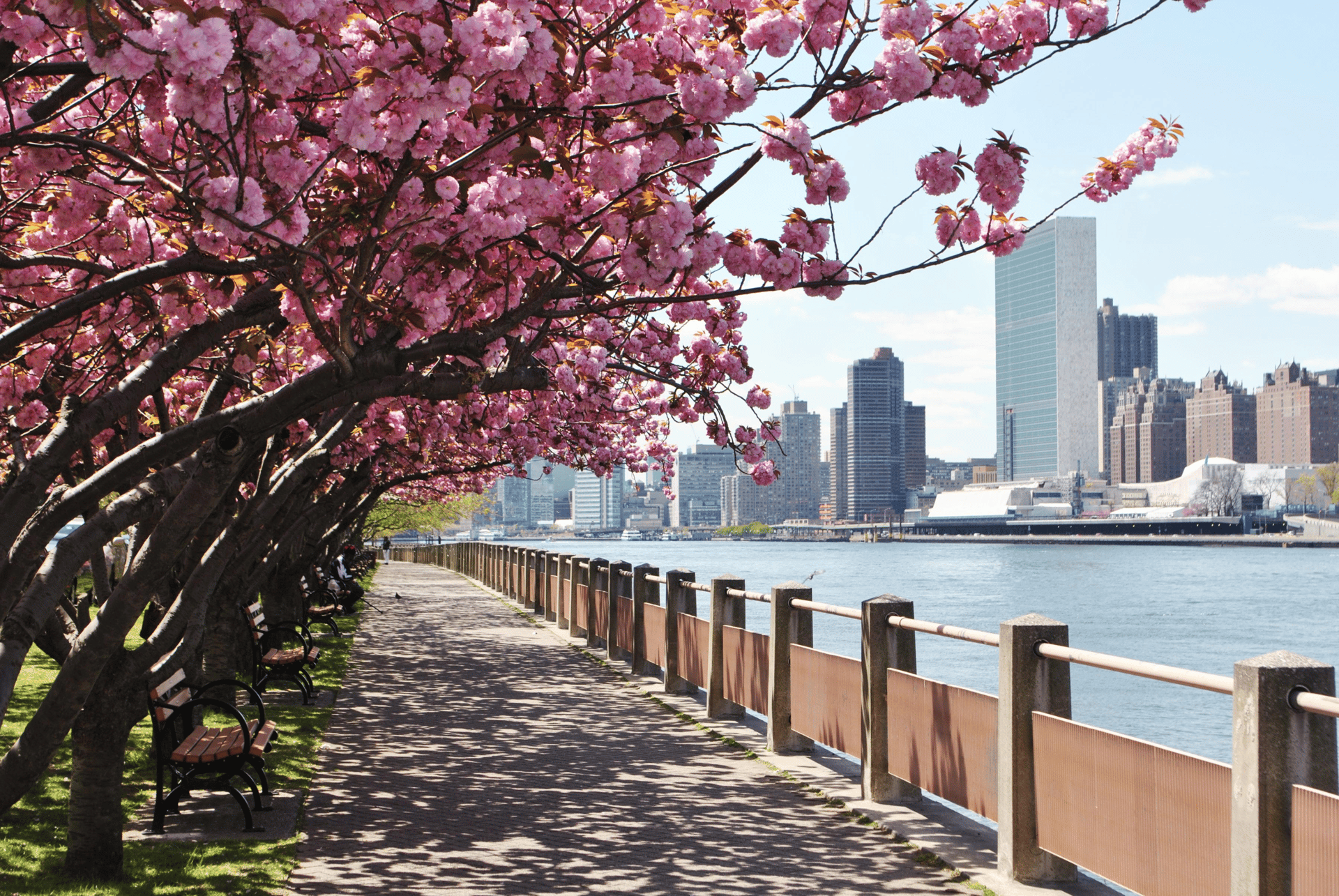
Take your coffee outside afterward and continue along the waterfront toward Southpoint Park and Four Freedoms Park.
The southern end of the island is particularly beautiful in the morning.
Roosevelt Island is one of those neighborhoods where the best route is rarely the shortest one.
Instead of walking directly down Main Street, use the waterfront promenades whenever possible.
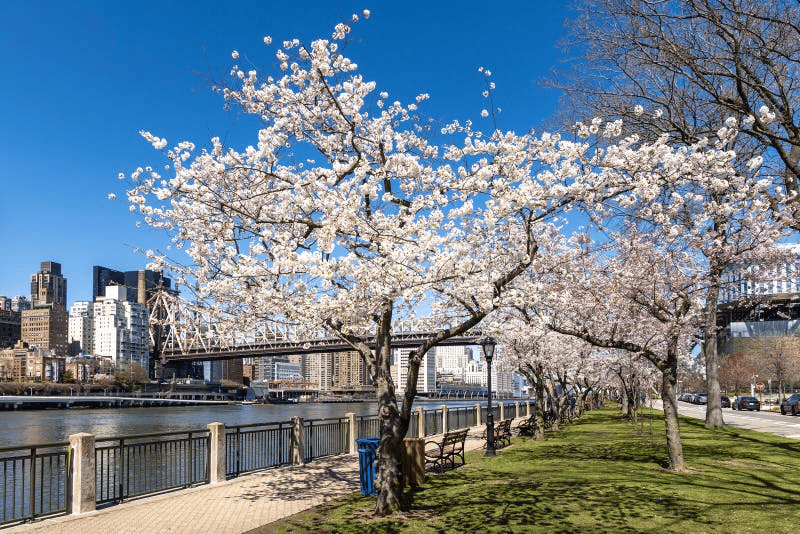
The western side offers uninterrupted views toward Manhattan and the Queensboro Bridge, while the eastern edge looks toward Long Island City.
Benches, lawns and small public spaces appear throughout the walk, and because the island is so narrow, you can move between the two sides in only a few minutes.
This is a neighborhood best experienced by walking its edges.
There are New York commutes, and then there is the Roosevelt Island Tramway.
Opened in 1976, the aerial tram connects Roosevelt Island with Manhattan at East 60th Street and Second Avenue, carrying passengers high above the East River alongside the Queensboro Bridge.
What was originally conceived as an interim transportation solution became a permanent and beloved part of the city. In 2026, the Tramway celebrated 50 years of service.
For residents, it is practical everyday transportation. For everyone else, it is one of the most memorable ways to arrive in a Manhattan neighborhood.
The ride offers extraordinary views of Midtown, the East River and the bridge before descending directly into Tramway Plaza on Roosevelt Island.
Standard MTA fares and OMNY are accepted, making it as easy to use as the subway.
Ride it during the day for the skyline, then take it again after dark.
The view is completely different.
Roosevelt Island’s dining scene is more intimate and neighborhood-driven than many parts of Manhattan.
You will not find blocks lined with fine-dining restaurants here. Instead, the island has a compact collection of places residents actually use regularly — an all-day hotel restaurant, a neighborhood bistro, Japanese food, an Irish pub and newer casual spots along Main Street.
That local quality is part of the appeal.
For the island’s most polished all-day dining room, head to Anything At All inside Graduate by Hilton New York on the Cornell Tech campus.
The bright lobby-level restaurant serves breakfast, lunch and dinner, moving from coffee, eggs and pancakes in the morning to salads, sandwiches, seafood, pasta and larger dinner plates later in the day.
The room feels contemporary and relaxed rather than overly formal, with large windows connecting the restaurant to the architecture and open spaces outside.
It works particularly well for brunch, an easy lunch after Four Freedoms Park or dinner when you want somewhere slightly more elevated without leaving the island.
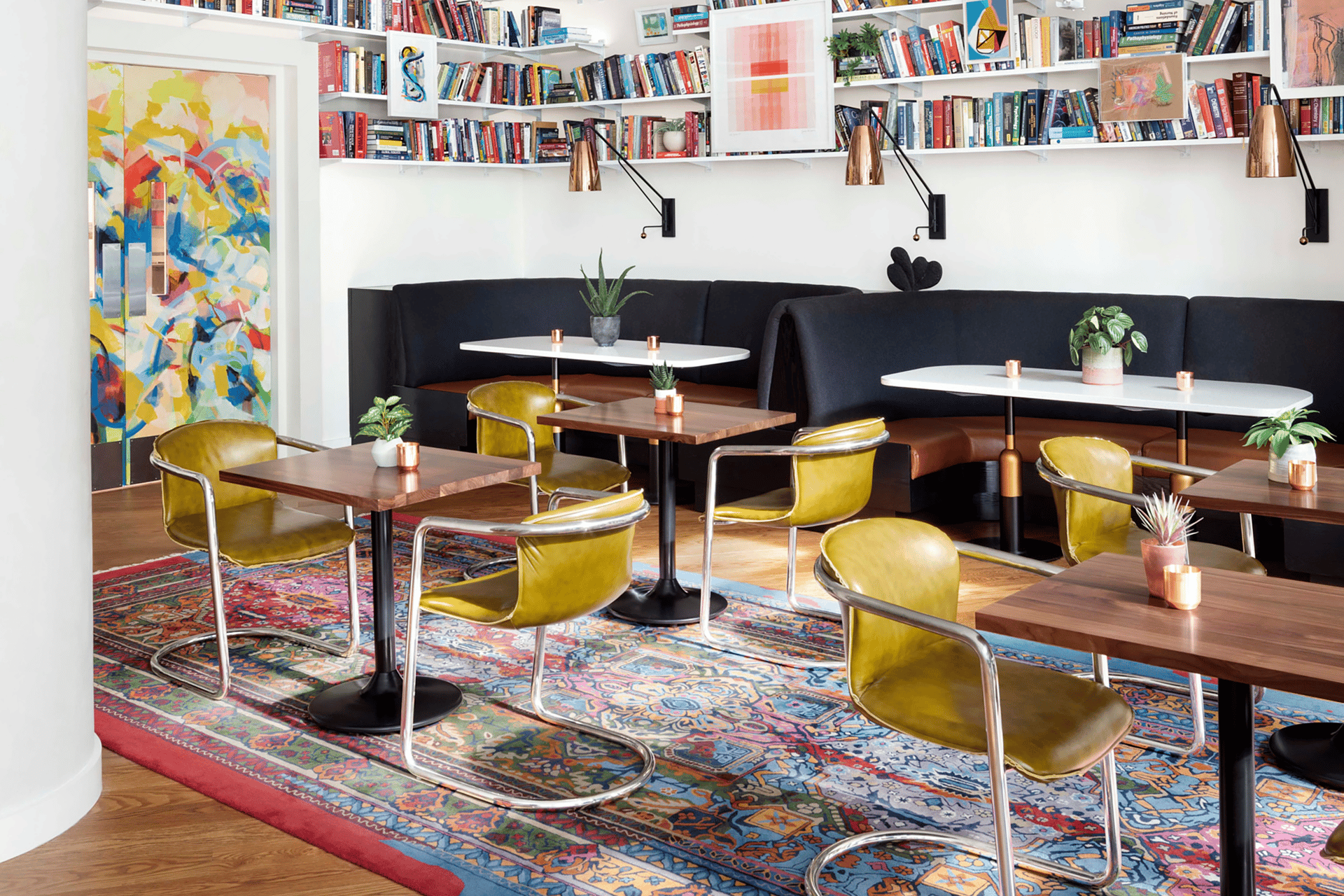
Nisi Bistro on Main Street feels much more like a traditional neighborhood restaurant.
Open throughout the day, the menu moves between breakfast and brunch favorites, Mediterranean-influenced dishes and familiar bistro comfort food.
The glass-fronted dining room has long made it a natural meeting place for residents, particularly because of its central location along Main Street.
Come for breakfast, lunch with a friend or a relaxed dinner when you do not feel like crossing the river.
It is exactly the kind of dependable local place every residential neighborhood needs.
For Japanese, Fuji East on Main Street is one of the island’s established options.
The menu covers sushi and sashimi alongside rolls, teriyaki, noodles and familiar Japanese dishes, making it equally practical for a sit-down meal or an easy weeknight order.
It is not trying to be a destination omakase restaurant.
Instead, it fills a much more useful role: reliable neighborhood sushi only a short walk from the tram and subway.
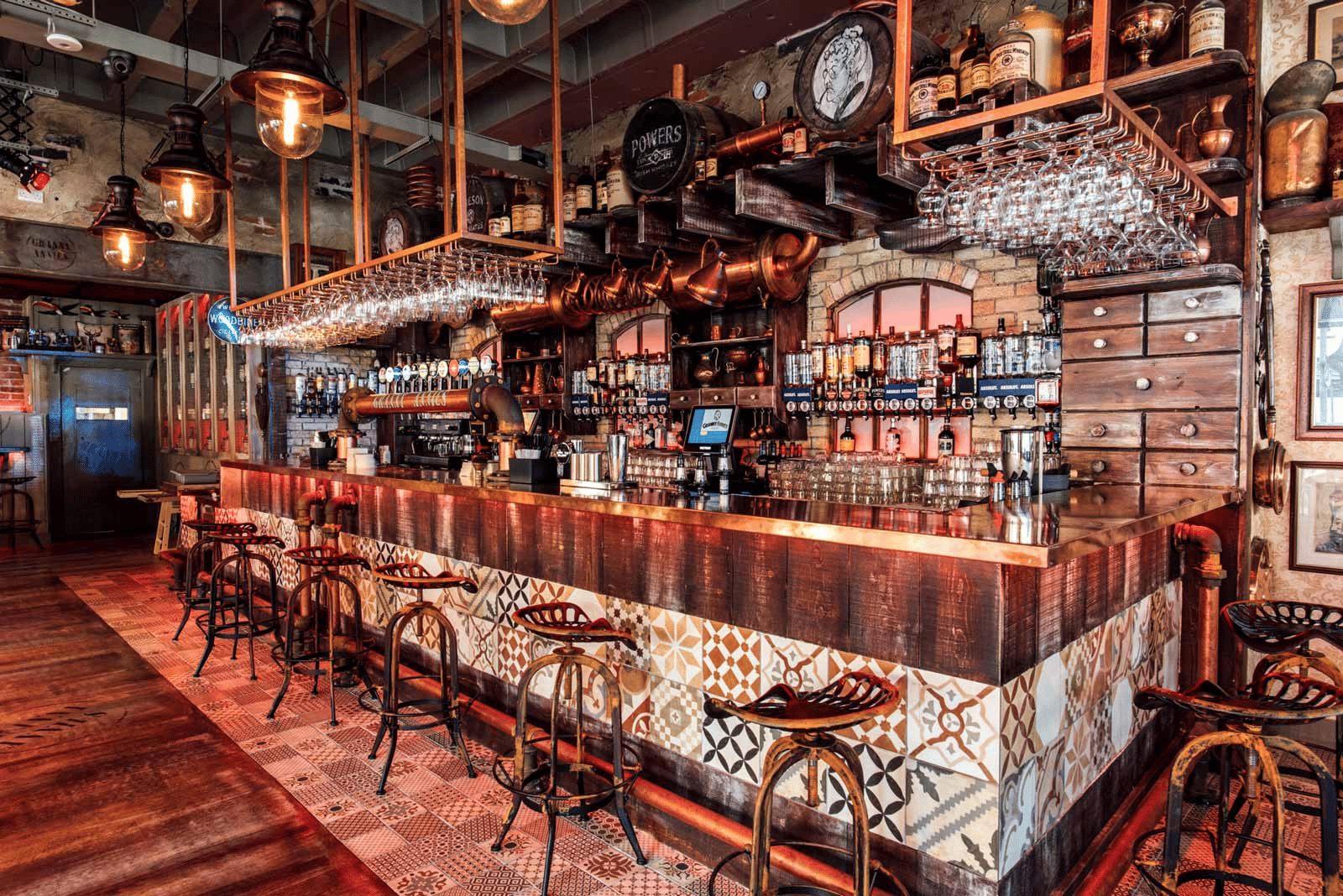
Granny Annie’s brings the feeling of an Irish neighborhood pub to Roosevelt Island.
The Main Street restaurant serves burgers, sandwiches, shepherd’s pie, steak and other comfort-food staples alongside a full bar.
The atmosphere is warm and casual, and the restaurant has quickly become the kind of place residents use for brunch, drinks, dinner or simply meeting someone without planning much in advance.
It works especially well when you want somewhere lively but still distinctly local.
Pinks Cantina is one of the newer casual additions to Main Street.
The menu is built around tacos, burritos, bowls and quesadillas, with a few playful New York-inspired combinations mixed into the more familiar options.
It is quick, easy and particularly useful when the plan is really to grab something to eat before heading back outside.
Take it toward the waterfront when the weather is good.
Roosevelt Island carries an unusually visible record of New York’s institutional and social history.
Before becoming a residential neighborhood, the island was known first as Blackwell’s Island and later as Welfare Island, serving for generations as the location of hospitals, charitable institutions and other city facilities.
Several important pieces of that history remain.
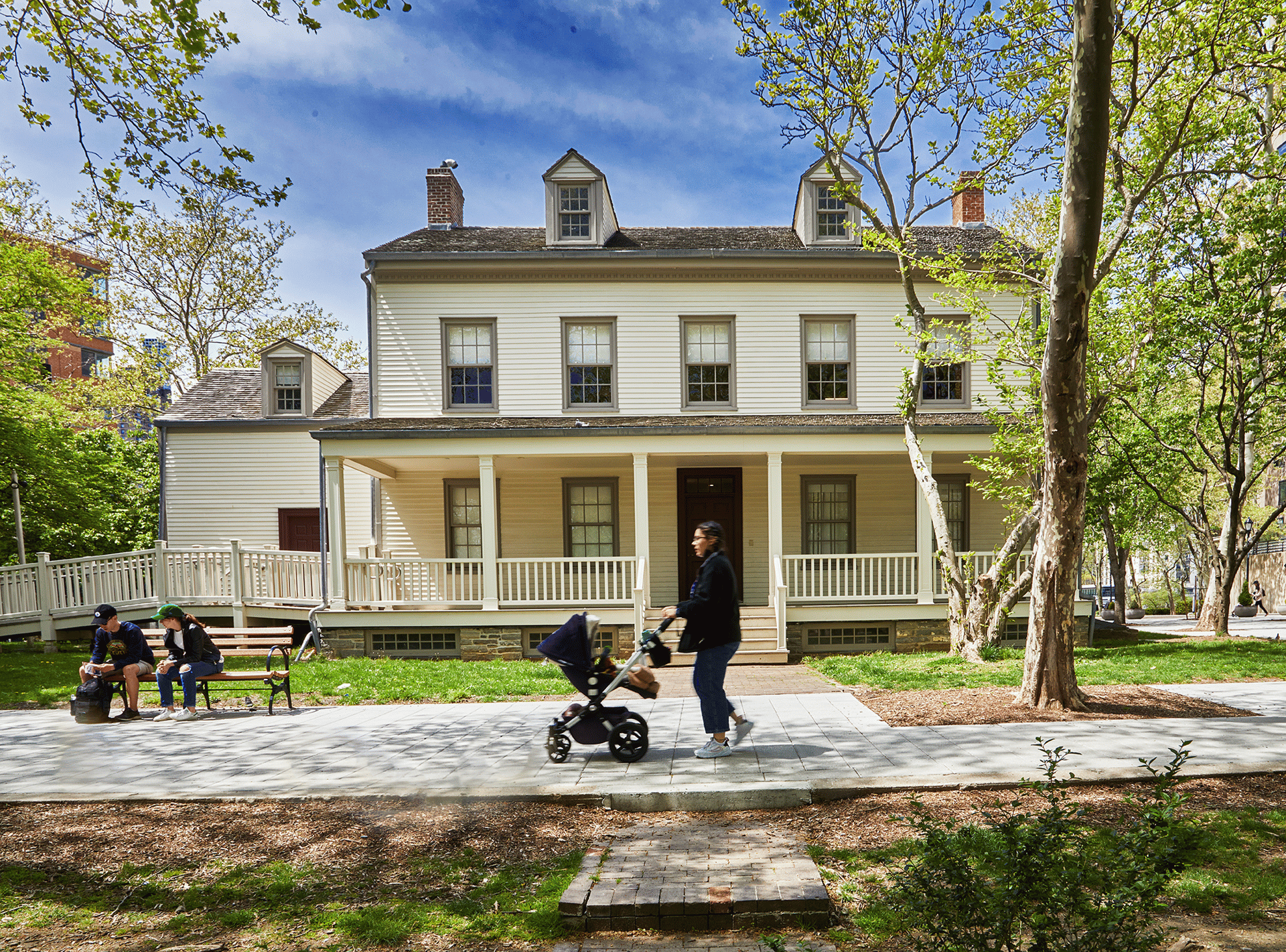
Blackwell House on Main Street is one of Roosevelt Island’s oldest surviving landmarks.
Built around 1796, the farmhouse predates the island’s transformation into a center for public institutions and provides a rare glimpse of the period when the island was still largely rural.
The restored building now helps tell the story of Roosevelt Island’s long history through exhibits and community programming.
Its modest scale makes the contrast with the residential buildings surrounding it especially striking.
This is one of those places worth stopping to notice rather than simply walking past.
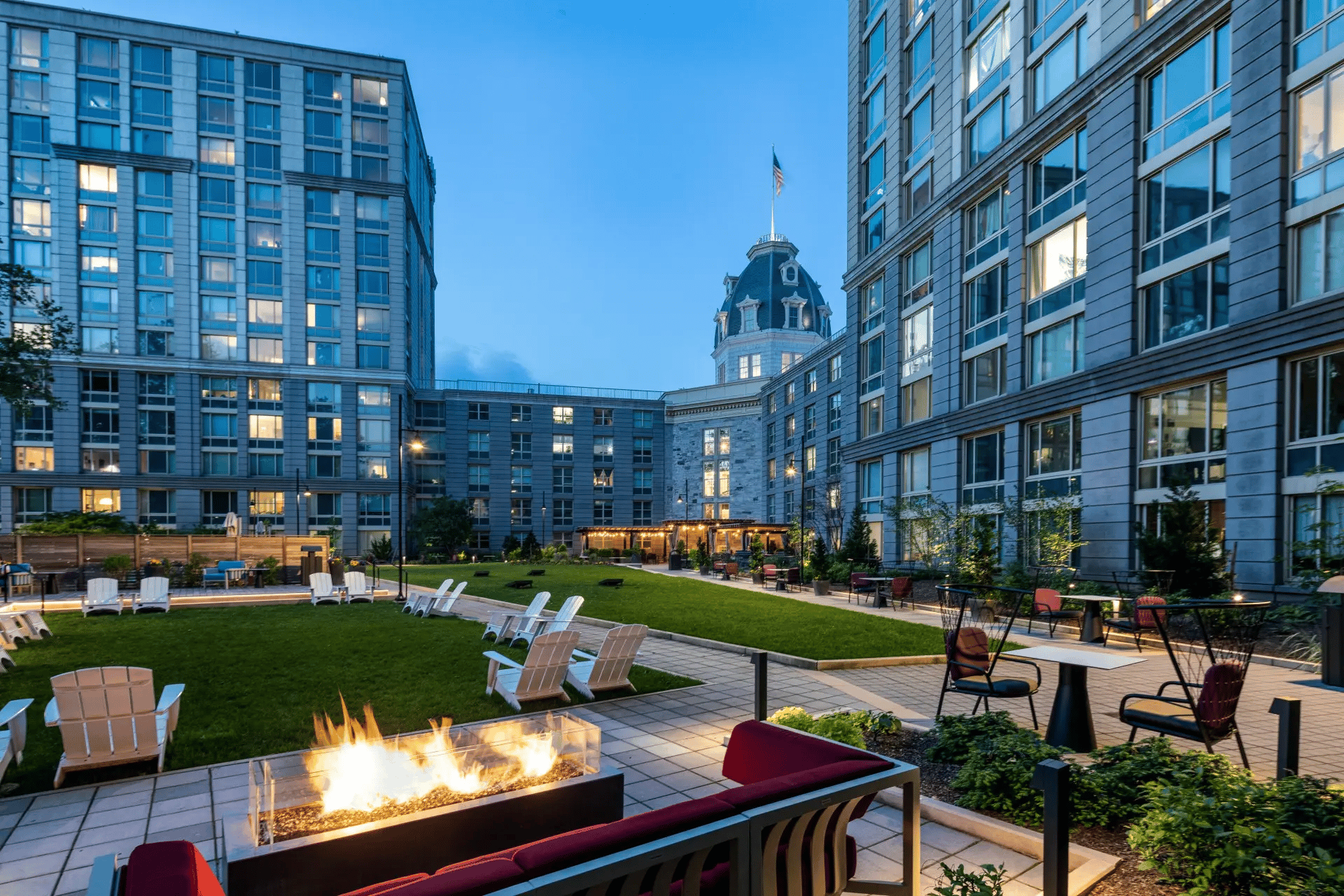
At the northern end of the island, The Octagon preserves one of the most remarkable pieces of Roosevelt Island history.
The distinctive eight-sided structure dates to 1839 and originally formed the central entrance of the New York City Lunatic Asylum.
Journalist Nellie Bly famously exposed conditions inside the institution in the late 19th century after going undercover as a patient.
Today, the restored Octagon has been incorporated into a residential complex.
The contrast is extraordinary: a surviving fragment of 19th-century institutional architecture forming the centerpiece of a modern apartment community.
Cornell Tech has completely reshaped the southern end of Roosevelt Island.
The graduate technology campus opened its first phase in 2017 and brings together academic buildings, research spaces, housing and landscaped public areas in a setting designed around sustainability and collaboration.
The Bloomberg Center, Tata Innovation Center and The House create a distinctly contemporary architectural campus, while public lawns and paths maintain the open character of the island.
You do not need to be a student to enjoy the setting.
The campus grounds are open to the public, and the waterfront paths make it easy to incorporate Cornell Tech into a longer walk toward Southpoint Park.
Inside Southpoint Park stand the haunting ruins of the former Smallpox Hospital.
Designed by architect James Renwick Jr. and opened in the 1850s, the Gothic Revival hospital treated patients during a period when isolating infectious disease outside the dense city was considered essential.
Only the stabilized stone shell remains today.
Against the lawns, river and modern Cornell Tech buildings nearby, the ruin creates one of the most dramatic architectural contrasts anywhere on Roosevelt Island.
It is beautiful, unsettling and impossible to mistake for anything else.
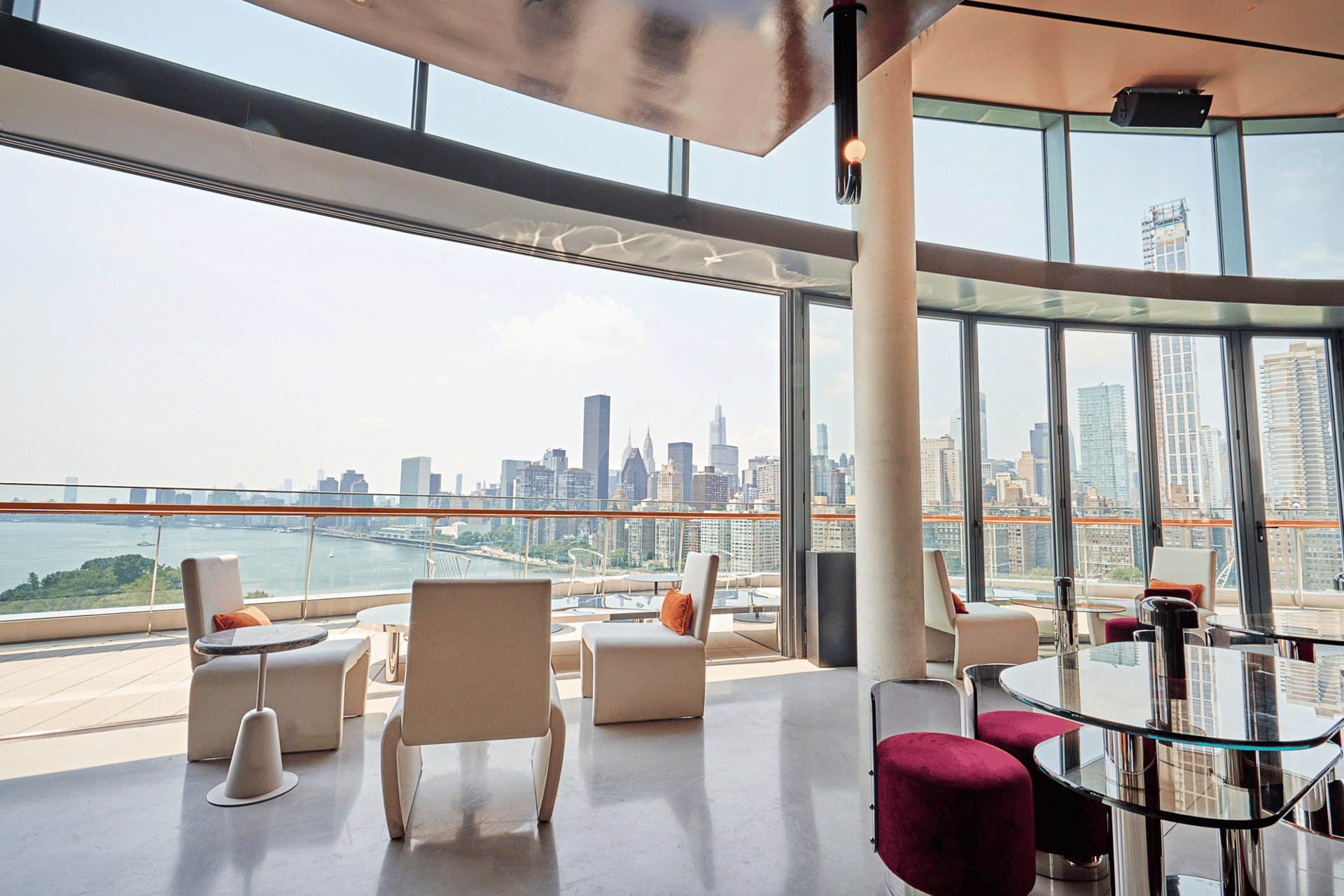
For cocktails, Panorama Room is the obvious choice.
Set on the 18th floor of Graduate by Hilton New York, the rooftop bar offers extraordinary views in nearly every direction — Midtown Manhattan, the Queensboro Bridge, Long Island City and the East River all appear through the glass walls and from the outdoor terrace.
Cocktails are the focus, with food and small plates available alongside them.
Come around sunset if you can.
Watching Manhattan light up across the river makes it very easy to understand what is special about living on an island in the middle of New York City.
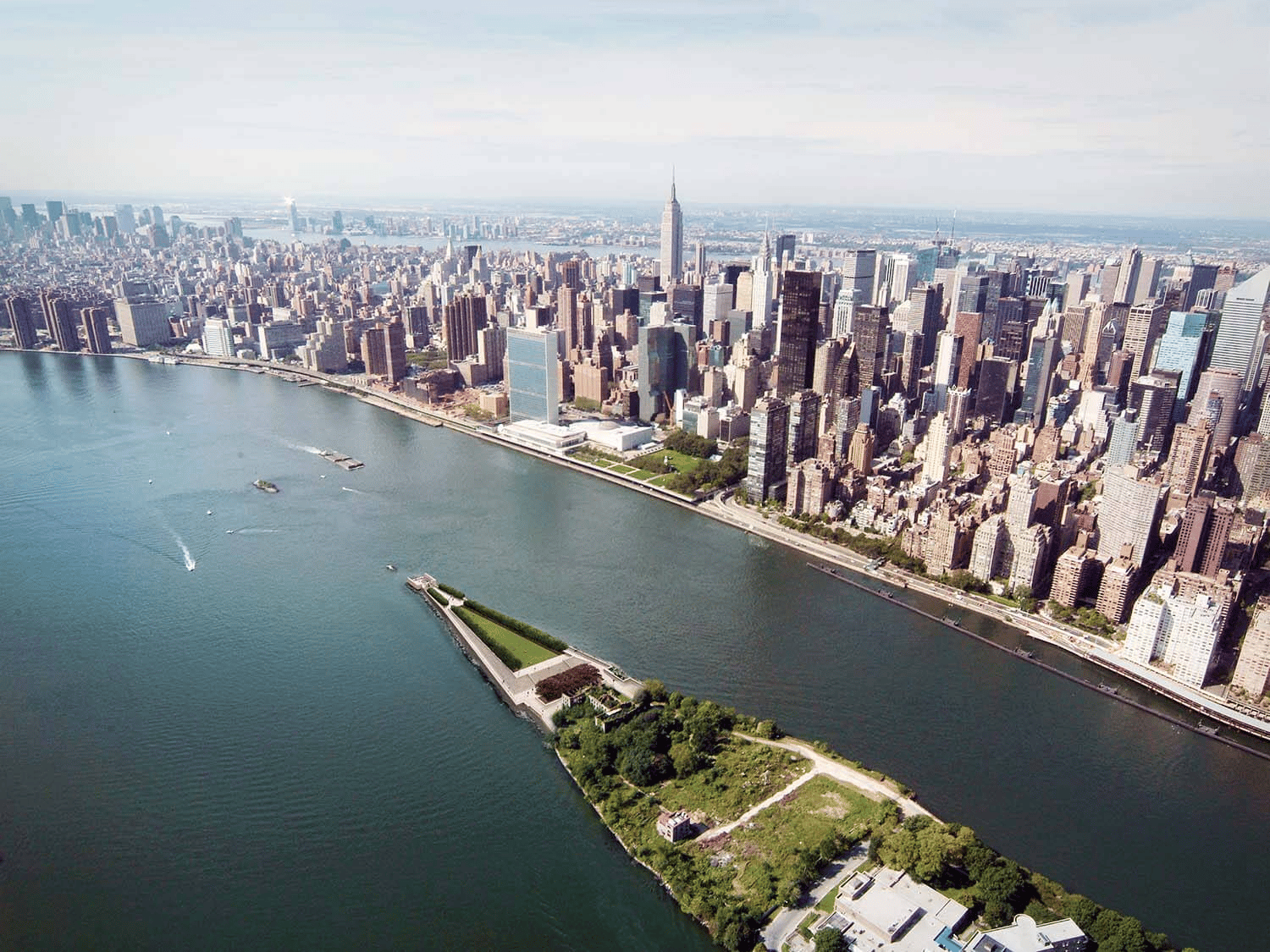
At the southern tip of the island, Franklin D. Roosevelt Four Freedoms State Park is one of New York’s most architecturally powerful public spaces.
Designed by Louis Kahn as a memorial to President Franklin D. Roosevelt and his Four Freedoms, the park follows a remarkably disciplined composition of trees, lawn, granite and open sky.
A triangular lawn leads toward a monumental bust of Roosevelt and ultimately into the granite “Room” at the island’s southernmost point.
Manhattan and the United Nations sit directly across the East River.
The park is beautiful in photographs, but its scale and sense of stillness are much more powerful in person.
Give yourself enough time to experience it slowly.
Immediately north of Four Freedoms Park, Southpoint Park feels looser and more natural.
The roughly seven-acre landscape includes native planting, lawns, picnic areas and broad views toward Manhattan and Queens.
It is also where you will find the Smallpox Hospital ruins and historic Strecker Laboratory.
Walk through rather than rushing directly to Four Freedoms.
The gradual transition from Cornell Tech to historic ruins to the formal geometry of the memorial park is one of the best walks on the island.
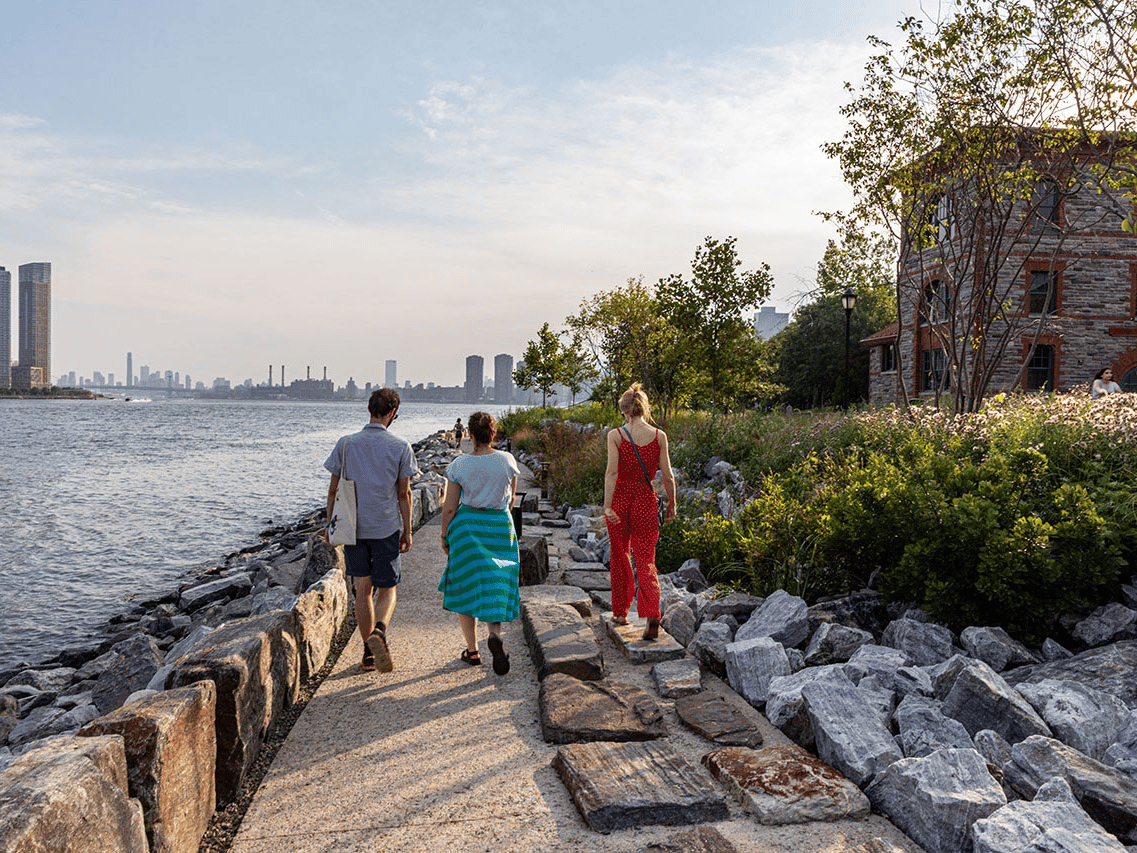
At the opposite end of Roosevelt Island, Lighthouse Park feels completely different.
The park occupies the island’s northern tip and is anchored by the 50-foot Roosevelt Island Lighthouse, built in 1872.
Lawns, trees, picnic areas and open views up the East River make it one of the island’s most peaceful places.
It takes a little longer to reach from the tram or subway, which is part of the appeal.
Bring something to eat, walk the waterfront north and stay awhile once you get there.
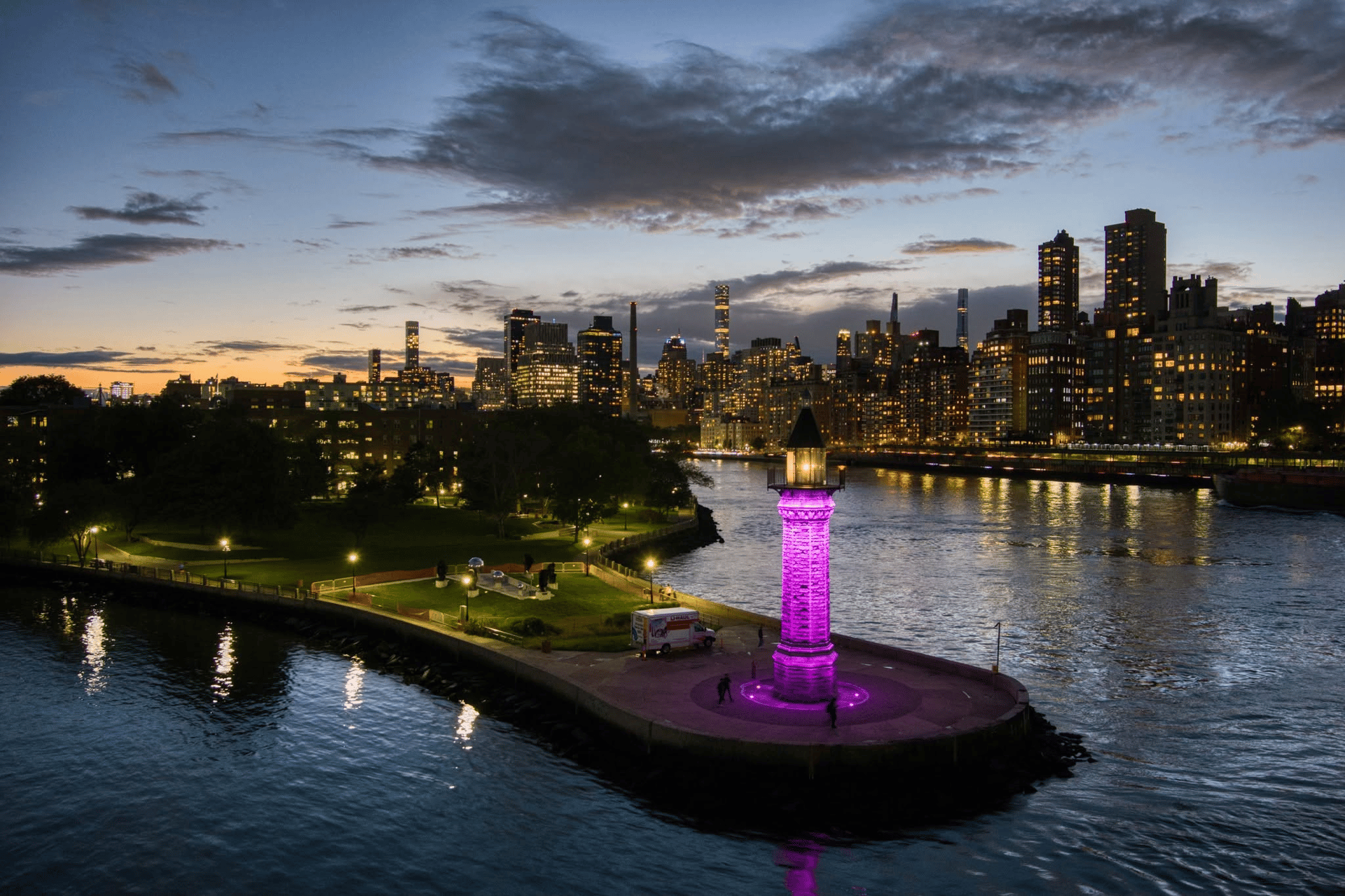
Roosevelt Island is not really a neighborhood of streets in the traditional Manhattan sense.
Main Street forms the central spine, connecting residential buildings, shops and community spaces from Southtown through the original 1970s developments and toward Manhattan Park and The Octagon.
But the best walks usually leave Main Street.
Follow the western promenade beneath the Queensboro Bridge for views toward Midtown, then continue north along the East River.
Cross toward the eastern side whenever you want a completely different skyline.
South of the tram, the paths around Cornell Tech lead naturally into Southpoint Park and Four Freedoms Park.
Farther north, the neighborhood becomes quieter and increasingly residential before eventually reaching Lighthouse Park.
The entire island rewards walking.
You can cover a surprising amount of it without ever feeling like you are crossing Manhattan.
Residentially, Roosevelt Island offers one of Manhattan’s most unusual living environments.
Much of the neighborhood was deliberately planned as a residential community beginning in the 1970s, with large apartment buildings, pedestrian paths, parks and shared public space arranged around Main Street rather than the traditional Manhattan grid.
The housing mix includes rentals, cooperatives and condominiums, ranging from the island’s original residential complexes to newer developments around Riverwalk and Cornell Tech.
What connects them is the setting outside: waterfront promenades, parks, playgrounds and unusually open skyline views.
The Roosevelt Island Tramway, subway, ferry and free Red Bus make the neighborhood highly connected while still allowing it to feel noticeably removed from the pace of Midtown.
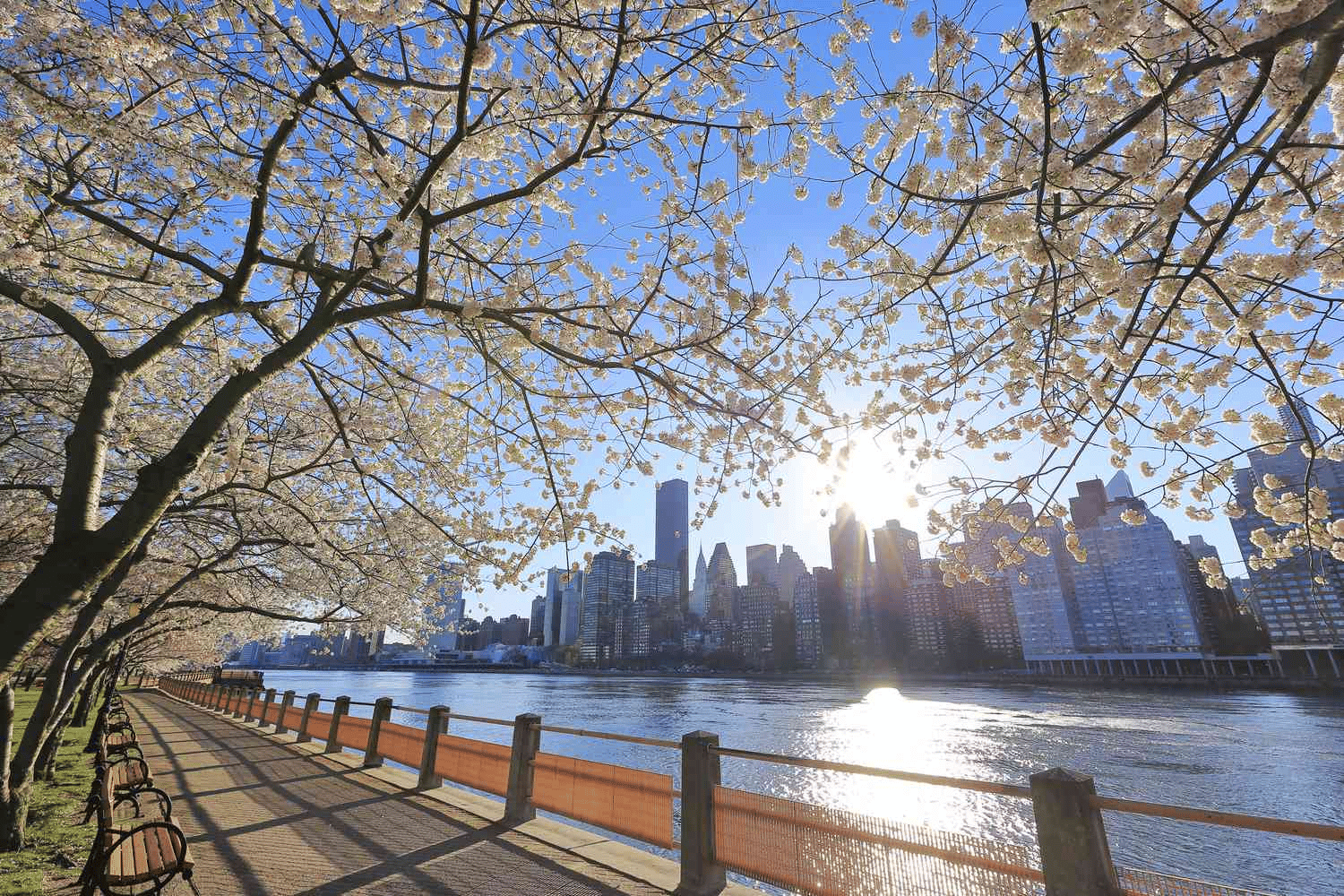
Roosevelt Island real estate reflects the neighborhood’s history as a planned community.
Earlier residential buildings often offer generous layouts, large windows and river or skyline views, while newer developments around Riverwalk and Cornell Tech add contemporary interiors, full-service amenities and a more modern architectural language.
The island also has an unusual land structure. The City of New York owns Roosevelt Island, while the Roosevelt Island Operating Corporation manages most of it through a master-lease arrangement, so buyers should review each building’s ownership structure and any applicable ground-lease terms carefully.
From established cooperatives and spacious rentals to newer condominiums and waterfront residences, Roosevelt Island offers a distinctly different way to live in Manhattan.
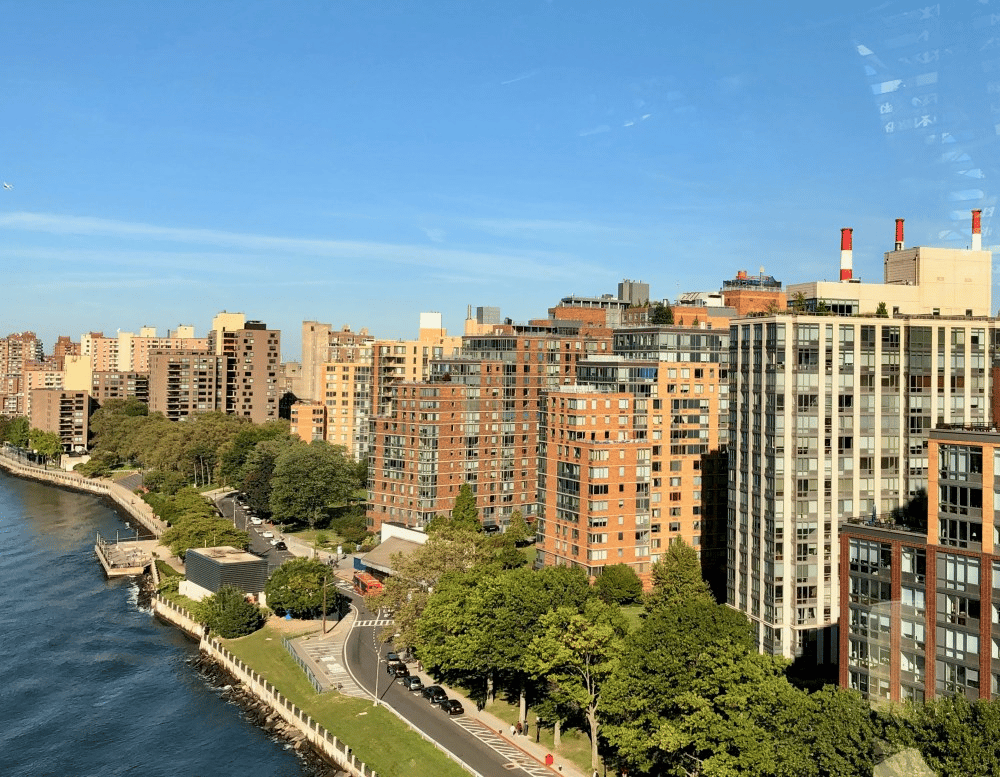
Whether you are drawn to a spacious residence overlooking the East River, a modern condominium near Cornell Tech or an apartment within steps of the Roosevelt Island Tramway, explore what is currently available across Roosevelt Island.
11,520 people live in Roosevelt Island, where the median age is 41 and the average individual income is $68,971. Data provided by the U.S. Census Bureau.
Total Population
Median Age
Population Density
Average individual Income
There's plenty to do around Roosevelt Island, including shopping, dining, nightlife, parks, and more. Data provided by Walk Score and Yelp.
Explore popular things to do in the area, including La Miniteoro Grocery, Sutton Marketplace, and Midtown Seafood Corporation.
| Name | Category | Distance | Reviews |
Ratings by
Yelp
|
|---|---|---|---|---|
| Dining | 0.41 miles | 0 reviews | 0/5 stars | |
| Dining | 0.73 miles | 0 reviews | 0/5 stars | |
| Dining | 0.93 miles | 0 reviews | 0/5 stars | |
| Shopping | 0.89 miles | 0 reviews | 0/5 stars | |
| Shopping | 1.03 miles | 0 reviews | 0/5 stars | |
| Shopping | 1.03 miles | 0 reviews | 0/5 stars | |
| Active | 0.71 miles | 0 reviews | 0/5 stars | |
| Active | 0.71 miles | 0 reviews | 0/5 stars | |
| Active | 0.95 miles | 0 reviews | 0/5 stars | |
| Active | 0.95 miles | 0 reviews | 0/5 stars | |
| Active | 0.97 miles | 0 reviews | 0/5 stars | |
| Active | 0.98 miles | 0 reviews | 0/5 stars | |
| Active | 0.98 miles | 0 reviews | 0/5 stars | |
| Active | 1.03 miles | 2 reviews | 3/5 stars | |
| Active | 1.03 miles | 0 reviews | 0/5 stars | |
| Beauty | 0.3 miles | 2 reviews | 5/5 stars | |
| Beauty | 0.69 miles | 0 reviews | 0/5 stars | |
| Beauty | 0.74 miles | 0 reviews | 0/5 stars | |
| Beauty | 0.93 miles | 0 reviews | 0/5 stars | |
| Beauty | 0.94 miles | 0 reviews | 0/5 stars | |
| Beauty | 0.97 miles | 0 reviews | 0/5 stars | |
| Beauty | 0.97 miles | 1 review | 5/5 stars | |
| Beauty | 0.97 miles | 0 reviews | 0/5 stars | |
| Beauty | 1.03 miles | 0 reviews | 0/5 stars | |
|
|
||||
|
|
||||
|
|
||||
|
|
||||
|
|
||||
|
|
Roosevelt Island has 5,175 households, with an average household size of 2. Data provided by the U.S. Census Bureau. Here’s what the people living in Roosevelt Island do for work — and how long it takes them to get there. Data provided by the U.S. Census Bureau. 11,520 people call Roosevelt Island home. The population density is 76,260 and the largest age group is Data provided by the U.S. Census Bureau.
Total Population
Population Density Population Density This is the number of people per square mile in a neighborhood.
Median Age
Men vs Women
Population by Age Group
0-9 Years
10-17 Years
18-24 Years
25-64 Years
65-74 Years
75+ Years
Education Level
Total Households
Average Household Size
Average individual Income
Households with Children
With Children:
Without Children:
Blue vs White Collar Workers
Blue Collar:
White Collar:
590 Madison Ave, Floor 8 New York, NY10022
590 Madison Ave, Floor 8 New York, NY10022