
Downtown Manhattan at its most understated: cobblestone streets, landmark loft buildings, destination restaurants, quiet residential blocks and the Hudson River only a few minutes away.
Tribeca has a rare ability to feel both unmistakably New York and slightly removed from the pace of the city around it. Former warehouses and mercantile buildings line broad cobblestone streets, many now converted into expansive loft residences, while restaurants, galleries and neighborhood businesses occupy the storefronts below.
Its scale is part of the appeal. Buildings tend to feel substantial without becoming overwhelming, streets are wider and quieter than in many downtown neighborhoods, and the Hudson River creates an open western edge that changes the atmosphere entirely.
Spend enough time here and you quickly find your own routine: coffee on Church Street, a walk along Franklin or North Moore, lunch somewhere you can linger, an afternoon by the river, dinner in one of Manhattan’s best dining rooms and a quiet walk home over the cobblestones.
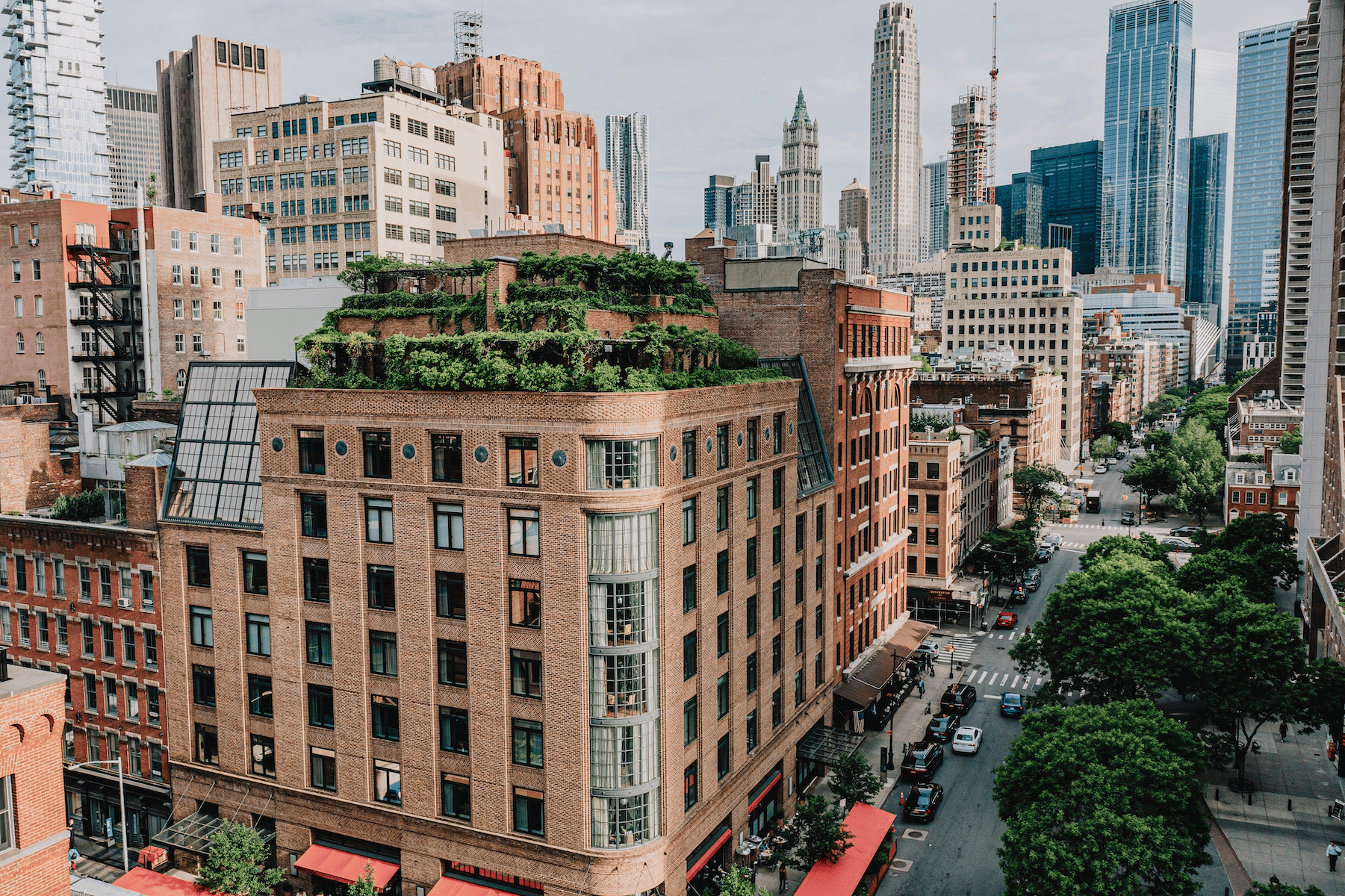
The architecture is an obvious place to start.
Tribeca’s identity is closely connected to its 19th-century commercial past, when the neighborhood became an important center for warehouses, wholesalers and manufacturing. Large store-and-loft buildings were constructed with high ceilings, generous windows and open interiors designed for commerce rather than conventional residential life.
Those same qualities eventually made the buildings particularly suited to loft conversions.
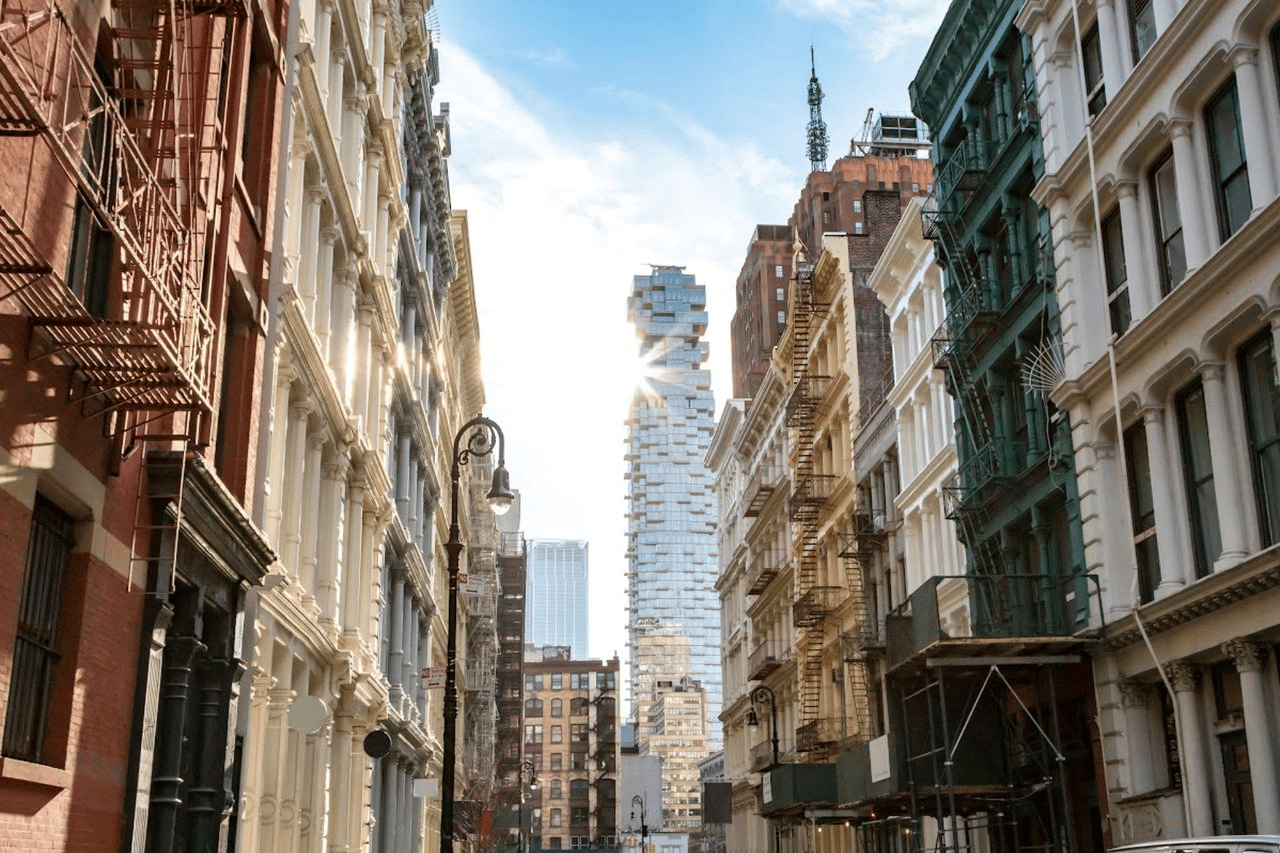
Today, cast-iron storefronts, brick warehouses, stone façades and former industrial buildings give Tribeca a visual character unlike almost anywhere else in Manhattan. Several historic districts protect large portions of the neighborhood, helping preserve the scale and architecture that make these blocks so distinctive.
Then there is the quiet. Despite being surrounded by SoHo, Chinatown, the Financial District and some of Lower Manhattan’s busiest streets, much of Tribeca can feel remarkably residential — especially around Duane, Franklin and North Moore Streets.
Add the Hudson River waterfront to the western edge and the neighborhood becomes even more unusual: historic downtown architecture with genuine room to breathe.
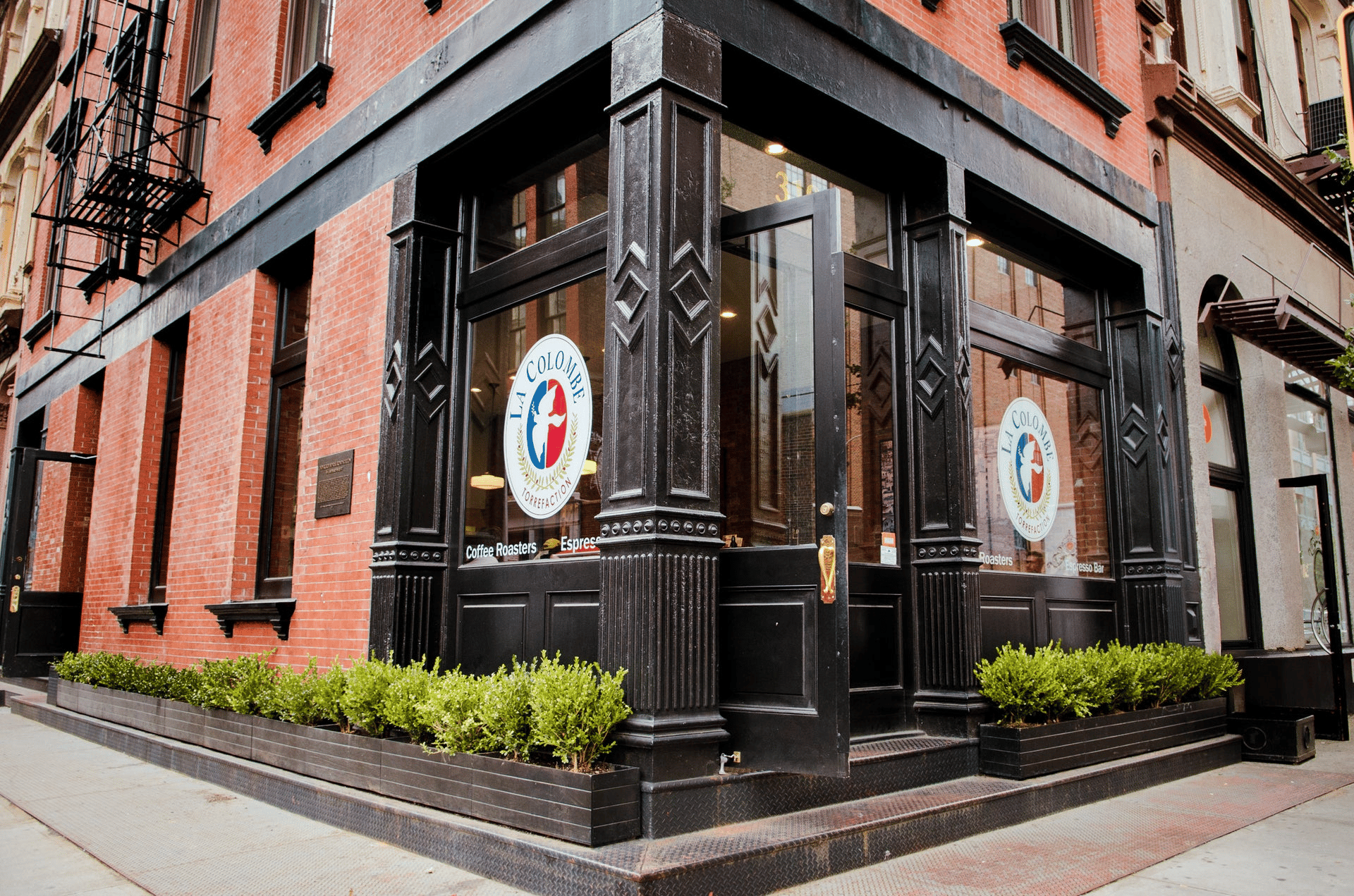
La Colombe on Church Street is an easy place to begin a Tribeca morning.
The café keeps things relatively simple: excellent espresso, coffee and pastries served in a beautiful corner space with large windows looking onto the neighborhood.
It works particularly well as a first stop before walking west toward Franklin Street or continuing south through Tribeca’s historic loft district.
Grab a coffee, skip the fastest route and let the neighborhood unfold around you.
Franklin Street captures much of what makes Tribeca special.
Historic loft buildings, cast-iron details, cobblestones and quiet storefronts create a streetscape that feels unmistakably downtown without the crowds found only a few blocks away in SoHo.
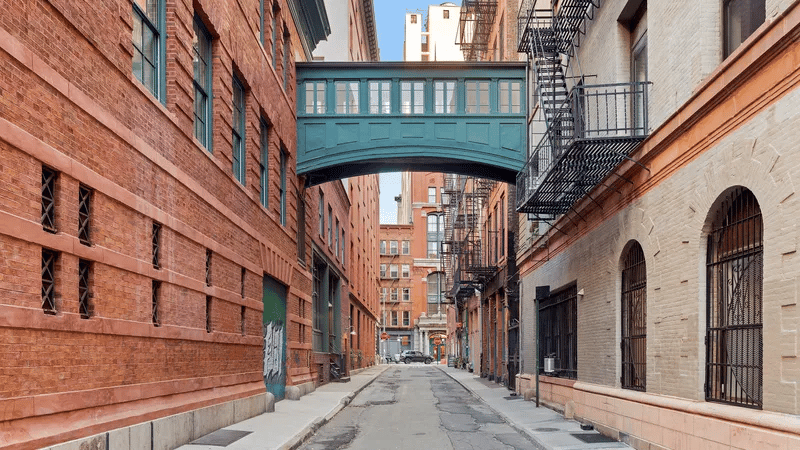
Continue toward Greenwich Street, turn onto North Moore or make the short detour to Staple Street, where one of the neighborhood’s most recognizable skybridges stretches between two historic buildings.
There is no major attraction to rush toward.
The architecture is the destination.
Tribeca has one of Manhattan’s most accomplished restaurant scenes, but it rarely feels like a traditional dining district.
Exceptional restaurants are scattered among residential streets, historic townhouses and converted warehouses, giving dinner here a more neighborhood-like quality than you might expect from some of the city’s most difficult reservations.
The best mix includes contemporary fine dining, French cooking, Italian institutions and places that have helped define downtown New York for decades.
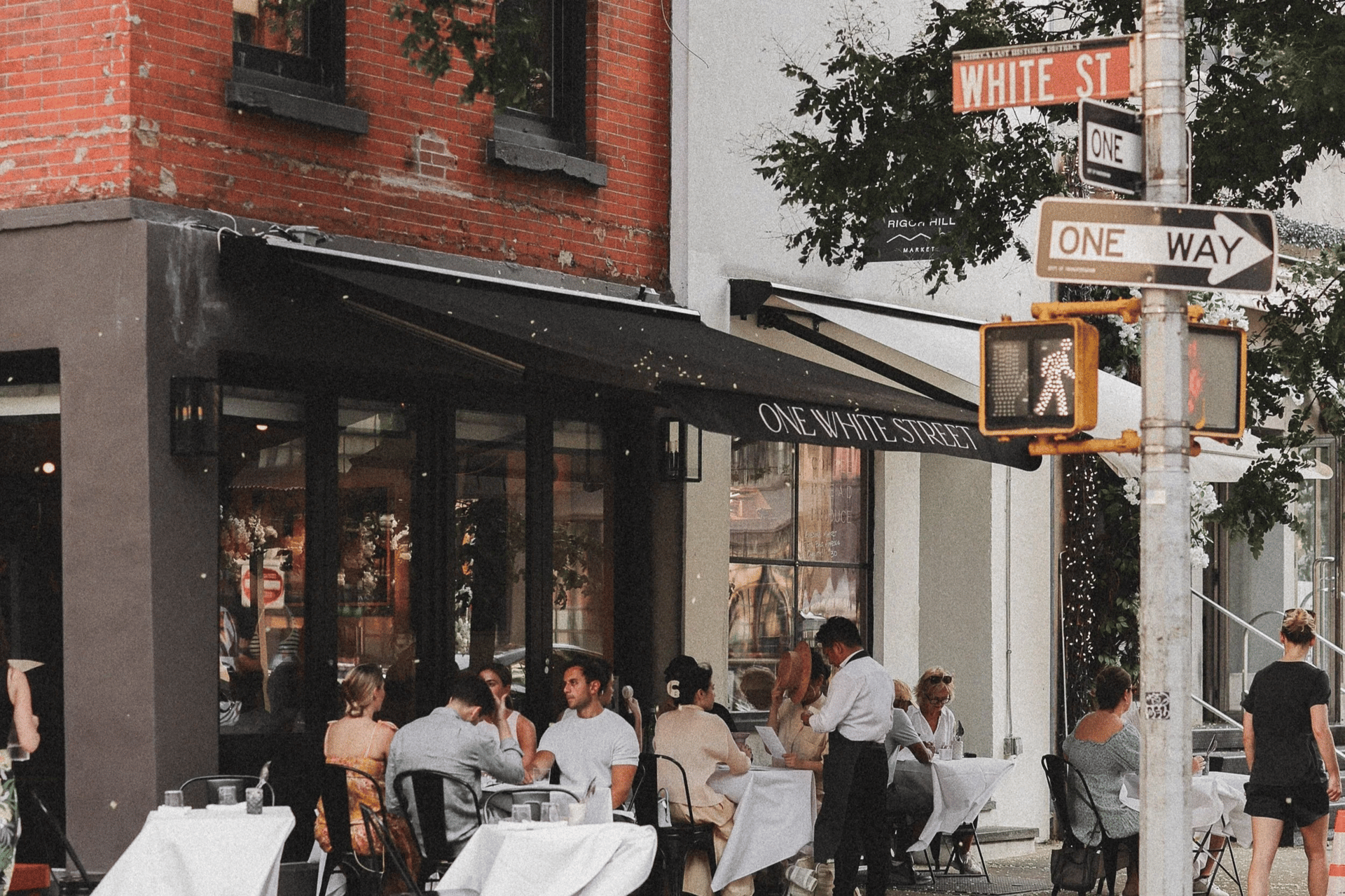
For a special dinner, One White Street is one of the neighborhood’s most distinctive choices.
The restaurant occupies a beautifully restored 19th-century townhouse at the corner of White and West Broadway, creating an experience that feels much more intimate than a traditional fine-dining room.
Its menus are shaped heavily by produce from Rigor Hill Farm in the Hudson Valley, with seasonal ingredients informing both the tasting menu and à la carte dishes.
The townhouse setting is part of what makes it so appealing. Dinner unfolds across several floors, with warm wood, thoughtful interiors and the feeling that you have stepped inside someone’s exceptionally beautiful downtown home.
It is refined without feeling stiff — particularly appropriate for Tribeca.
Frenchette on West Broadway brings the energy of a contemporary Parisian brasserie to downtown Manhattan.
Chefs Lee Hanson and Riad Nasr approach French cooking with enough confidence to keep things relaxed, moving between oysters, pâté, roast chicken, steak frites and dishes that change with the season.
The wine program is equally important, with an adventurous selection that makes the restaurant particularly good for a long dinner rather than a quick meal.
The room is lively, polished and unmistakably downtown.
It is one of those restaurants that feels equally appropriate for a celebration or an ordinary Wednesday when you simply want dinner somewhere excellent.
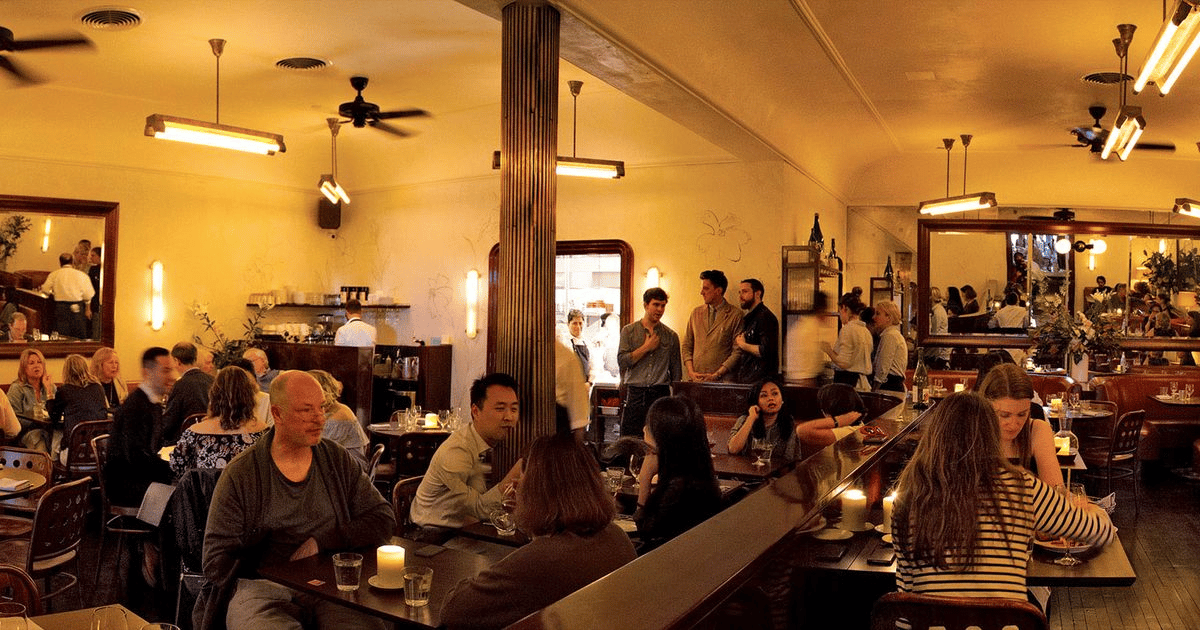
Locanda Verde has been part of the Tribeca dining landscape since 2009 and still feels like a genuine neighborhood institution.
Chef Andrew Carmellini’s Italian cooking is rustic, generous and polished without becoming overly complicated, with handmade pasta, seasonal dishes and the kind of food that encourages several things for the table.
The corner dining room on Greenwich Street is lively throughout the day, moving naturally from breakfast and brunch to lunch and dinner.
It is sophisticated enough for an occasion but comfortable enough to become somewhere you return to regularly — exactly what a good neighborhood restaurant should be.
For Indian, Tamarind Tribeca on Hudson Street brings a more formal style of dining to the neighborhood.
The expansive dining room pairs contemporary design with an extensive menu that moves across regional Indian cooking, from tandoor preparations and seafood to curries, breads and richly layered vegetarian dishes.
The presentation is elegant without losing the depth and warmth that define the food.
It works particularly well for a celebratory dinner, a client lunch or an evening when you want something polished but completely different from the European restaurants that dominate much of downtown Manhattan.
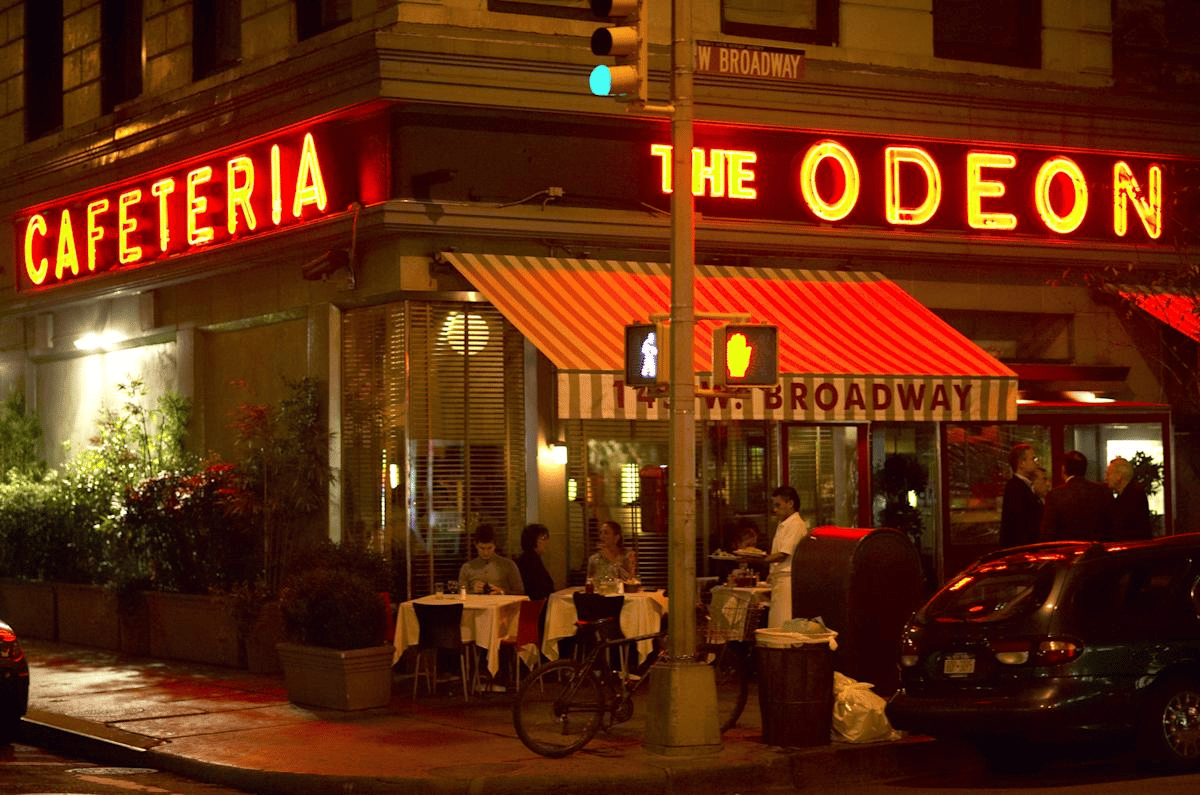
Few restaurants are as closely connected to Tribeca as The Odeon.
The West Broadway brasserie opened in 1980 and became part of the downtown New York world of artists, writers, filmmakers and nightlife that helped transform the neighborhood from a former industrial district into the Tribeca we recognize today.
The neon sign, red banquettes and bustling dining room still feel wonderfully familiar.
Order oysters, a burger or steak frites, have a martini at the bar and settle in.
Some New York restaurants constantly reinvent themselves.
The Odeon’s appeal is that it never really needed to.
Bubby’s has been part of Tribeca since 1990 and remains one of the neighborhood’s most relaxed places to eat.
The restaurant began with pies and grew into a full American comfort-food institution known particularly for breakfast, brunch, pancakes, biscuits and fried chicken.
Weekend mornings can be busy, but that is part of the experience.
Come hungry, order more than you planned and save room for pie.
Tribeca’s cultural identity is closely tied to the creative community that helped reshape the neighborhood beginning in the late 20th century.
Artists moved into former industrial lofts, filmmakers established studios and production companies downtown, and the neighborhood eventually became associated with one of New York’s most recognizable cultural festivals.
That creative identity remains visible today.
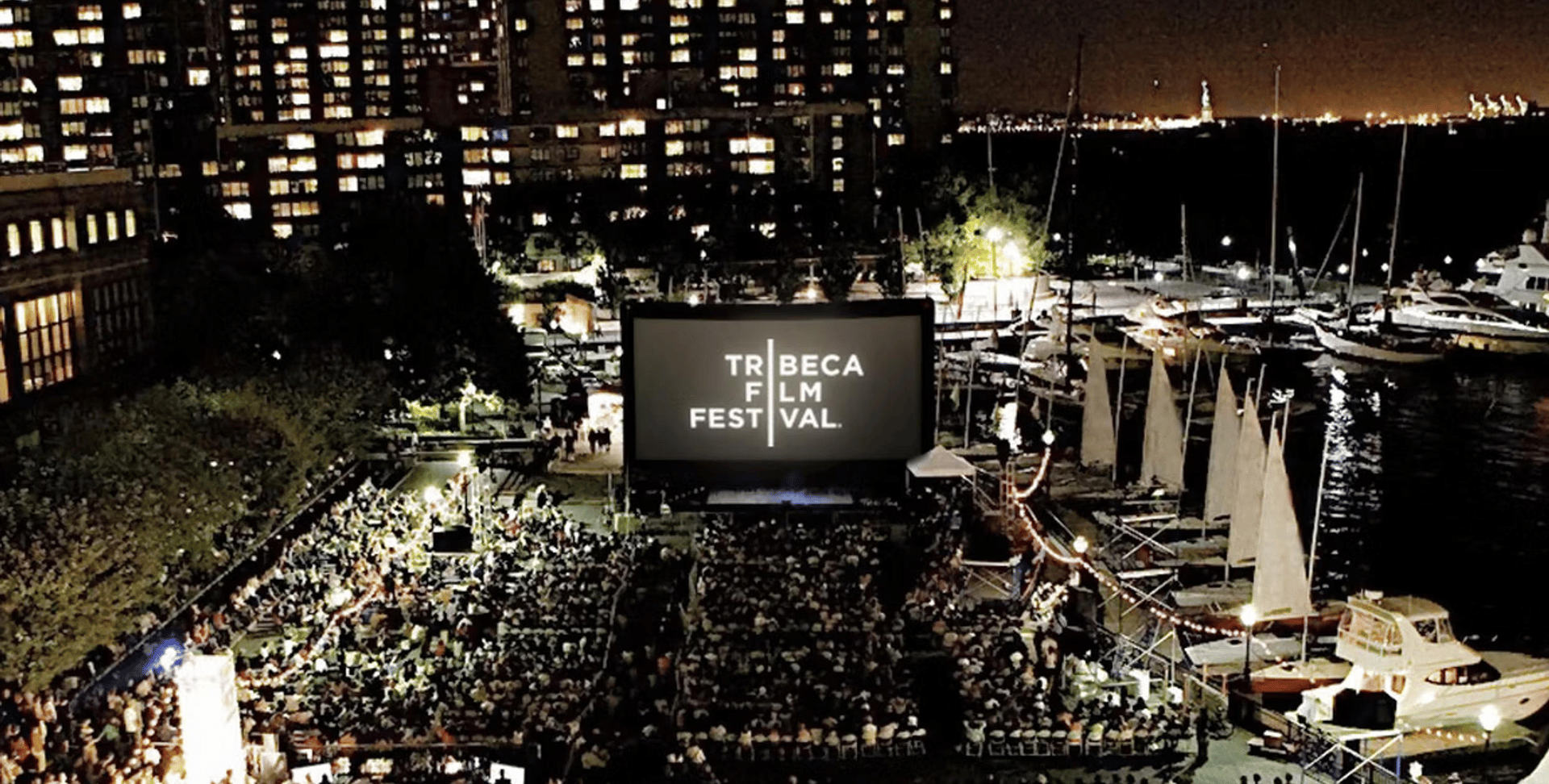
Tribeca Festival began in the aftermath of September 11 as an effort to bring people back to Lower Manhattan and support the neighborhood’s economic and cultural recovery.
Founded in 2001 by Robert De Niro, Jane Rosenthal and Craig Hatkoff, the festival has grown far beyond its original focus on film.
Today, programming includes cinema, television, music, talks, podcasts, games and immersive storytelling, with screenings and events taking place throughout New York.
The festival celebrated its 25th anniversary in 2026.
Its scale may now be global, but its connection to downtown Manhattan remains central to its identity.
On Franklin Street, the New York Academy of Art brings a quieter visual-arts presence to the neighborhood.
The graduate art school is particularly known for drawing, painting and sculpture rooted in figurative and representational traditions.
Its Tribeca building contains studios, classrooms and exhibition spaces, with public shows and special events offering opportunities to see work by students, emerging artists and established names.
It is worth checking what is on before you visit.
The building itself also feels completely at home among Tribeca’s former commercial lofts.
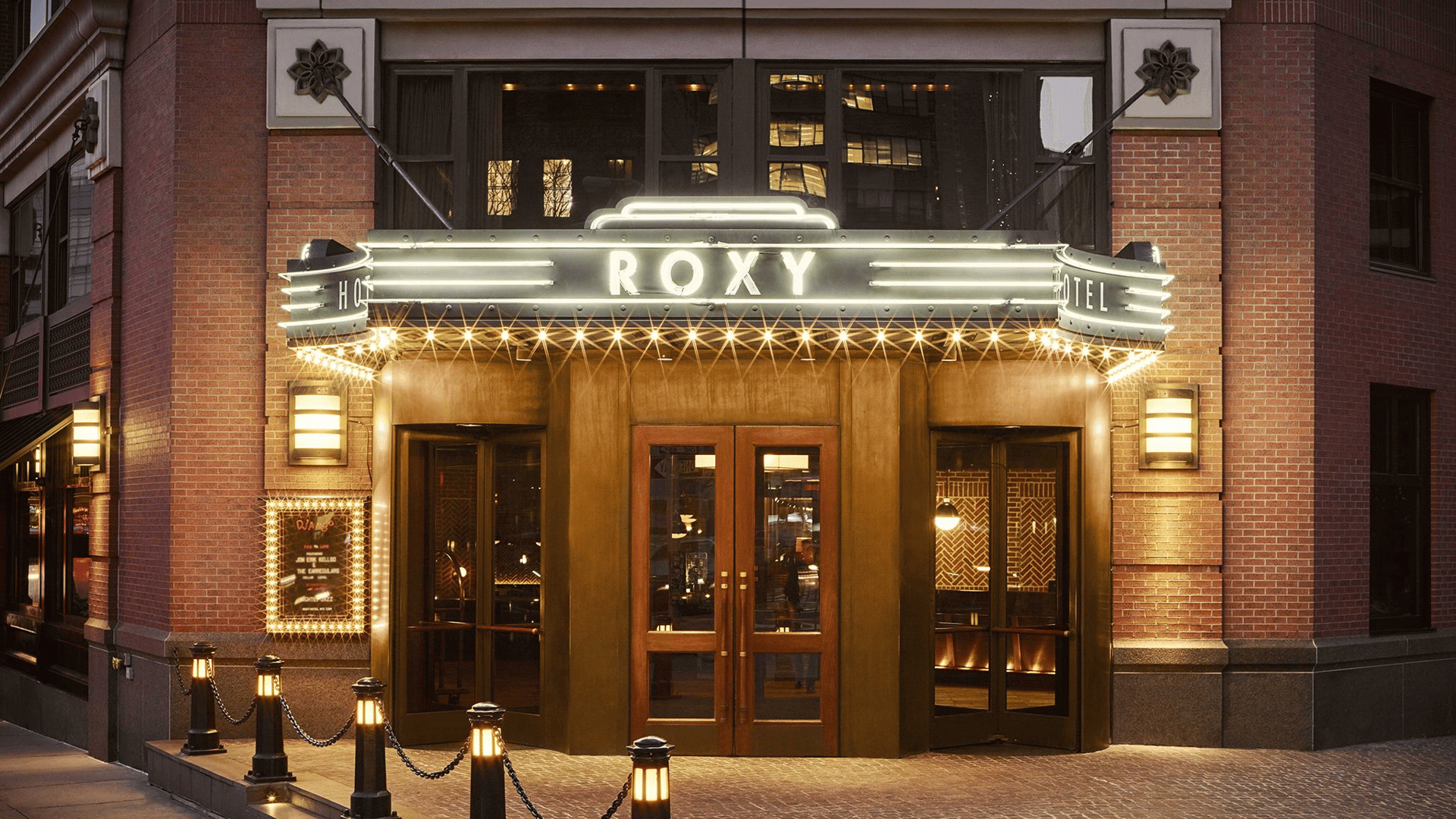
Inside The Roxy Hotel, Roxy Cinema offers an old-school moviegoing experience on a much more intimate scale.
The Art Deco-inspired theater programs independent and international films alongside archival prints, repertory cinema, cult classics and 35mm screenings.
Special events frequently include filmmaker conversations, live performances and Q&As.
It is the kind of cinema that turns seeing a film into an evening rather than simply another streaming option.
Have a drink before the screening and stay downstairs afterward.
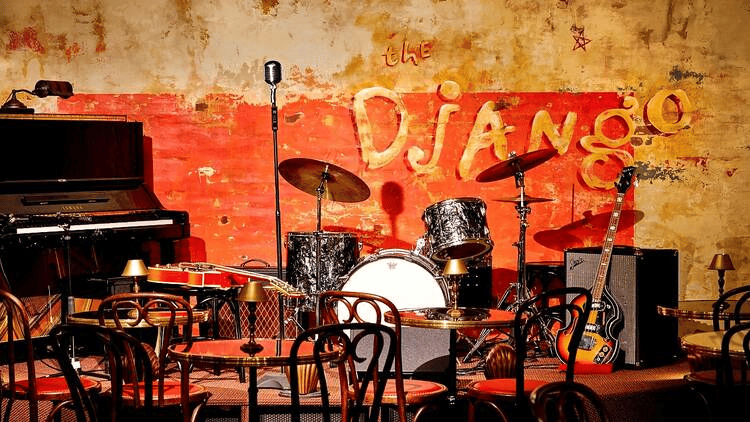
Also beneath The Roxy Hotel, The Django brings live jazz to a vaulted, subterranean room inspired by the intimate clubs of Paris.
The exposed brick, low lighting and close proximity to the musicians give performances a wonderfully immediate quality.
Dinner and cocktails are available during the shows, but the music remains the reason to come.
It is one of our favorite ways to finish an evening in Tribeca.
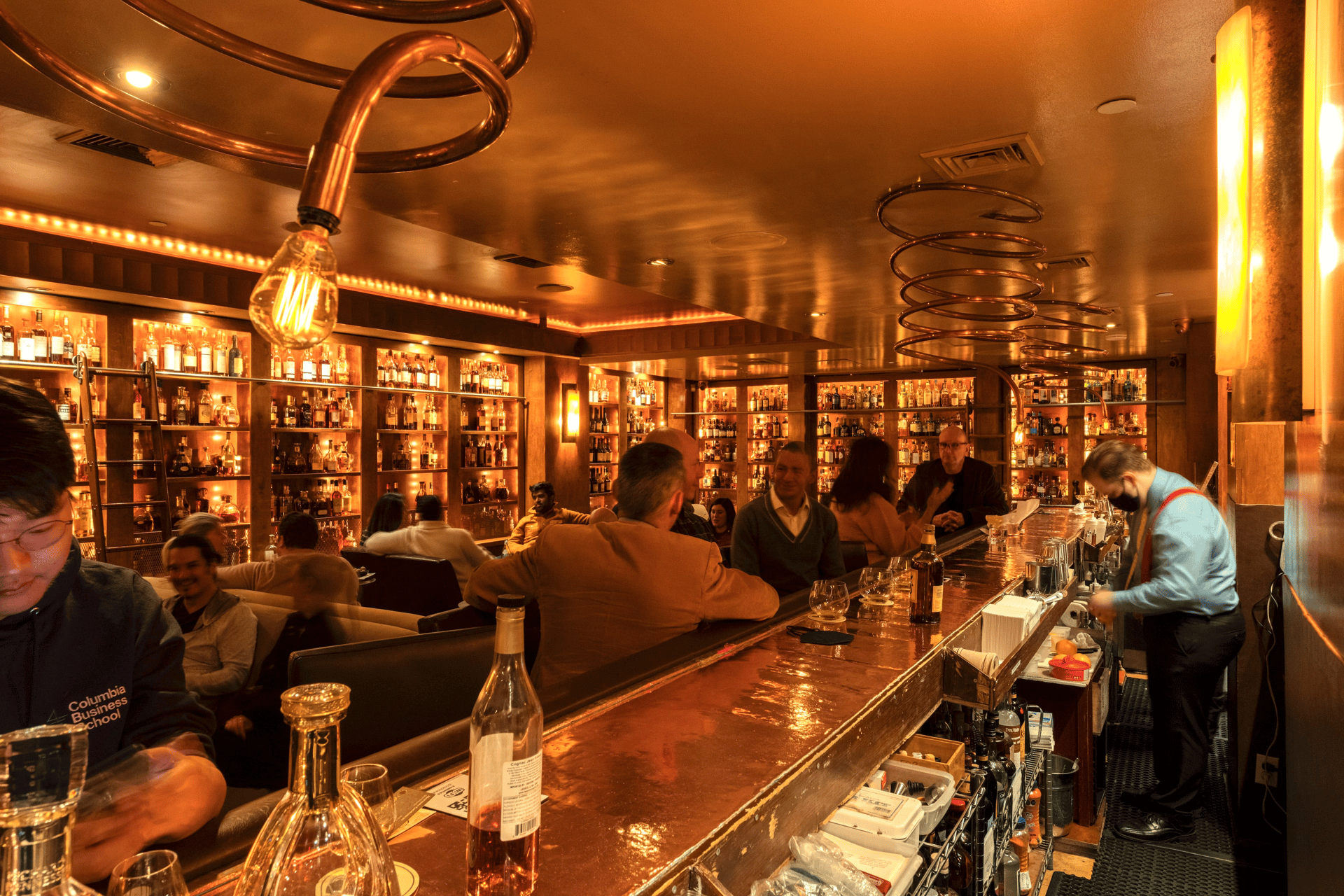
For a proper drink, Brandy Library on North Moore Street is our pick.
The room feels closer to a private library than a traditional bar, with warm lighting, low seating and shelves holding an extraordinary collection of aged spirits.
Whiskey, Cognac, Armagnac, Calvados and other brown spirits are the focus, although cocktails and wine are available as well.
You do not need to know exactly what you want. Part of the appeal is allowing the staff to guide you toward something unfamiliar.
It is quiet, intimate and sophisticated without trying to be fashionable.
Very Tribeca.
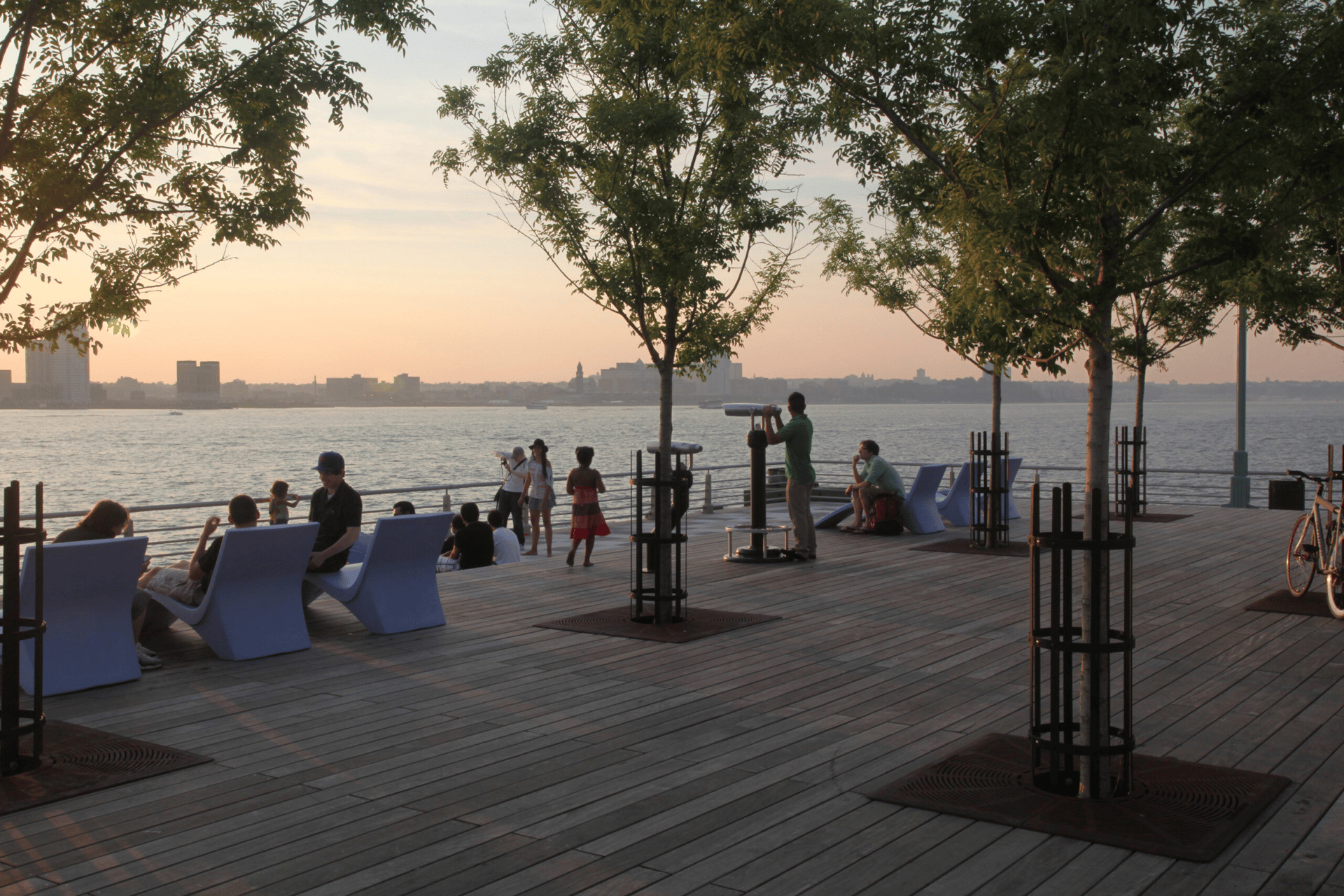
Tribeca changes completely when you reach the Hudson.
The neighborhood’s section of Hudson River Park stretches from Chambers Street north toward Canal, creating a long waterfront edge for walking, running, cycling and simply sitting near the river.
Pier 25 extends nearly 1,000 feet into the Hudson and offers lawns, recreation, playgrounds, volleyball, miniature golf and wide views toward Lower Manhattan and New York Harbor.
Walk all the way to the end and turn around.
The brick and cast-iron neighborhood behind you suddenly looks very small against the downtown skyline.
For something more intimate, Washington Market Park feels like Tribeca’s neighborhood backyard.
The landscaped park sits between Greenwich Street and the waterfront, with lawns, gardens, playgrounds and shaded places to sit.
It is particularly connected to daily residential life in Tribeca and feels noticeably different from a large destination park.
Come with coffee, find a bench and stay longer than you intended.
The World Trade Center may be visible nearby, but the atmosphere feels surprisingly removed from Lower Manhattan’s busiest streets.
Tribeca is one of Manhattan’s best neighborhoods for walking slowly.
North Moore Street is a favorite, with cobblestones, converted warehouses and some of the neighborhood’s most recognizable loft architecture.
Franklin Street offers another beautiful stretch, particularly between Hudson Street and Broadway, where cast-iron storefronts and substantial former commercial buildings line the blocks.
Duane Street feels especially residential around Duane Park, while Greenwich Street connects many of the neighborhood’s restaurants and historic buildings from north to south.
Then there is Staple Street.
The tiny cobblestone lane and its distinctive overhead skybridge create one of those New York streetscapes that feels almost too cinematic to be real.
The neighborhood is compact enough that you can see all of these streets in a single walk.
There is no reason to hurry.
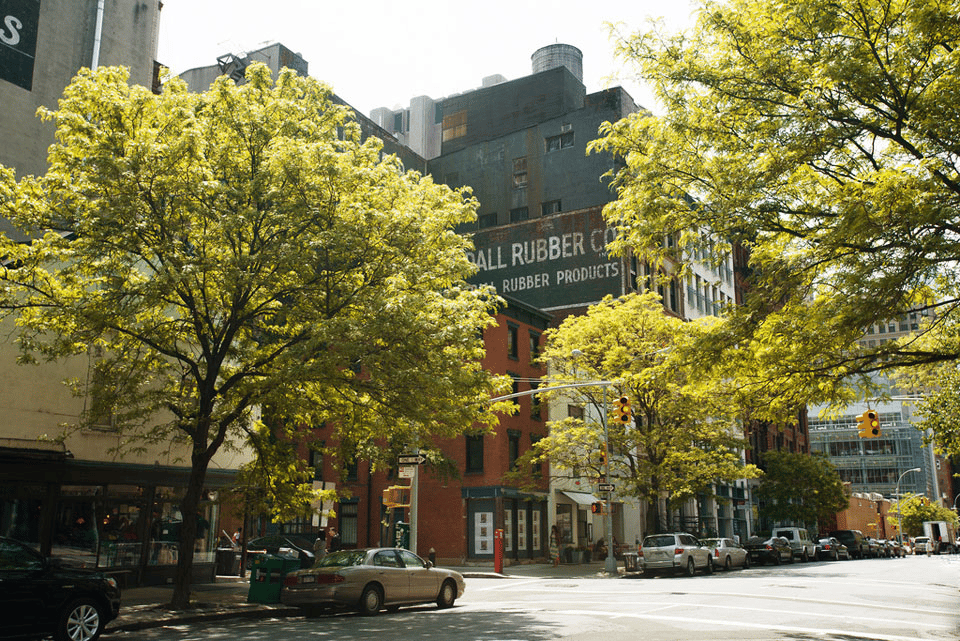
Residentially, Tribeca offers something that is difficult to replicate elsewhere in Manhattan.
Many homes occupy buildings that were never originally designed as residences. Former warehouses, manufacturing buildings and commercial lofts have been transformed into apartments while retaining the high ceilings, oversized windows, columns and generous proportions associated with their original uses.
That history gives many Tribeca homes an unusual sense of scale.
Traditional loft conversions sit beside boutique condominiums and newer luxury developments, while historic townhouses appear occasionally among the larger commercial buildings.
The neighborhood’s relatively low-rise architecture also contributes to its residential atmosphere. Rather than living among rows of towers, many residents look across broad streets toward buildings of similar height, allowing more light and creating a streetscape that feels distinctly different from Midtown or the Financial District.
The Hudson River, Washington Market Park, excellent restaurants and neighborhood schools add another layer to daily life.
For all of its reputation as one of Manhattan’s most desirable addresses, Tribeca often feels surprisingly low-key once you are actually living in it.
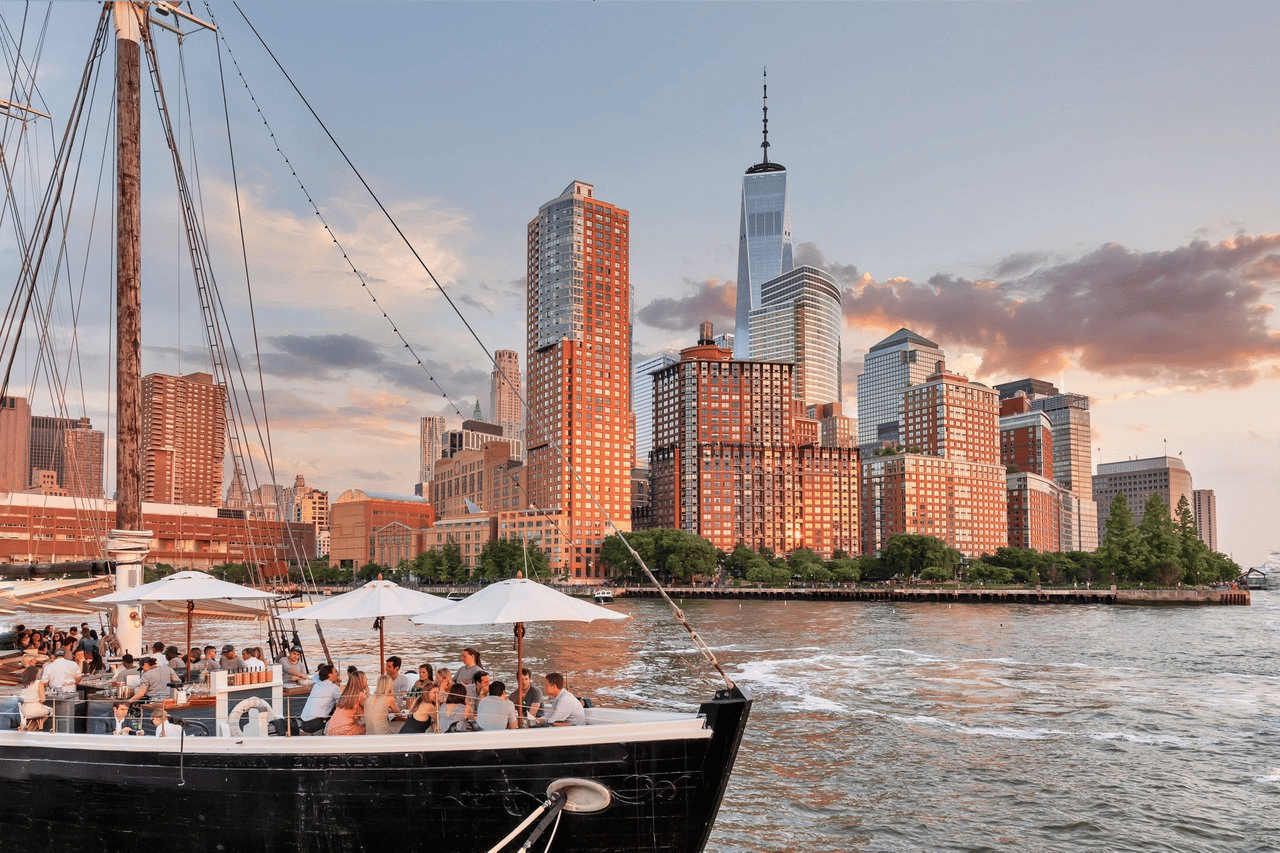
Tribeca real estate is defined by loft living.
The neighborhood’s historic warehouse and store-and-loft buildings were constructed largely for commercial and industrial use during the 19th and early 20th centuries, creating large floor plates, high ceilings and oversized windows that later proved ideal for residential conversion.
Many of the most characteristic Tribeca lofts retain elements of that history: cast-iron columns, exposed brick, timber beams, large windows and expansive open living spaces.
Several designated historic districts protect significant portions of the neighborhood’s architectural fabric, including Tribeca East, Tribeca North, Tribeca South and Tribeca West.
Alongside historic conversions are newer luxury condominiums and ground-up developments. These buildings tend to reinterpret the neighborhood’s industrial vocabulary through stone, brick, metal and large-scale windows while introducing private elevators, extensive amenities, terraces and contemporary interiors.
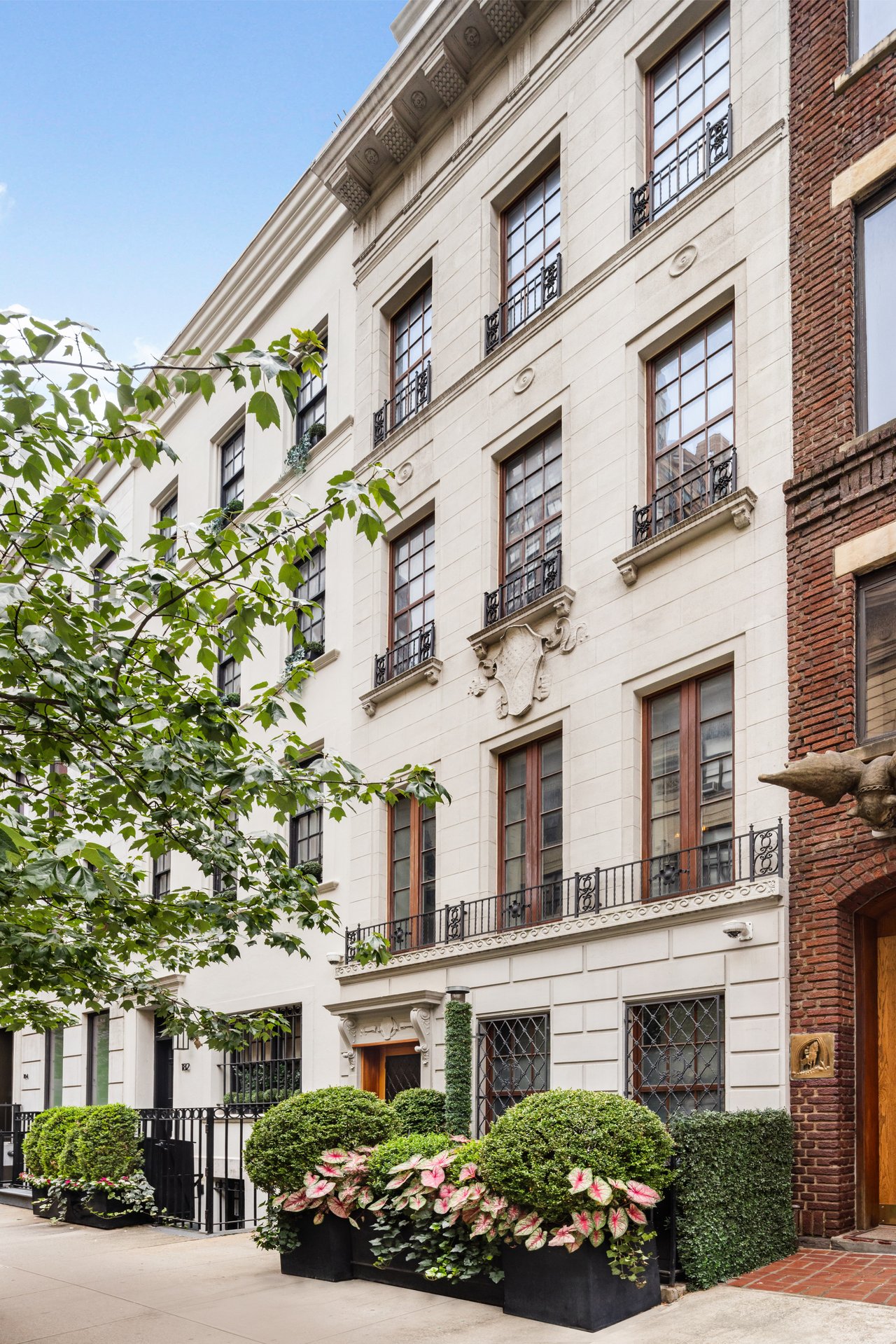
Townhouses are considerably less common but can occasionally be found on quieter blocks, offering an entirely different type of downtown living.
The relative scarcity of conventional apartment buildings is part of what makes Tribeca real estate so distinctive.
From vast historic lofts and converted warehouses to architect-designed condominiums and rare townhouses, Tribeca offers some of Manhattan’s most individual residential spaces within a neighborhood whose industrial history remains visible on almost every block.
Whether you are drawn to a sprawling historic loft, a converted warehouse residence or a contemporary condominium overlooking the Hudson, explore what is currently available across Tribeca.
590 Madison Ave, Floor 8 New York, NY10022
590 Madison Ave, Floor 8 New York, NY10022