Classic New York between two parks: landmark prewar buildings, tree-lined brownstone blocks, evenings at Lincoln Center and sunsets along the Hudson.
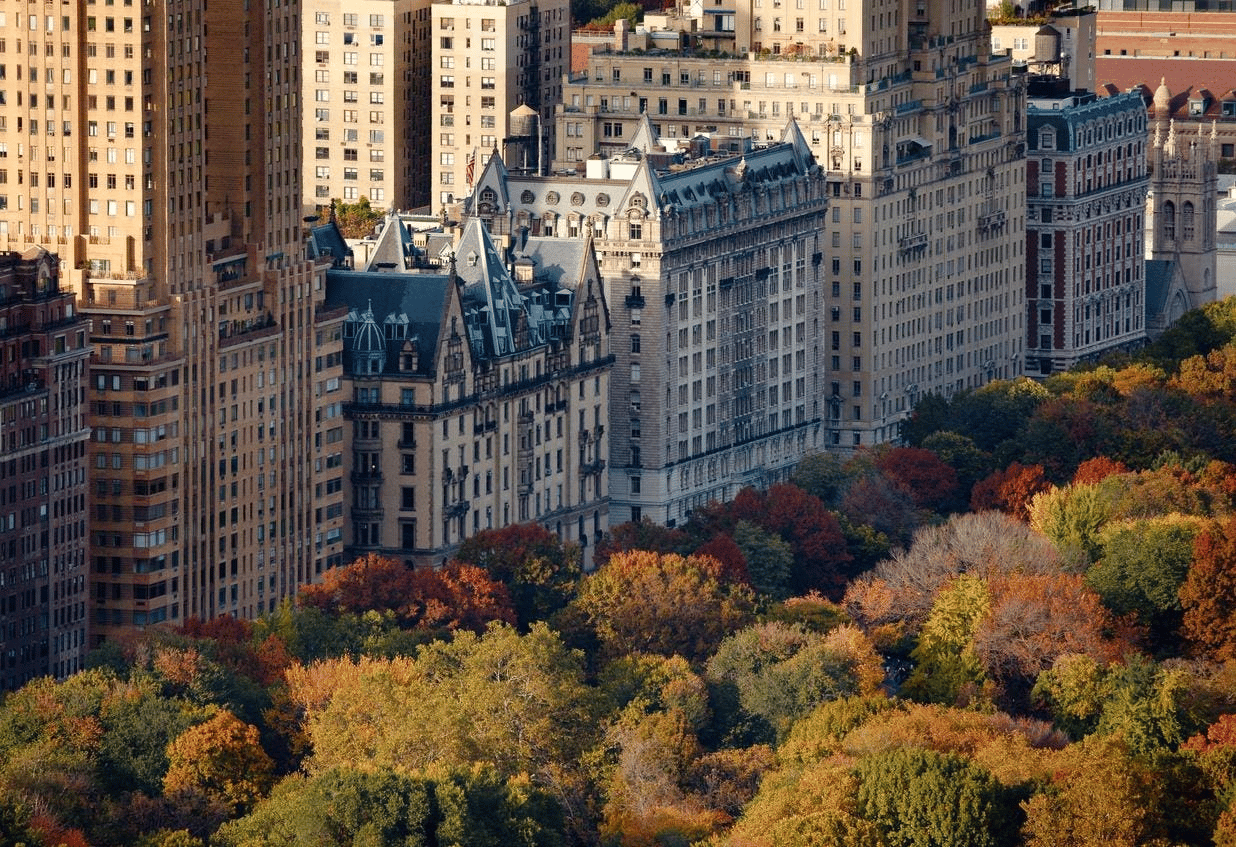
The Upper West Side has a way of feeling unmistakably Manhattan while still offering a little more room to settle in. Central Park defines its eastern edge, Riverside Park follows the Hudson to the west, and between them are historic apartment houses, brownstone streets, neighborhood restaurants, cultural institutions and places that have been part of New York life for generations.
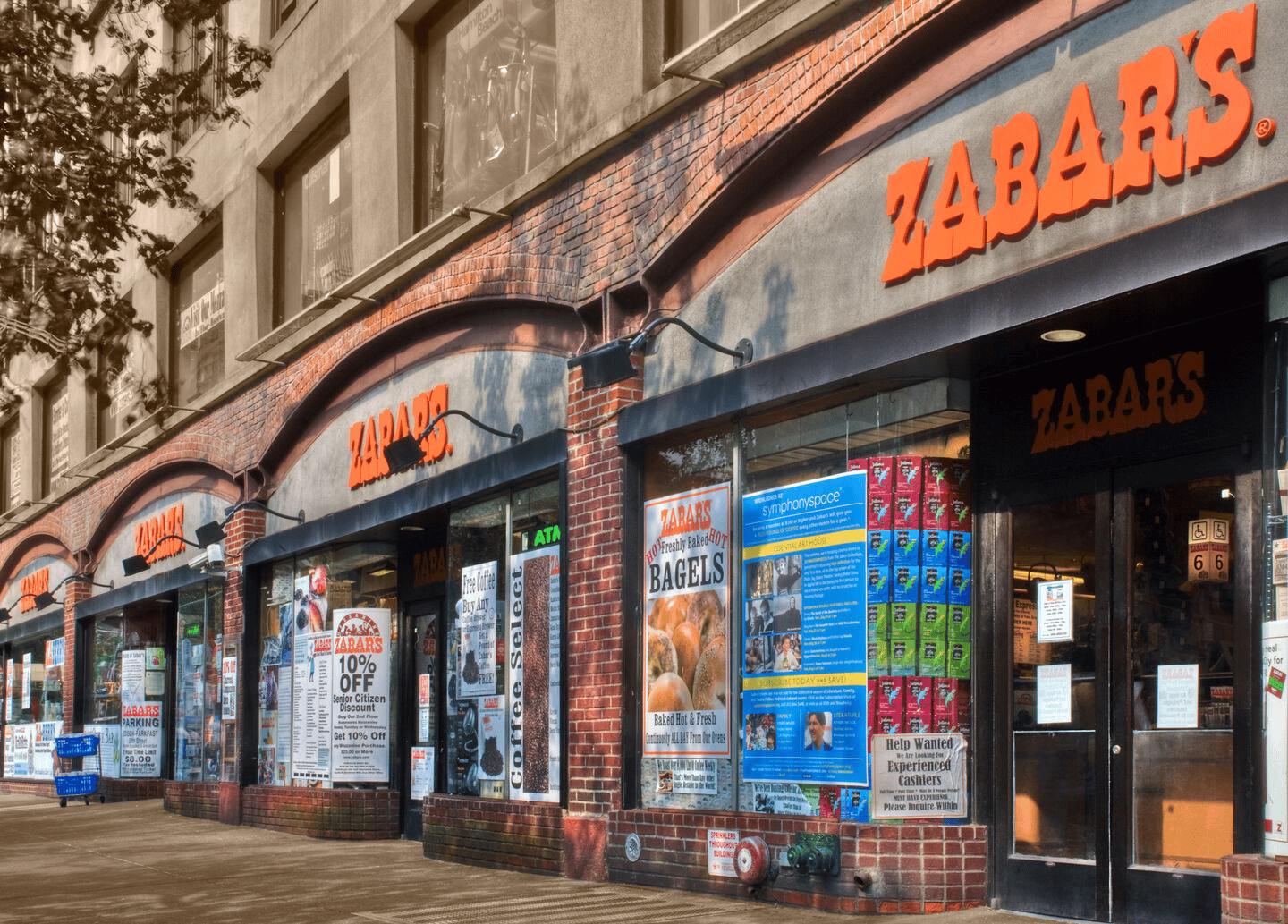
It is elegant without feeling overly formal. Spend enough time in the neighborhood and you quickly find your own routine: coffee on Broadway, a morning walk through Central Park, a stop at Zabar’s, dinner before a performance at Lincoln Center, or a walk toward the Hudson just before sunset.
The parks are an obvious place to start. Few Manhattan neighborhoods are positioned quite like this one, with Central Park on one side and Riverside Park on the other. For residents, both become part of everyday life — somewhere for a morning run, an evening walk, a weekend picnic or simply a little distance from the pace of the city.
Away from the parks, the neighborhood changes block by block. Central Park West is lined with some of Manhattan’s most recognizable prewar apartment houses, while West End Avenue and Riverside Drive feel quieter and more residential. Between the avenues, the West 70s and 80s are filled with brownstones, rowhouses, local restaurants and tree-lined streets that make this one of the most enjoyable parts of Manhattan to explore on foot.
And then there is the culture. Lincoln Center, the American Museum of Natural History and The New York Historical give the Upper West Side an unusually strong cultural identity, while institutions like the Beacon Theatre and the New York Public Library for the Performing Arts add even more to the neighborhood.
Few places feel more Upper West Side than Zabar’s at Broadway and 80th Street. Smoked fish, cheeses, breads, coffee, prepared foods and kitchenware all somehow fit under one roof, and the energy inside feels wonderfully New York.
It is one of those neighborhood institutions worth stopping into even when you do not particularly need anything.
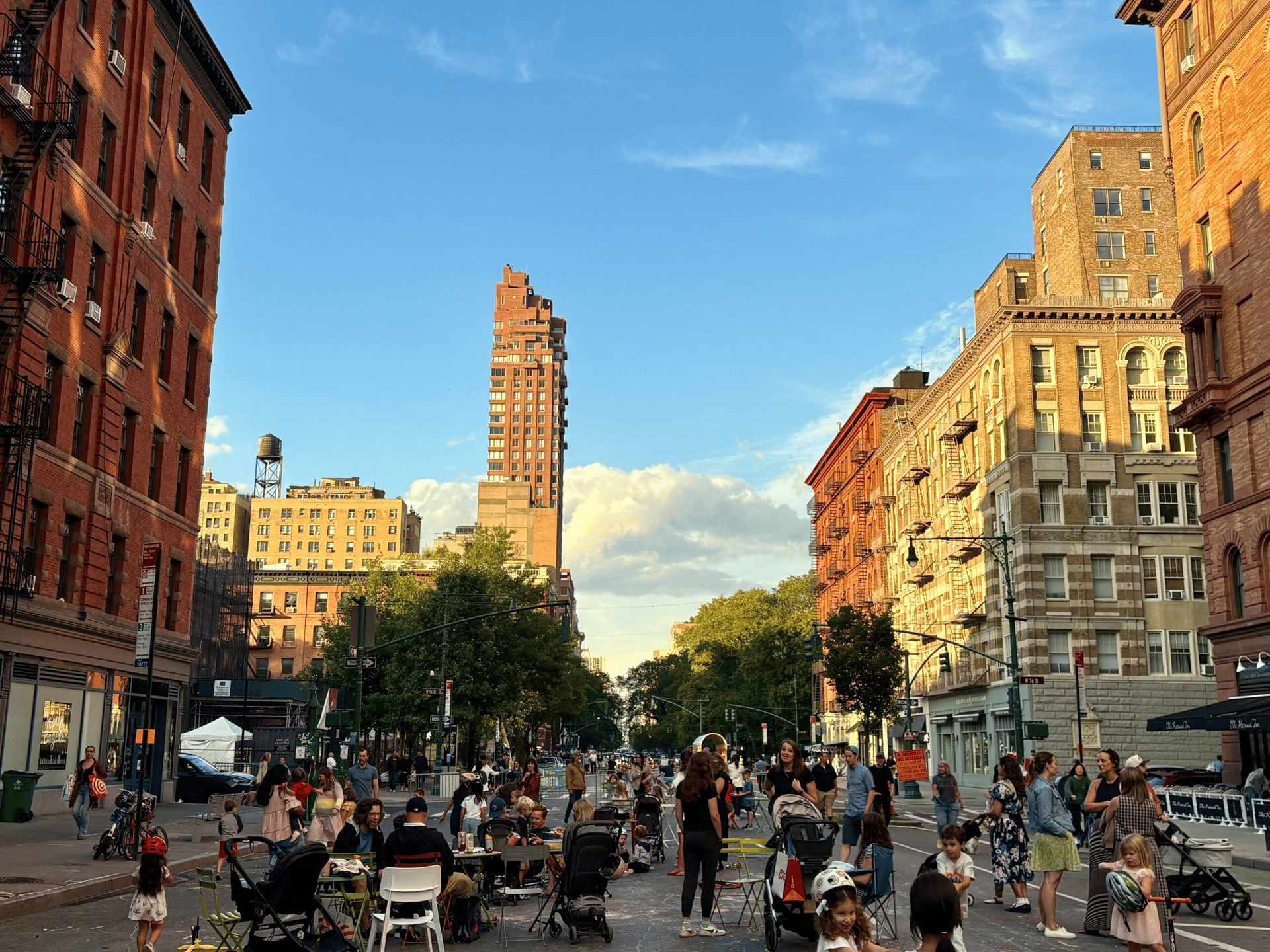
Columbus Avenue is one of our favorite ways to experience the neighborhood. Around the West 70s and 80s, restaurants, cafés, boutiques and neighborhood shops sit between some of the Upper West Side’s prettiest residential blocks.
Walk south and the avenue eventually brings you toward Lincoln Square and Lincoln Center; walk north and it becomes quieter and increasingly residential. It is the kind of street best experienced without much of a plan.
One of the best things about dining on the Upper West Side is the mix. Longtime neighborhood institutions now sit alongside a growing group of polished restaurants that are worth making a reservation for even if you do not live nearby.
Inside David Geffen Hall at Lincoln Center, Tatiana is one of the neighborhood’s most distinctive dining experiences. Chef Kwame Onwuachi draws on the flavors and memories of his New York upbringing, bringing together Caribbean, African, American and other influences in a restaurant that feels energetic, celebratory and completely at home in the city.
It is an especially good choice when you want to make an entire evening out of Lincoln Center.
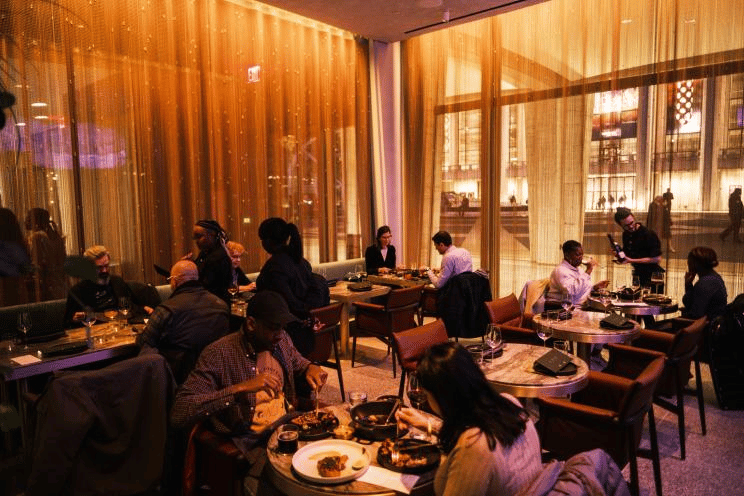
For something more refined, Essential by Christophe on West 77th Street brings contemporary French fine dining to the Upper West Side.
Chef Christophe Bellanca’s Michelin-starred restaurant focuses on seasonal ingredients, precise French technique and tasting menus served in an elegant but intimate dining room. It feels special without becoming overly formal — exactly the kind of restaurant the neighborhood does particularly well.
Sempre Oggi on West 75th Street brings a more contemporary energy to the neighborhood with seasonal Italian cooking, house-made pastas, fresh focaccia and a strong aperitivo culture.
The room feels polished but relaxed, making it just as appealing for dinner with friends as it is for an early meal before a performance at Lincoln Center or the Beacon Theatre.
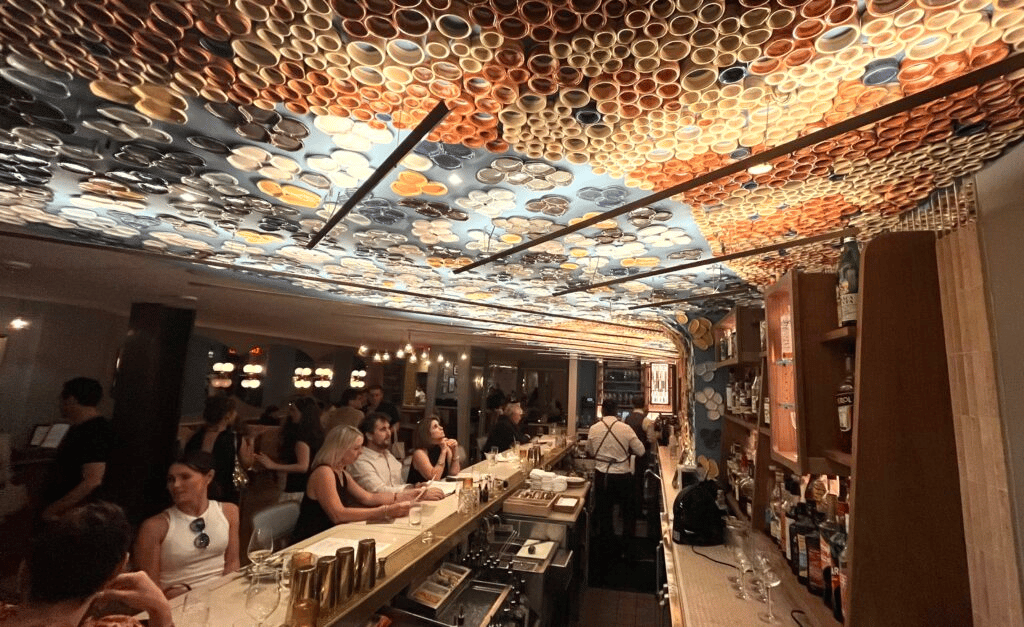
Eléa on West 85th Street is one of our picks for a beautiful Greek dinner. The restaurant has an elegant, warm atmosphere and a menu centered around Greek classics, seafood, vegetables and dishes designed to be shared.
It feels sophisticated without losing the easy neighborhood quality that makes the Upper West Side so appealing.
Farther north on Broadway, Dagon brings modern Mediterranean cooking to West 91st Street, drawing inspiration from southern Italy through North Africa.
Fresh breads, mezze, vegetables, seafood and shareable dishes make it particularly good for dinner with friends, while the lively dining room gives this stretch of Broadway a little extra energy in the evening.
Every neighborhood guide needs one place where polish is beside the point.
Barney Greengrass on Amsterdam Avenue is that place. Come for smoked fish, bagels, eggs and an old-school dining room that feels wonderfully removed from whatever restaurant trend is happening elsewhere in the city.
It is one of those places that could only really exist in New York — and feels especially at home on the Upper West Side.
One of the luxuries of living on the Upper West Side is being able to treat some of New York’s major cultural institutions like neighborhood destinations rather than once-a-year excursions.
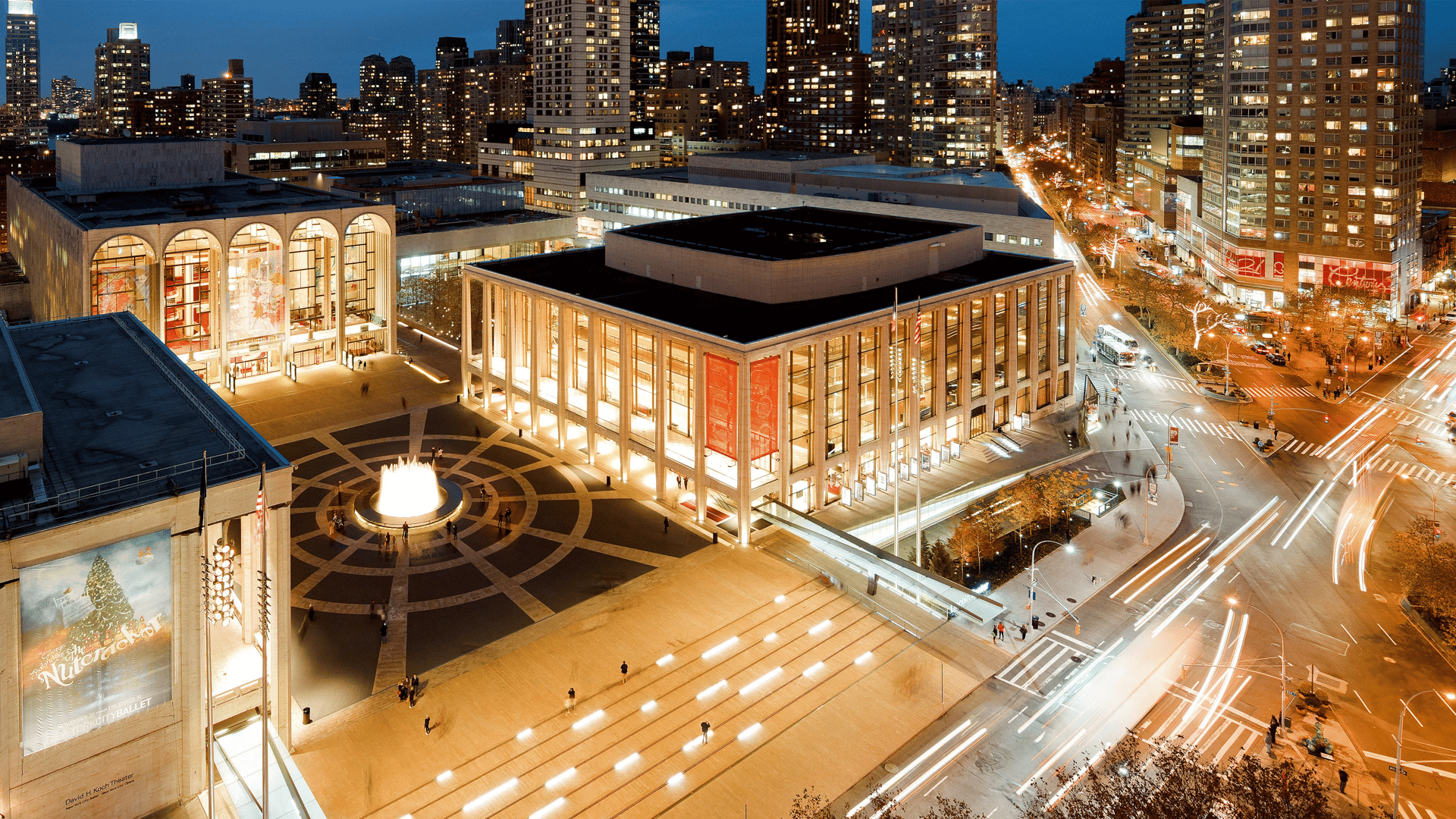
Opera, ballet, orchestral music, theater and dance all come together at Lincoln Center.
The campus is home to the Metropolitan Opera, New York City Ballet, New York Philharmonic, Lincoln Center Theater and the New York Public Library for the Performing Arts, among other institutions.
Even without a ticket, walking through Lincoln Center Plaza in the evening is one of those New York experiences that never really gets old.
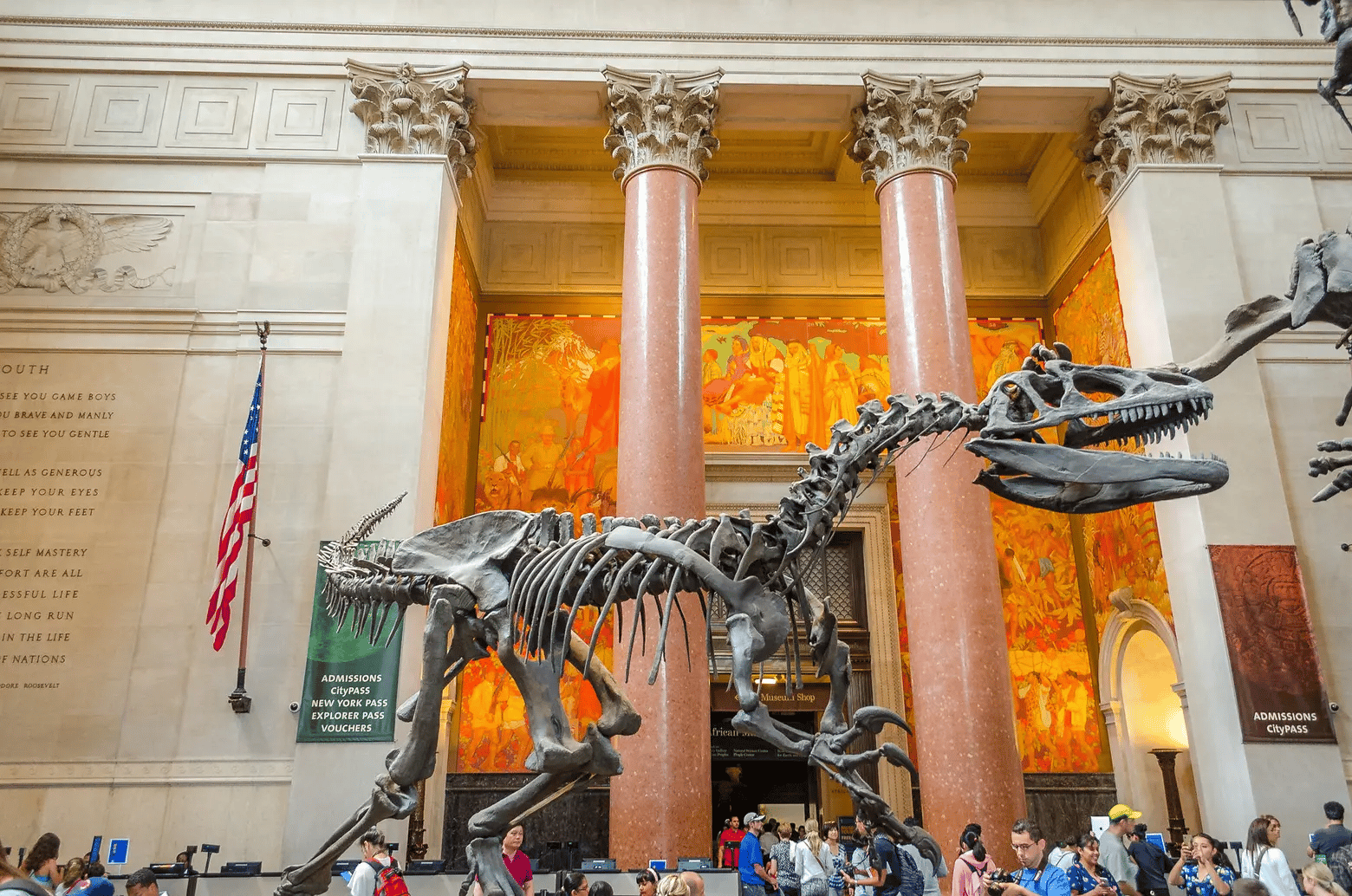
The American Museum of Natural History could easily fill an entire day, but living nearby means you do not have to experience it that way.
Stop in for one gallery, a special exhibition or an afternoon inside the Richard Gilder Center for Science, Education, and Innovation, whose dramatic contemporary architecture has added an entirely new dimension to the museum.
Its location directly on Central Park West also makes it easy to combine with a walk through the park.
Just south of the Museum of Natural History at 170 Central Park West, The New York Historical is particularly worth knowing for exhibitions focused on New York and American history, art and culture.
It offers a quieter museum experience and is perfectly positioned for an afternoon that includes Central Park, the Museum of Natural History or the surrounding streets of the West 70s.
Tucked within the Lincoln Center campus, the New York Public Library for the Performing Arts is one of the neighborhood’s quieter cultural gems.
Its collections span dance, theater, music and recorded sound, and its exhibitions and public programs make it worth knowing even if you are not heading to a performance next door.
For cocktails, The Wallace Lounge on West 76th Street feels particularly well suited to the neighborhood.
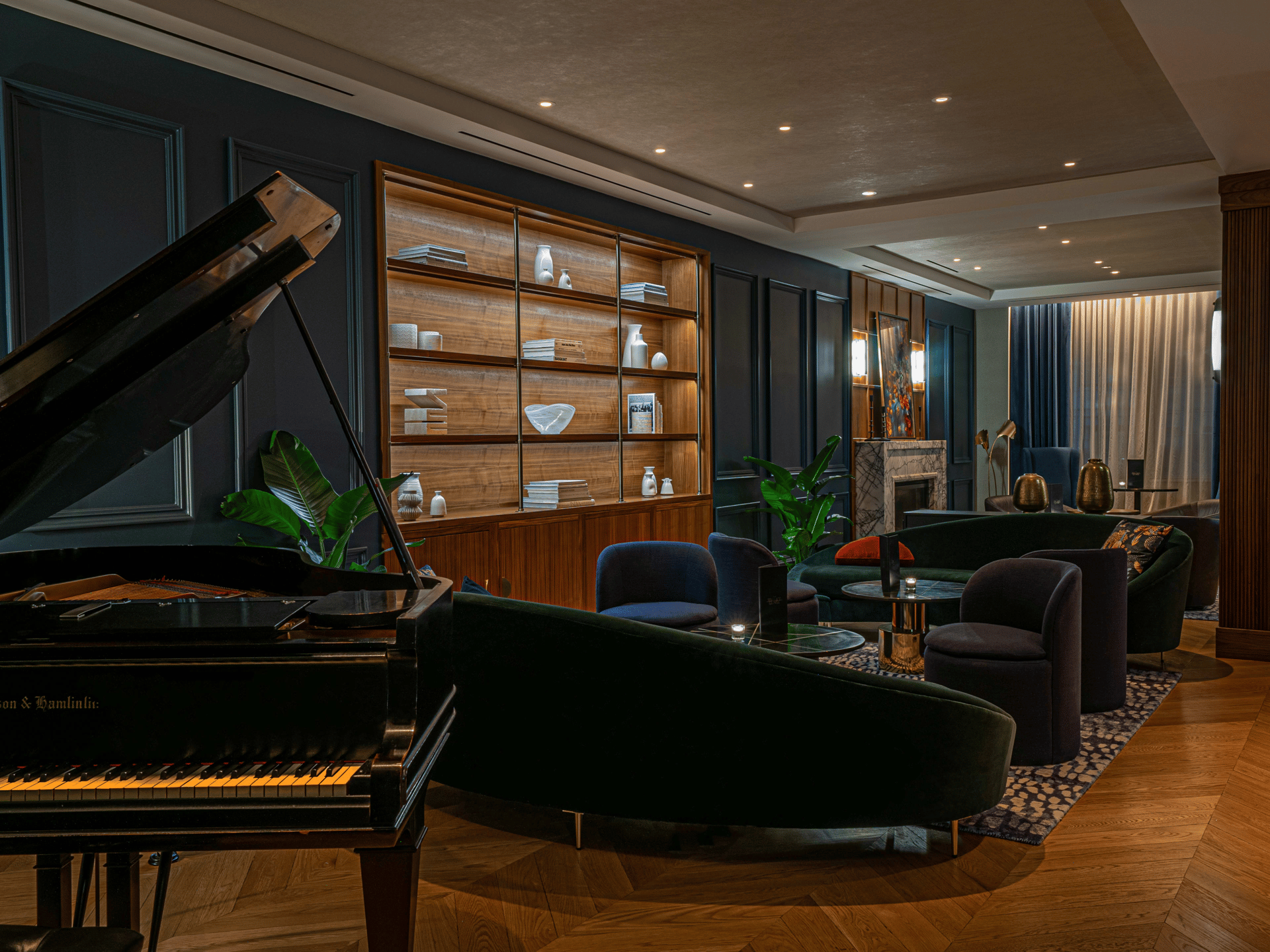
Inside The Wallace, the room is polished but comfortable, with cocktails, small plates and regular live jazz performances creating the kind of setting that works equally well before dinner or for a proper nightcap afterward.
It is our pick for an elegant Upper West Side drink without having to head downtown.
There is no single best way to experience Central Park from the Upper West Side.
Enter around West 72nd Street for Strawberry Fields, head toward the Reservoir, wander through the Ramble, spend an afternoon on Sheep Meadow or simply take whichever path looks interesting.
The luxury is having enough time nearby that you do not need an itinerary.
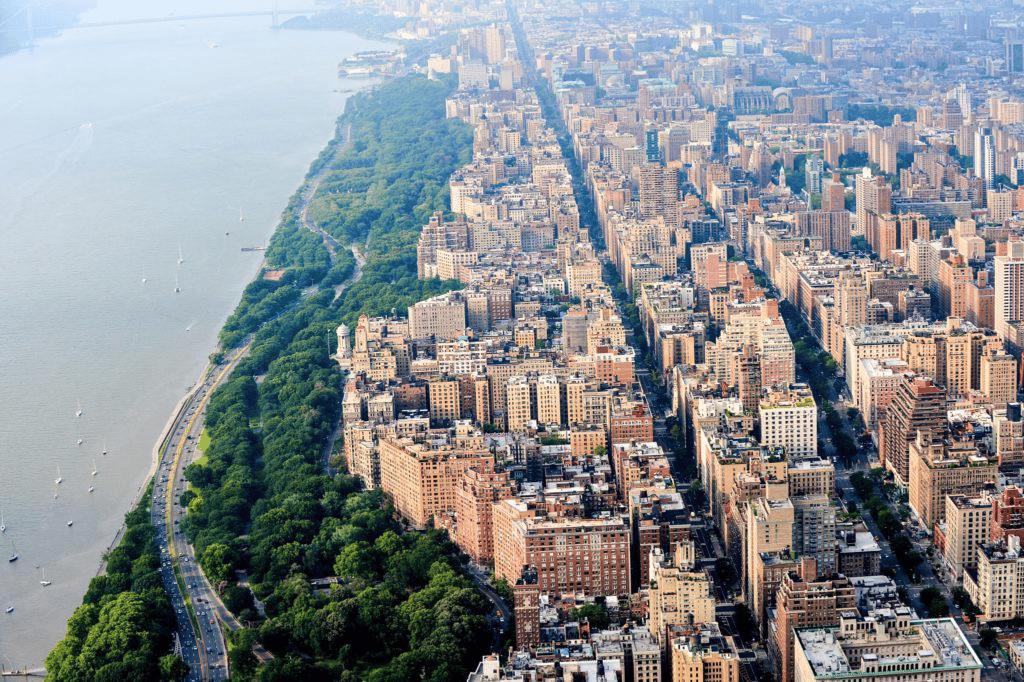
On the opposite side of the neighborhood, Riverside Park has a completely different personality.
The Hudson River, mature trees, winding paths, lawns and long waterfront views give the western edge of the Upper West Side a quieter feeling, particularly in the late afternoon.
Walk along the river, find a bench overlooking the water or stay until sunset. It is one of the neighborhood’s best reminders that Manhattan can occasionally feel surprisingly peaceful.
Some of the best parts of the Upper West Side do not require a reservation.
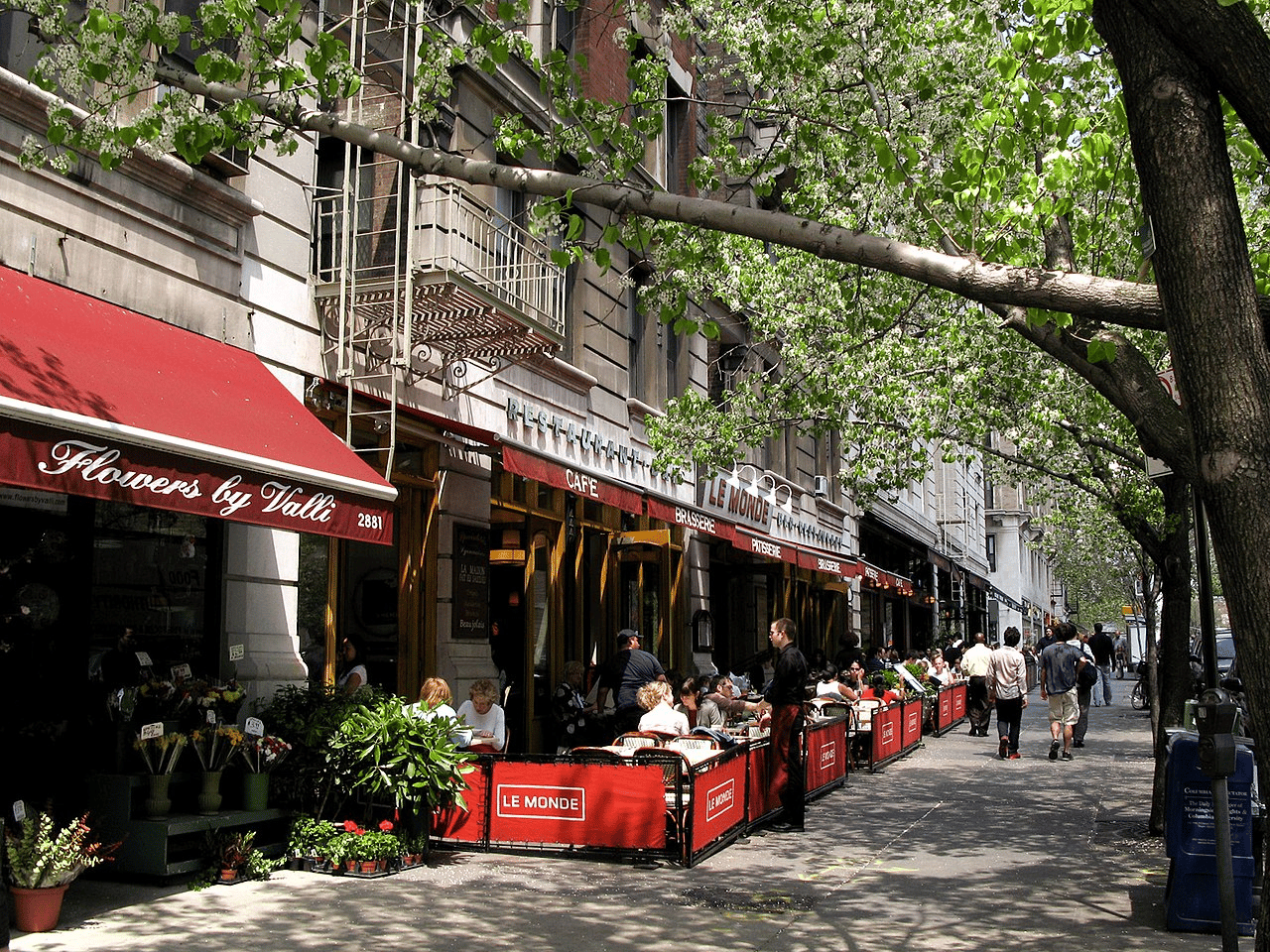
Walk through the West 70s and 80s between Central Park West and Amsterdam Avenue and you will find brownstones, bay windows, carved stone façades and tree-lined blocks that can feel surprisingly intimate for Manhattan.
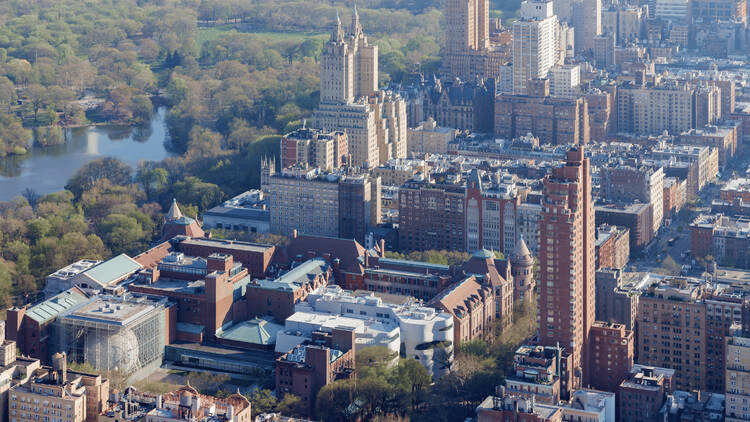
Central Park West is grander, with landmark prewar residences including The Dakota, The San Remo and The Beresford overlooking the park. Farther west, West End Avenue and Riverside Drive have their own collection of substantial prewar buildings and a quieter residential character.
Closer to Lincoln Center, the neighborhood becomes slightly more urban, while farther north toward the West 90s, Broadway, Amsterdam and Columbus feel increasingly local and residential.
Part of the fun is simply choosing a block you have never walked before and seeing where it leads.
Residentially, the Upper West Side offers something increasingly rare in Manhattan: a neighborhood that can feel both grand and relaxed.
Central Park West is known for substantial prewar apartment houses and some of the neighborhood’s most recognizable residential architecture, while West End Avenue and Riverside Drive offer another collection of elegant buildings farther west.
Between the avenues, brownstones, townhouses and smaller prewar buildings give many of the side streets a much more intimate scale. Around Lincoln Square and along parts of Broadway, newer condominiums and larger full-service buildings add a more contemporary option.
What ties it all together is the neighborhood itself: Central Park in one direction, the Hudson River in the other, and restaurants, museums, cultural institutions, shops and familiar local places woven into everyday life in between.
Upper West Side real estate offers one of Manhattan’s most varied residential landscapes, with architecture and housing that change noticeably from avenue to avenue and block to block.
Along Central Park West, the neighborhood is known for grand prewar cooperatives and condominiums with gracious layouts, detailed architecture and direct proximity to Central Park.
West End Avenue and Riverside Drive offer another collection of substantial prewar residences, often with a quieter residential atmosphere and easy access to Riverside Park and the Hudson River.
On the side streets, brownstones, townhouses and smaller prewar buildings create a more intimate residential feel, particularly throughout the West 70s and 80s.
The neighborhood also has a strong collection of contemporary condominiums and newer luxury developments, particularly around Lincoln Square and along its major avenues, where modern layouts, larger windows, private outdoor space and extensive amenities are more common.
From landmark prewar residences and elegant brownstones to contemporary condominiums, the Upper West Side offers a remarkably broad range of ways to live — all within a neighborhood framed by Central Park and the Hudson River.
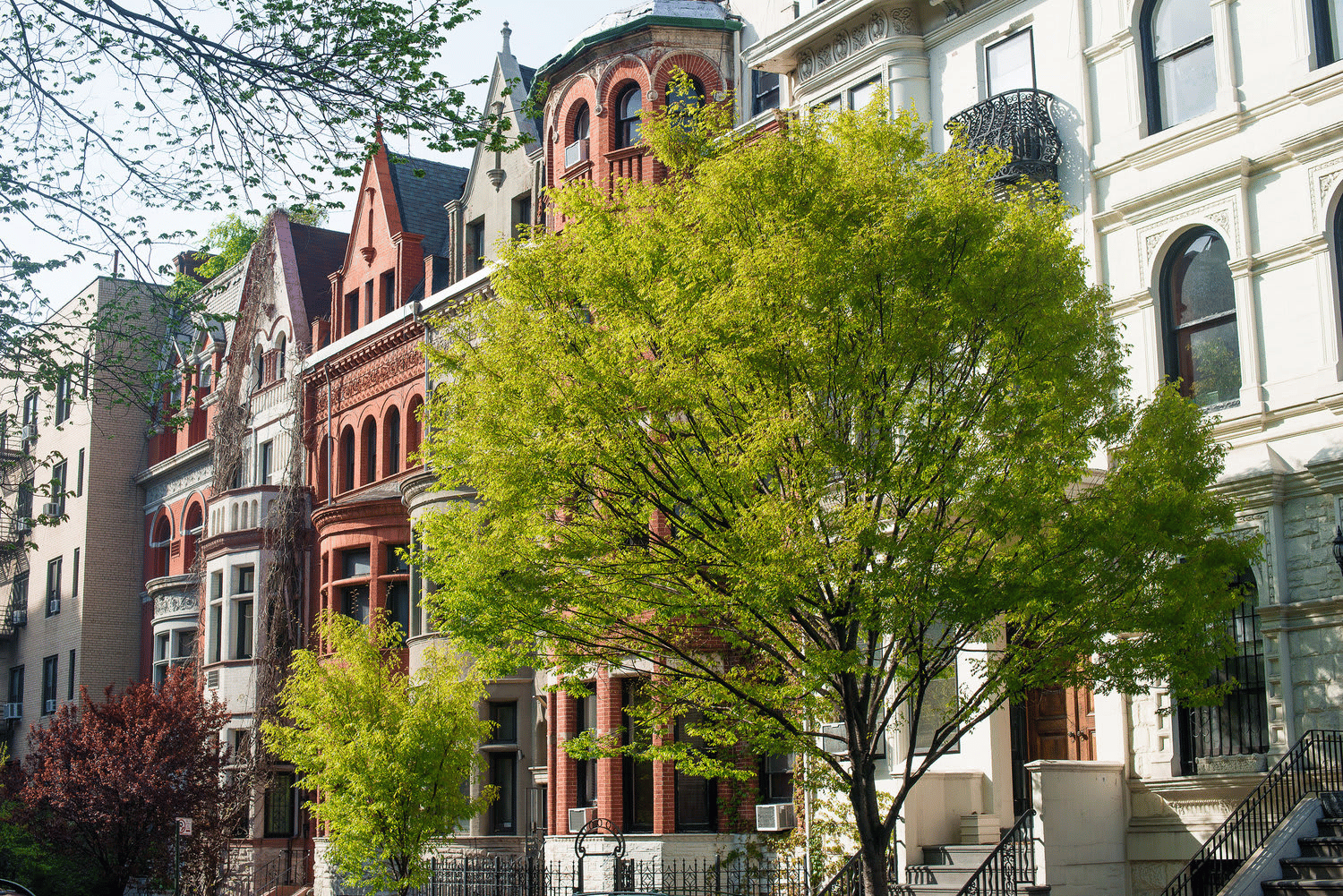
Whether you are drawn to a classic prewar cooperative overlooking Central Park, a brownstone on a quiet tree-lined street or a contemporary condominium near Lincoln Center, explore what is currently available across the Upper West Side.
219,343 people live in Upper West Side, where the median age is 46 and the average individual income is $126,285. Data provided by the U.S. Census Bureau.
Total Population
Median Age
Population Density
Average individual Income
There's plenty to do around Upper West Side, including shopping, dining, nightlife, parks, and more. Data provided by Walk Score and Yelp.
Explore popular things to do in the area, including Nationwide Produce Incorporated, 97st Deli, and Solis's Video.
| Name | Category | Distance | Reviews |
Ratings by
Yelp
|
|---|---|---|---|---|
| Dining | 0.52 miles | 0 reviews | 0/5 stars | |
| Dining | 1.02 miles | 0 reviews | 0/5 stars | |
| Shopping | 1.14 miles | 0 reviews | 0/5 stars | |
| Active | 0.27 miles | 0 reviews | 0/5 stars | |
| Active | 0.3 miles | 0 reviews | 0/5 stars | |
| Active | 0.71 miles | 0 reviews | 0/5 stars | |
| Active | 0.82 miles | 0 reviews | 0/5 stars | |
| Active | 0.85 miles | 0 reviews | 0/5 stars | |
| Active | 1.01 miles | 4 reviews | 4/5 stars | |
| Active | 1.07 miles | 0 reviews | 0/5 stars | |
| Active | 1.11 miles | 0 reviews | 0/5 stars | |
| Beauty | 0.13 miles | 1 review | 5/5 stars | |
| Beauty | 0.39 miles | 2 reviews | 3/5 stars | |
| Beauty | 0.85 miles | 0 reviews | 0/5 stars | |
| Beauty | 0.93 miles | 1 review | 5/5 stars | |
|
|
||||
|
|
||||
|
|
||||
|
|
||||
|
|
||||
|
|
Upper West Side has 107,551 households, with an average household size of 2. Data provided by the U.S. Census Bureau. Here’s what the people living in Upper West Side do for work — and how long it takes them to get there. Data provided by the U.S. Census Bureau. 219,343 people call Upper West Side home. The population density is 139,057 and the largest age group is Data provided by the U.S. Census Bureau.
Total Population
Population Density Population Density This is the number of people per square mile in a neighborhood.
Median Age
Men vs Women
Population by Age Group
0-9 Years
10-17 Years
18-24 Years
25-64 Years
65-74 Years
75+ Years
Education Level
Total Households
Average Household Size
Average individual Income
Households with Children
With Children:
Without Children:
Blue vs White Collar Workers
Blue Collar:
White Collar:
590 Madison Ave, Floor 8 New York, NY10022
590 Madison Ave, Floor 8 New York, NY10022