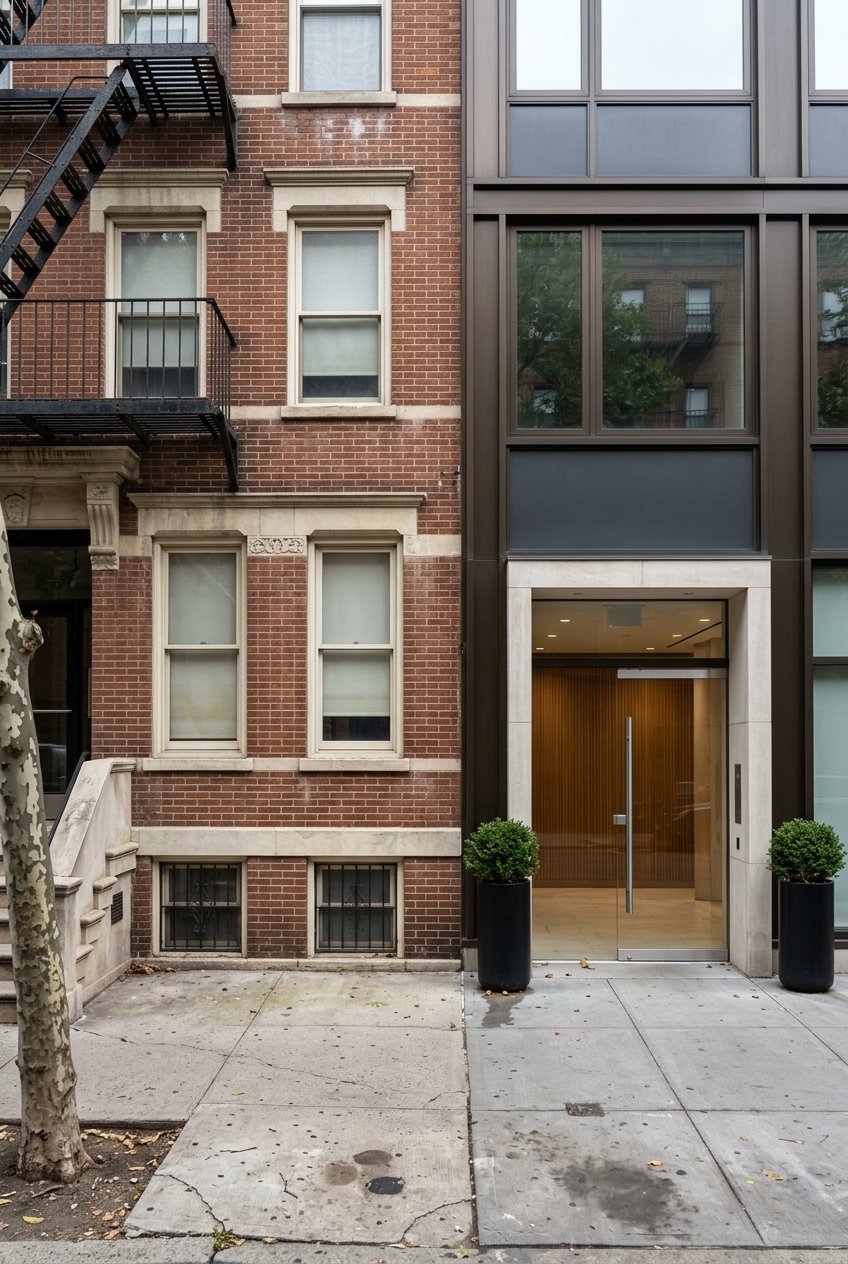
If you are torn between a sleek condo and a classic walk-up in Hell’s Kitchen, you are not alone. This neighborhood gives you both ends of the Manhattan ownership spectrum, often within a few blocks of each other. Understanding how price, monthly costs, amenities, and building rules differ can help you buy with more confidence. Let’s dive in.
Hell’s Kitchen Offers Two Distinct Paths
Hell’s Kitchen stands out because older walk-ups, tenements, converted lofts, and newer high-rise buildings all exist in the same neighborhood landscape. That mix gives you real choice, not just in style, but in how you want to live day to day.
The neighborhood is also highly walkable, with a Walk Score of 99. That matters because whether you choose a full-service condo or a smaller walk-up building, you are still buying into a location built for convenience.
Hell’s Kitchen Prices at a Glance
Current listing data shows a market that is expensive, but still clearly segmented. StreetEasy currently shows 354 listings for sale, with a median asking price of $1.195 million, a median price of $1,463 per square foot, and a median size of 951 square feet.
Recent sales data points in a similar direction. Redfin’s March 2026 snapshot shows a median sale price of $1,186,500 and median days on market of 76, which suggests buyers still need to weigh value carefully rather than assume every property competes on the same terms.
One of the clearest patterns is the condo premium. StreetEasy’s current snapshot shows condos priced above co-ops across every bedroom count, from studios at $718,000 versus $460,000 to two-bedrooms at $1.675 million versus $999,000.
Why Buyers Choose Condos
Condo Living Prioritizes Convenience
In Hell’s Kitchen, condos often appeal to buyers who want a smoother daily routine. Many of the current examples in the neighborhood emphasize attended lobbies, elevator access, and shared amenities that reduce friction.
Buildings such as The Sheffield and 540 West highlight what this can look like in practice. Depending on the building, features may include a 24-hour doorman or concierge, roof decks, fitness centers, lounges, landscaped outdoor space, pet spa access, and laundry conveniences.
Condo Interiors Often Feel More Modern
Current condo listings in Hell’s Kitchen also tend to lean toward open-plan layouts and newer finishes. Features cited in active listings include floor-to-ceiling windows, 9-foot ceilings, central air, in-unit washer and dryer setups in some homes, and modern kitchens.
For many buyers, that translates into a more turnkey experience. If you value contemporary design, larger windows, and a building that feels service-oriented, a condo may align better with your lifestyle.
Condo Costs Extend Beyond the Purchase Price
The tradeoff is usually cost, both upfront and month to month. Condo ownership generally means planning for your mortgage, monthly common charges or HOA dues, and property taxes billed separately.
A current 540 West studio listing offers a useful example. On a $735,000 asking price, Redfin’s calculator shows $754 per month in HOA dues and $868 per month in property taxes, before insurance and utilities.
NYC also notes that some condo owners may qualify for the co-op and condo property tax abatement if the unit is a primary residence and the development applies. That is worth reviewing building by building, since it can affect your real monthly budget.
Why Buyers Choose Walk-Ups
Walk-Ups Often Offer a Lower Entry Point
If your top priority is value, Hell’s Kitchen walk-ups deserve a close look. Many are older, smaller-scale buildings, often prewar or early-20th-century co-ops, and their pricing can sit well below full-service condo levels.
Current examples show how wide that gap can be. Listings include a $375,000 studio at 426 West 46th Street, a $450,000 one-bedroom at 351 West 53rd Street, and a $549,000 HDFC one-bedroom at 646 Ninth Avenue with $395 monthly maintenance that includes taxes.
That lower entry point can be meaningful if you want to buy in Manhattan without stretching into the condo tier. In this neighborhood, the price difference is not theoretical. It is visible in the active market.
Walk-Ups Tend to Deliver Character
Walk-up apartments often trade elevator access and larger amenity packages for prewar detail and a more intimate scale. In current listings, that can mean hardwood floors, high ceilings, decorative fireplaces, loft-like layouts, elevated sleeping platforms, and building sizes that feel more boutique.
That character can be a major draw if you want a home with personality rather than a more standardized new-development feel. The floor plans may also be more individualized, which appeals to buyers who care about charm and architectural texture.
Walk-Ups Can Mean More Daily Effort
The practical downside is straightforward. You may be climbing stairs, doing laundry in the basement, and living in a building with fewer shared services.
That may not bother you at all, especially in a neighborhood as walkable as Hell’s Kitchen. But it is an important part of the comparison, because what feels charming on a first showing can feel different when it becomes your daily routine.
The Biggest Difference May Be Monthly Carrying Costs
When buyers compare condos and walk-ups, purchase price gets most of the attention. In reality, monthly carrying costs often have just as much impact on long-term comfort.
With condos, taxes are generally billed directly to the owner, along with common charges. With many walk-up co-ops, taxes are folded into the monthly maintenance rather than billed separately.
That distinction matters because many walk-ups in Hell’s Kitchen are co-ops, including HDFCs. A monthly payment that looks simpler on paper may still come with rules, restrictions, or future assessments that deserve close review.
Co-op Rules Matter in Walk-Ups
Board Policies Can Shape Flexibility
Many walk-up buildings are co-ops, and co-op ownership comes with a governance layer that condo buyers may find more hands-on. Policies can vary meaningfully from one building to the next.
For example, one current walk-up listing at 424 West 46th Street advertises flexible policies including pied-à-terre use, pets, and subletting after two years. That sounds appealing, but the key point is that these rules are building-specific, not neighborhood-wide.
HDFC Rules Require Special Attention
If you are considering an HDFC co-op, the review process should be especially careful. According to NYC HPD, HDFC co-ops are governed by boards that enforce income, resale, and subletting restrictions.
HPD also notes that long-term sublets are generally limited, flip taxes are common, and board members must act in the best interests of the cooperative. In other words, a lower purchase price can come with additional limits that affect your future plans.
How to Decide Which Fits You
A Condo May Fit You Best If
A condo may be the better choice if you want:
- Elevator access
- A doorman or concierge experience
- Shared amenities like a gym, roof deck, or lounge
- Newer finishes and more open-plan layouts
- A building culture centered on convenience
This path often works well for buyers who want a more turnkey experience and are comfortable paying a premium for services, amenities, and newer infrastructure.
A Walk-Up May Fit You Best If
A walk-up may be the better choice if you want:
- A lower purchase price
- Prewar charm and more individualized layouts
- A smaller building feel
- Monthly costs that may be structured differently than a condo
- A home where character matters more than amenities
This option can make sense if you are comfortable with stairs, willing to review co-op rules carefully, and focused on value within Manhattan.
What to Compare Before You Make an Offer
No matter which path you prefer, a smart comparison goes beyond finishes and photos. In Hell’s Kitchen, two homes can look equally appealing online but carry very different ownership experiences.
Before you move forward, compare:
- Monthly common charges or maintenance
- Property tax structure
- Reserve strength
- Subletting policy
- Any flip tax provisions
- Income-limit rules, if the building is an HDFC
- Laundry setup and day-to-day convenience
- Amenity access included in monthly charges
This is where careful, neighborhood-specific guidance can make a real difference. In a market like Hell’s Kitchen, the best fit is not always the most polished apartment. It is the one that matches your budget, your tolerance for friction, and your long-term plans.
The Bottom Line in Hell’s Kitchen
Hell’s Kitchen is one of the few Manhattan neighborhoods where the condo premium and the walk-up value story are both easy to see in the same micro-market. Condos usually offer convenience, amenities, and more modern layouts, but they come with higher entry prices and layered monthly costs.
Walk-ups can offer more character and a lower price of entry, especially in co-op buildings, but they often ask more of you in daily effort and board review. If you are deciding between the two, the right answer is less about which category is better and more about which tradeoffs you are happiest to live with.
If you want help comparing specific buildings, monthly cost structures, or co-op and condo ownership tradeoffs in Hell’s Kitchen, the Steven Cohen Team offers discreet, data-driven guidance tailored to your goals.
FAQs
What is the main difference between Hell’s Kitchen condos and walk-ups?
- Condos in Hell’s Kitchen usually offer more services, amenities, elevator access, and modern finishes, while walk-ups often offer lower entry prices, smaller-scale buildings, and more prewar character.
Are Hell’s Kitchen walk-ups usually cheaper than condos?
- Yes. Current market snapshots show condos priced above co-ops across bedroom counts, and active walk-up examples in Hell’s Kitchen show significantly lower asking prices than many full-service condos.
Do Hell’s Kitchen walk-ups usually have lower monthly costs?
- They can, but you need to review the structure carefully. Many walk-ups are co-ops, so taxes are often included in maintenance rather than billed separately, and building rules may affect the overall value.
What should buyers review before purchasing a Hell’s Kitchen co-op walk-up?
- You should review maintenance, subletting rules, flip taxes, reserve strength, pet policies, pied-à-terre rules, and any HDFC income or resale restrictions that apply.
Who is a Hell’s Kitchen condo best for?
- A Hell’s Kitchen condo is often a strong fit if you want convenience, elevator access, a doorman or concierge, newer interiors, and amenity spaces that support a more turnkey lifestyle.
Who is a Hell’s Kitchen walk-up best for?
- A Hell’s Kitchen walk-up may suit you if you prioritize value, prewar character, a boutique building feel, and can comfortably live with stairs and a more rule-driven co-op structure.