If you want waterfront views in Manhattan without giving up everyday convenience, Battery Park City stands apart. This neighborhood offers a calmer rhythm than many downtown areas, yet it still keeps you close to transit, dining, shopping, and Lower Manhattan’s business core. If you are wondering what life here actually feels like beyond the postcard views, this guide will walk you through the day-to-day experience. Let’s dive in.
Battery Park City feels planned
Battery Park City is not just a stretch of buildings by the water. It is a 92-acre, state-managed neighborhood on Manhattan’s Lower West Side, originally planned to expand Lower Manhattan, attract residents downtown, and add parks and open space.
That planning still shapes daily life now. The neighborhood is designed as a balanced mix of residential, commercial, retail, and park space, which gives it a more structured and composed feel than a typical Manhattan grid.
For many buyers, that is the first thing you notice. Battery Park City often feels less improvised than other neighborhoods because so much of the public realm, from open spaces to maintenance systems, is actively managed.
Waterfront living is part of daily life
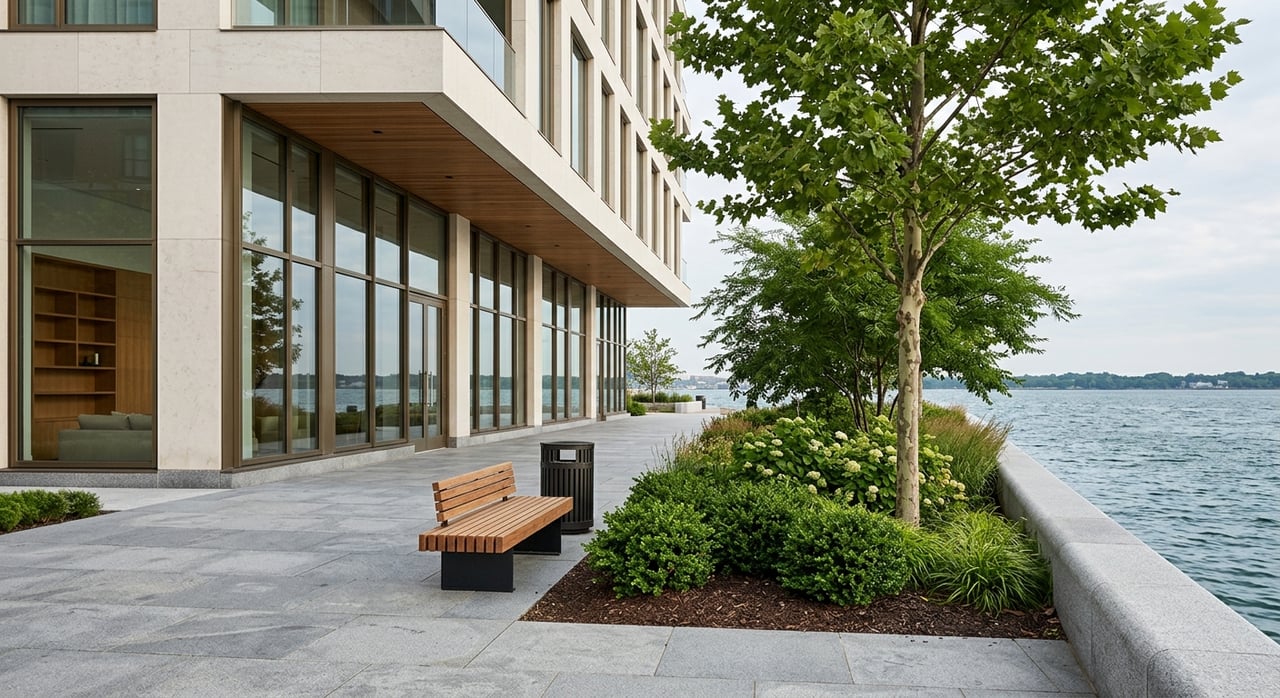
In Battery Park City, the waterfront is not just something you look at from a distance. The neighborhood’s layout makes the Hudson part of your routine, whether you are heading out for a morning walk, meeting a friend outdoors, or taking in harbor views at the end of the day.
A big reason is the scale of the open space. Battery Park City includes 36 acres of open space, with parks, the Esplanade, and shared public areas that help define the neighborhood’s lifestyle.
This creates a setting that feels unusually open for Manhattan. The result is a park-forward environment where greenery, paths, and water views play a larger role in your day than they do in many other downtown neighborhoods.
The Esplanade shapes the atmosphere
The Esplanade is one of the strongest examples of what makes the neighborhood different. It gives residents and visitors a broad waterfront path with views across the Hudson and out toward the harbor.
Esplanade Plaza adds seating, plantings, a volleyball court, and views that reach to the Statue of Liberty. It also serves as a local gathering spot and hosts free outdoor programming, including community dances.
For you as a resident, that means the waterfront can feel social without being hectic. It is a place where daily routines and community life overlap naturally.
North Cove adds a true marina setting
North Cove Marina gives the neighborhood direct public access to the Hudson waterfront. That marina presence adds another layer to the feeling of living here, making Battery Park City read more like a waterfront district than simply a collection of towers near the river.
For buyers who want a Manhattan address with a stronger connection to the water, that distinction matters. The marina, promenade, and public spaces work together to create a lifestyle that feels visually open and more relaxed.
Parks support different ways of living
One of Battery Park City’s biggest strengths is that its parks are not all trying to do the same thing. Some spaces are geared toward activity and gathering, while others are quieter and better suited for downtime.
That variety gives the neighborhood flexibility. Whether you want lawn space, play areas, a peaceful bench, or a scenic place to read, the public spaces support different routines.
Rockefeller Park is the social green space
Rockefeller Park is the neighborhood’s main lawn-and-playground zone. It includes broad lawns, gardens, public art, a sheltered pavilion, and nearby restrooms.
For many residents, this is one of the parks that makes the neighborhood easy to use on an everyday basis. It supports casual outdoor time, play, and group meetups without feeling overly programmed.
Teardrop Park is built for active family use
Teardrop Park is especially geared toward children and family routines. It includes a slide, sandboxes, water play, a reading area with rock seats, and naturalistic plantings.
If you are searching for a neighborhood where outdoor family time feels built in, this is one of Battery Park City’s strongest lifestyle advantages. The park gives younger children a destination that feels distinct from a standard city playground.
Rector Park offers a quieter option
Rector Park has a different character. It is described as quiet and protected, making it better suited for reading, resting, or a low-key lunch than active recreation.
That contrast says a lot about the neighborhood. Battery Park City supports both energy and quiet, which is part of why it appeals to buyers looking for a more balanced downtown lifestyle.
Convenience is stronger than many expect
One reason Battery Park City continues to attract interest is that it combines a peaceful setting with strong practical access. It may feel tucked away along the waterfront, but it is still well connected to the rest of Manhattan and beyond.
This balance is a major part of the appeal. You get the sense of separation that many buyers want, without giving up too much in terms of mobility or convenience.
Subway, PATH, bus, and bike access
Battery Park City is served by multiple transit options. Nearby access includes the 1/2/3 and A/C at Chambers Street, the 4/5 at Wall Street and Bowling Green, the 1/R at Cortlandt and Rector, and the J/Z at Broad Street.
PATH riders can connect through the World Trade Center and walk via the tunnel to Brookfield Place. The neighborhood also has M9, M20, and M22 buses, five Citi Bike stations, the free Downtown Connection bus, and public parking garages.
For residents, that means the neighborhood’s quieter feel does not come at the cost of connectivity. It is one of the more practical waterfront settings in Manhattan if you want car-light living.
Ferry access is a real lifestyle feature
NYC Ferry’s Battery Park City/Vesey Street landing is part of the St. George route. That route connects Staten Island, Wall Street/Pier 11, Brooklyn, Battery Park City, and Midtown West.
In everyday terms, the ferry is more than a novelty. It gives some residents another commuting option and adds to the sense that the waterfront is integrated into daily life.
Brookfield Place adds indoor convenience
Brookfield Place is the major indoor anchor for the neighborhood. It offers more than 40 shops and services, over a dozen fast-casual food options, seven restaurants, and arts programming.
Its Winter Garden is especially important in colder or rainy weather. With its large glass roof and open interior, it acts as an indoor counterpart to the outdoor park system nearby.
Culture is part of the neighborhood rhythm
Battery Park City is not only residential and scenic. Its public spaces also support a cultural layer that gives the neighborhood more depth.
Local landmarks include the Museum of Jewish Heritage at 36 Battery Place and the Irish Hunger Memorial at North End Avenue and Vesey Street. The neighborhood also includes public art such as Pylons, South Cove, and Wheatfield.
BPCA also offers free seasonal programming, including concerts and other community events. That helps keep the area active beyond office hours and gives residents recurring reasons to use the public spaces.
Families often find the setup practical
For buyers thinking long term, Battery Park City offers a practical day-to-day setup for households with children. The neighborhood includes nearby early-childhood and school options that can make daily routines more manageable.
Battery Park City School is a fully accessible PK-8 school at 55 Battery Place in District 2. Battery Park City Day Nursery offers 3K and pre-K at 215 South End Avenue, and P.S. 89 is nearby on Warren Street.
It is best to think of this as convenience, not just infrastructure. When schools and childcare options are in or close to the neighborhood, the logistics of everyday life can feel simpler.
The housing mix is broader than many assume
Battery Park City has a polished, upscale image, but the housing stock is not purely luxury. According to BPCA, the neighborhood has 30 residential buildings, split between 12 rentals and 18 condominiums.
It also includes roughly 300 income-tested affordable apartments and rent protections for hundreds more in Gateway Plaza. That broader housing mix is worth noting because it gives the neighborhood more variety than its luxury reputation might suggest.
For a buyer, this means Battery Park City is not defined by one housing type alone. It is better understood as a mixed residential district with a strong waterfront identity and a high-quality public realm.
Waterfront beauty comes with tradeoffs
Every neighborhood has tradeoffs, and Battery Park City is no exception. One of the most important here is that waterfront living is tied to long-term resiliency planning.
Wagner Park recently reopened after a major reconstruction that integrated flood protection, stormwater management, public art, and public access. The broader North/West resiliency project also continues to shape parts of the neighborhood’s northern and western edges.
That means buyers should view Battery Park City as both scenic and engineered. The beauty of the waterfront is real, but so is the presence of climate-adaptation work that can affect parts of the public realm over time.
Who Battery Park City tends to suit
Battery Park City is often a strong fit if you want a calmer downtown base with open space, water views, and excellent connectivity. It can be especially appealing if your ideal Manhattan lifestyle includes morning walks, nearby parks, practical transit, and a more composed atmosphere.
It may feel less natural for buyers who want the density, spontaneity, and street energy of a more traditional Manhattan neighborhood. Battery Park City is highly planned, and that ordered feel is either a major strength or a personal tradeoff, depending on what you value most.
For many luxury buyers, that distinction is exactly the point. If you want Manhattan living with more breathing room and a waterfront setting that feels intentionally designed, Battery Park City occupies a very specific niche.
If you are weighing Battery Park City against other Manhattan waterfront or downtown options, the right guidance can make the search far more efficient. The Steven Cohen Team offers discreet, white-glove advisory support for buyers and sellers seeking a polished, data-driven approach to Manhattan real estate.
FAQs
Is Battery Park City quiet compared with other Manhattan neighborhoods?
- Generally, yes. Its 36 acres of open space, waterfront promenade, and quieter pocket parks contribute to a calmer feel than many downtown Manhattan areas.
Is Battery Park City family-friendly for everyday living?
- Yes. Parks like Rockefeller Park and Teardrop Park, plus nearby PK-8, 3K, and pre-K options, support family routines in a practical way.
What is the biggest practical advantage of Battery Park City living?
- One of the biggest advantages is convenience. The neighborhood combines strong subway, PATH, ferry, bus, and bike access with shopping, dining, and indoor amenities at Brookfield Place.
What should buyers know about Battery Park City waterfront tradeoffs?
- Buyers should know that the neighborhood’s waterfront setting comes with ongoing resiliency planning and periodic construction tied to flood protection and climate adaptation.
Is Battery Park City only for luxury buyers?
- No. While the neighborhood has an upscale image, BPCA says the housing stock includes both rentals and condominiums, along with affordable apartments and rent protections in parts of the area.